Community (fb)

 es
es  ua
ua 



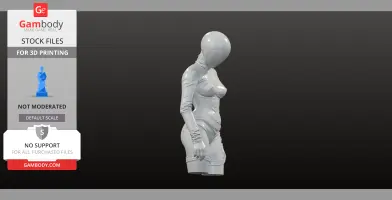
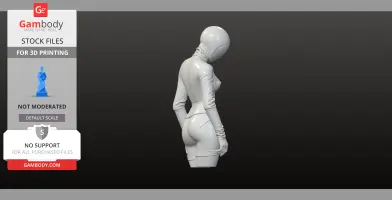


Files
3D model format
Stereolithography (.stl)
Total files

Slicer settings
not available
Mesh error check
not specified
Support
Provided by 3D Artist (optional)
Update requests
Subject to 3D Artist’s discretion
Model versions
FFF/FDM
Assembly method
not specified
Features
Additional details
Part of diorama
No
Special pack included
No
You will get instant access to the STL files of Latex Fencing suit bust after completing your purchase. Simply add the model to your cart and check out using PayPal, credit or debit card, Apple Pay, Google Pay, Alipay, or other available payment methods.
Watch the assembly video for Latex Fencing suit bust, and explore more tutorials, behind-the-scenes content, 3D printing timelapses, and painting guides on the official Gambody YouTube channel.
This 3D model comes with StereoLithography (.STL) files optimized for 3D printing. You'll get digital files, not a physical product
Before printing, take a look at Printing Details for recommended settings and tips to achieve better results.
Latex Fencing suit bust includes 1 version(s) for the supported 3D printer type(s): FFF/FDM. Files are available for download after purchase.
See the Description and Specifications sections for more details about this model.
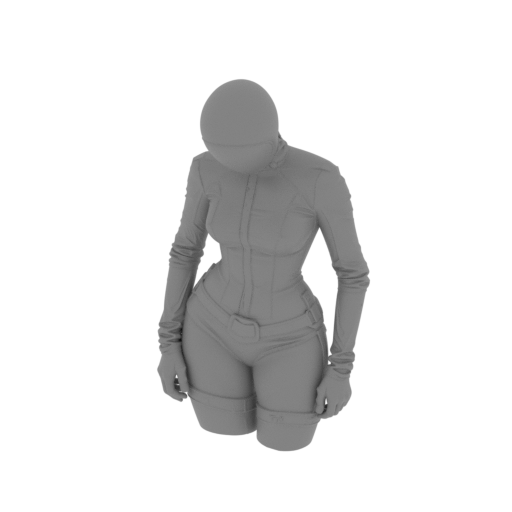
Design Concept
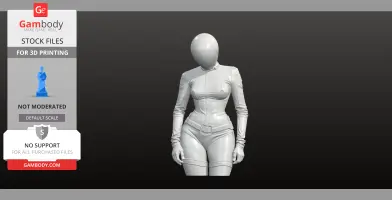
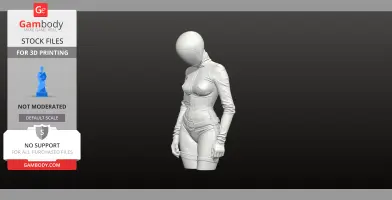
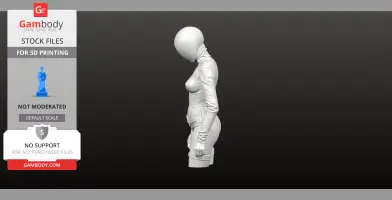
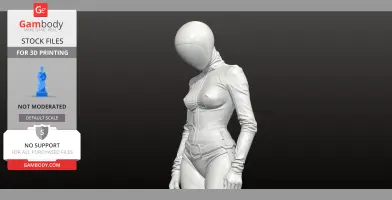
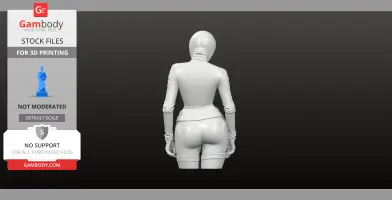
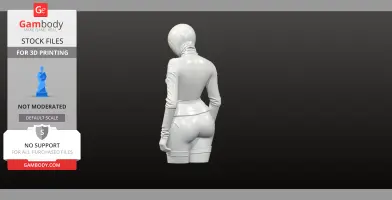
The Latex Fencing Suit Bust model presents a sleek and futuristic design combined with elements from classical fencing attire. The smooth, form-fitting suit resembles latex material, while the faceless helmet adds a sense of anonymity and intrigue.
Purpose
This model is ideal for use in art displays or as a character sculpture concept. Collectors and enthusiasts of futuristic or sci-fi themed art pieces may find it particularly appealing.
Printing Recommendations
For best results, print this model using a high-resolution 3D printer. It's recommended to use a resin printer to capture fine details and achieve a smooth surface finish, reminiscent of latex material.
Assembly Instructions
The model is designed to be printed as a single piece, minimizing the need for assembly and making post-processing, like smoothing or coloring, an optional step based on display preferences.