Community (fb)

 ua
ua 













Files
3D model format
Stereolithography (.stl)
Total files

Slicer settings
Mesh error check
Netfabb
Support
Lifetime support from Gambody team
Update requests
Available to verified buyers
Model complexity
Standard: balanced printing difficulty and moderate part count with assembly steps.
Model versions
DLP/SLA
Eco parts
Assembly method
Connectors
Features
STL files are pre-supported, hollowed out, and have drain holes where needed;
Can be displayed wielding the mace or holding up the One Ring, either cloaked in a cape or without one;
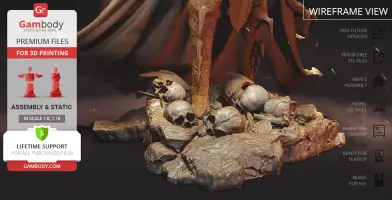
Comes with a platform resembling the battle scene on the slopes of Mount Doom;
The assembly parts are connected using specially designed integrated connectors that fit securely into the corresponding slots. Optionally, for added strength and rigidity, the static assembly joints can be glued together;
FFF/FDM
Assembly method
Connectors
Features
Can be displayed wielding the mace or holding up the One Ring, either cloaked in a cape or without one;
Comes with a platform resembling the battle scene on the slopes of Mount Doom;
The assembly parts are connected using specially designed integrated connectors that fit securely into the corresponding slots. Some model parts use separate connectors (part "50_ge_lock_7S(x5)", requires 5 copies;
part "51_ge_lock_10H(x14)", requires 14 copies);
DLP/SLA
Eco parts
Assembly method
Connectors
Features
Can be displayed wielding the mace or holding up the One Ring, either cloaked in a cape or without one;
Comes with a platform resembling the battle scene on the slopes of Mount Doom;
The assembly parts are connected using specially designed integrated connectors that fit securely into the corresponding slots. Optionally, for added strength and rigidity, the static assembly joints can be glued together;
SLS
Assembly method
Connectors
Features
Contains 6 parts: Sauron wielding the mace or holding up the One Ring, either cloaked in a cape or without one, with a separate platform part;
The assembly parts are connected using specially designed integrated connectors that fit securely into the corresponding slots. Optionally, for added strength and rigidity, the static assembly joints can be glued together;
DLP/SLA
Eco parts
Assembly method
Connectors
Features
Contains some hollowed out parts to save resin;
Can be displayed wielding the mace or holding up the One Ring, either cloaked in a cape or without one;
Comes with a platform resembling the battle scene on the slopes of Mount Doom;
The assembly parts are connected using specially designed integrated connectors that fit securely into the corresponding slots. Optionally, for added strength and rigidity, the static assembly joints can be glued together;
Additional details
Part of diorama
No
Special pack included
No
You can get the STL files of Sauron for 3D Printing immediately after the purchase! Just click the green Buy button in the top-right corner of the model’s page. You can pay with PayPal or your credit card.
Watch the tutorial on how to assemble Sauron 3D Printer Model at Gambody YouTube channel.
Also, you may like other The Lord of the Rings 3D Printer Models.
_______
FAQ:
This 3D model comes with StereoLithography (.STL) files optimized for 3D printing. You'll get digital files, not a physical product
Before printing, take a look at Printing Details for recommended settings and tips to achieve better results.
Sauron 3D Printer Files | Assembly includes 3 version(s) for the supported 3D printer type(s): FFF/FDM, DLP/SLA, SLS. Files are available for download after purchase.
See the Description and Specifications sections for more details about this model.
| File name | Size (mm | in) | Size(mb) | Printing Time / Filament | |||
|---|---|---|---|---|---|---|
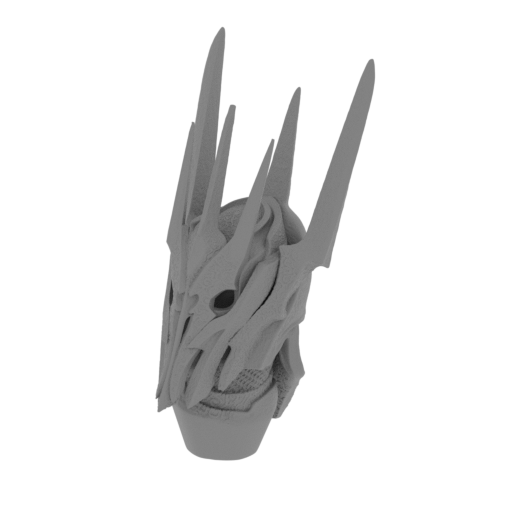 | 1_head_FDM(repaired) (repaired).stl 47.99 x 68.01 x 93.03 mm | 1.89 x 2.68 x 3.66 in | Size: 47.99 x 68.01 x 93.03 mm | 1.89 x 2.68 x 3.66 in | File size: 25.55 mb | Printing Time / Filament: 7 h 31 min / 4 m | ||
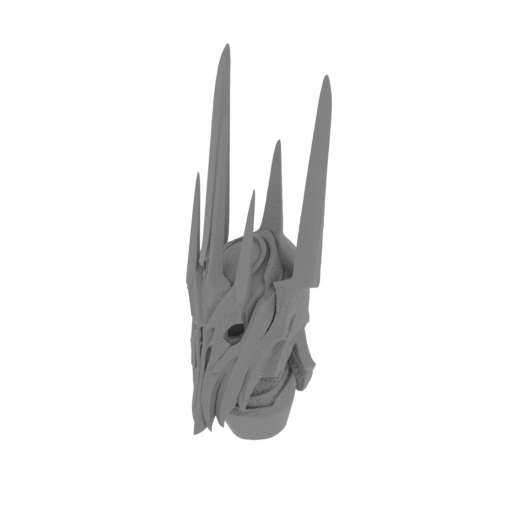 | 1_v2_head_FDM (repaired) (repaired).stl 44.25 x 50.5 x 117.22 mm | 1.74 x 1.99 x 4.61 in | Size: 44.25 x 50.5 x 117.22 mm | 1.74 x 1.99 x 4.61 in | File size: 28.49 mb | Printing Time / Filament: 8 h / 4 m | ||
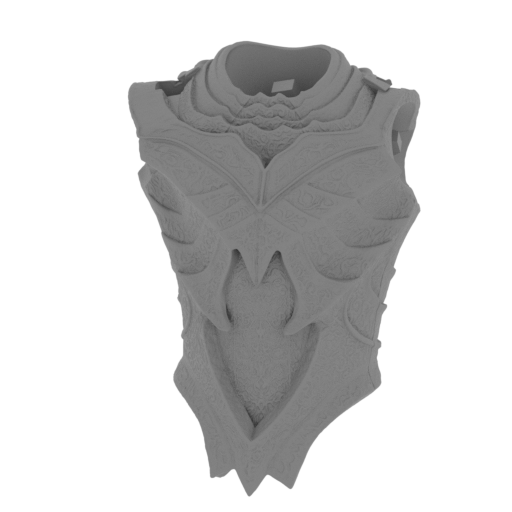 | 2_body_FDM(repaired) (repaired).stl 72.31 x 71.01 x 96.14 mm | 2.85 x 2.8 x 3.79 in | Size: 72.31 x 71.01 x 96.14 mm | 2.85 x 2.8 x 3.79 in | File size: 35.51 mb | Printing Time / Filament: 17 h 4 min / 10 m | ||
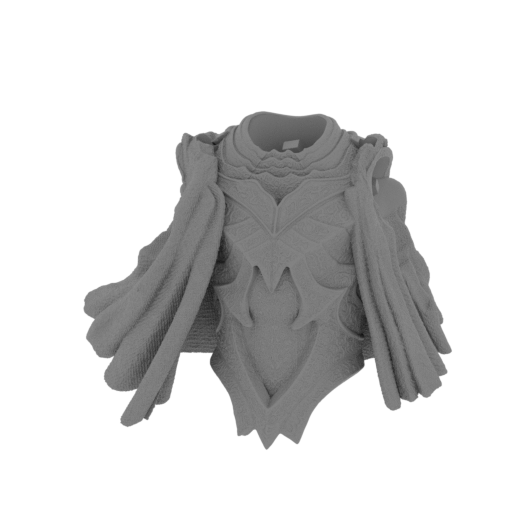 | 3_body_with_cloak_FDM(repaired) (repaired).stl 129.33 x 102.36 x 96.03 mm | 5.09 x 4.03 x 3.78 in | Size: 129.33 x 102.36 x 96.03 mm | 5.09 x 4.03 x 3.78 in | File size: 74.46 mb | Printing Time / Filament: 40 h 5 min / 23 m | ||
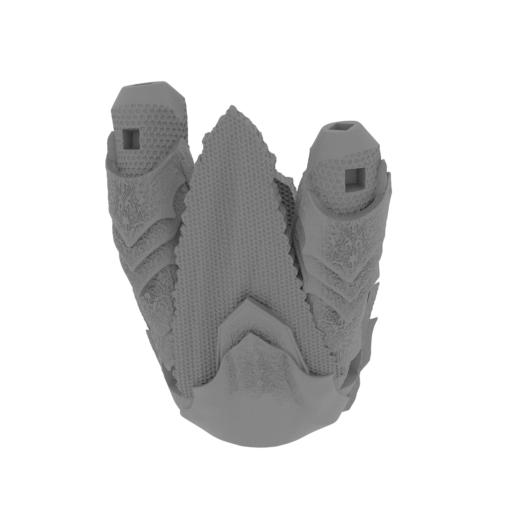 | 4_legs_FDM(repaired) (repaired).stl 89.88 x 55.24 x 115.22 mm | 3.54 x 2.17 x 4.54 in | Size: 89.88 x 55.24 x 115.22 mm | 3.54 x 2.17 x 4.54 in | File size: 45.28 mb | Printing Time / Filament: 22 h 55 min / 13 m | ||
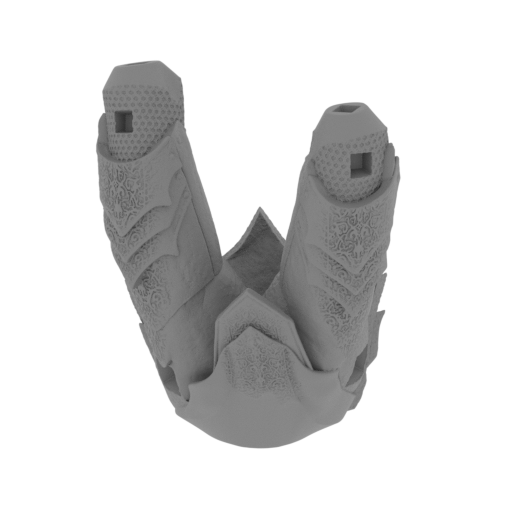 | 4_legs_without_chain_mail_FDM(repaired) (repaired).stl 90.09 x 55.43 x 108.87 mm | 3.55 x 2.18 x 4.29 in | Size: 90.09 x 55.43 x 108.87 mm | 3.55 x 2.18 x 4.29 in | File size: 60.83 mb | Printing Time / Filament: 18 h 19 min / 11 m | ||
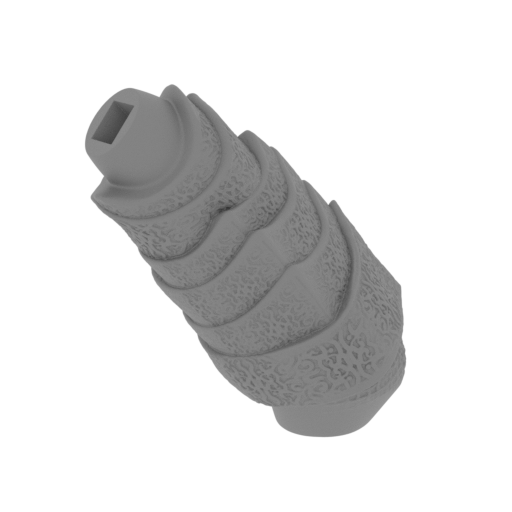 | 5_arm_R_1_FDM(repaired) (repaired).stl 40.14 x 35.76 x 52.35 mm | 1.58 x 1.41 x 2.06 in | Size: 40.14 x 35.76 x 52.35 mm | 1.58 x 1.41 x 2.06 in | File size: 23.54 mb | Printing Time / Filament: 2 h 54 min / 2 m | ||
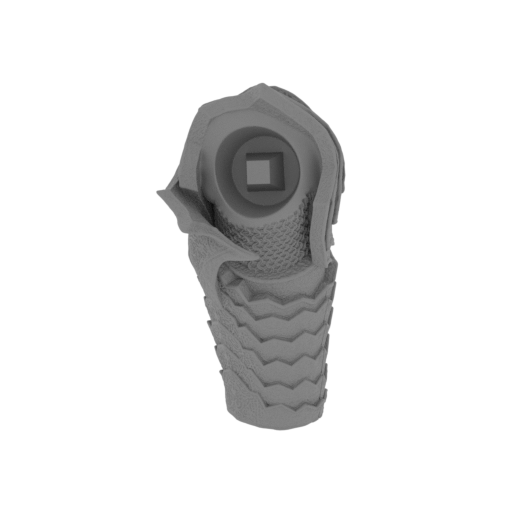 | 6_arm_R_2_FDM(repaired) (repaired).stl 26.82 x 33.5 x 60.99 mm | 1.06 x 1.32 x 2.4 in | Size: 26.82 x 33.5 x 60.99 mm | 1.06 x 1.32 x 2.4 in | File size: 23.81 mb | Printing Time / Filament: 3 h 35 min / 2 m | ||
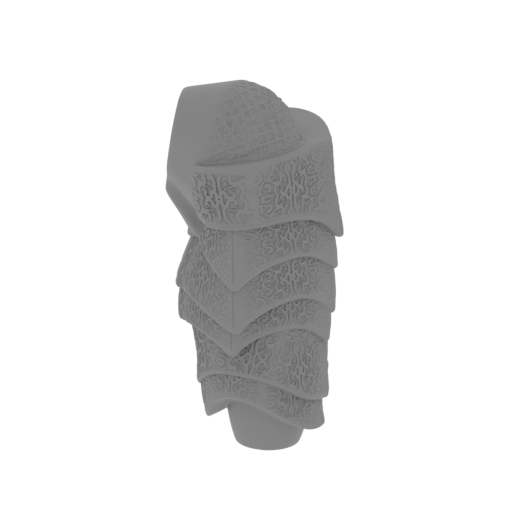 | 7_arm_L_1_FDM(repaired) (repaired).stl 27.29 x 28.34 x 60.2 mm | 1.07 x 1.12 x 2.37 in | Size: 27.29 x 28.34 x 60.2 mm | 1.07 x 1.12 x 2.37 in | File size: 22.44 mb | Printing Time / Filament: 3 h 10 min / 2 m | ||
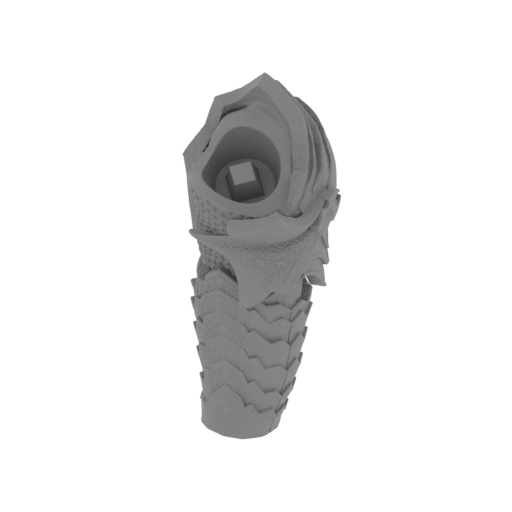 | 8_arm_L_2_FDM(repaired) (repaired).stl 26.6 x 33.34 x 64.7 mm | 1.05 x 1.31 x 2.55 in | Size: 26.6 x 33.34 x 64.7 mm | 1.05 x 1.31 x 2.55 in | File size: 19.43 mb | Printing Time / Filament: 3 h 47 min / 2 m | ||
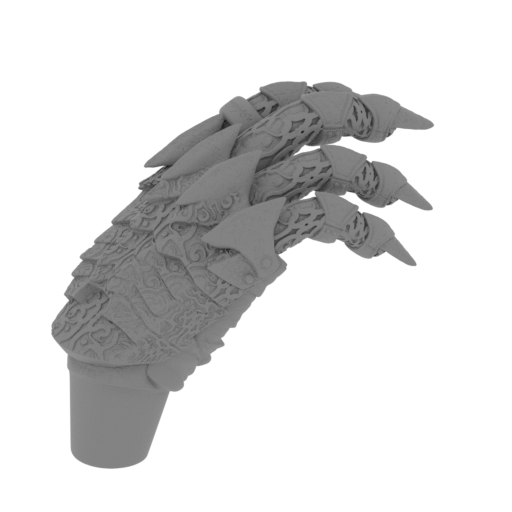 | 9_hand_R_FDM(repaired) (repaired).stl 35.71 x 40.56 x 34.16 mm | 1.41 x 1.6 x 1.34 in | Size: 35.71 x 40.56 x 34.16 mm | 1.41 x 1.6 x 1.34 in | File size: 26.65 mb | Printing Time / Filament: 2 h 28 min / 2 m | ||
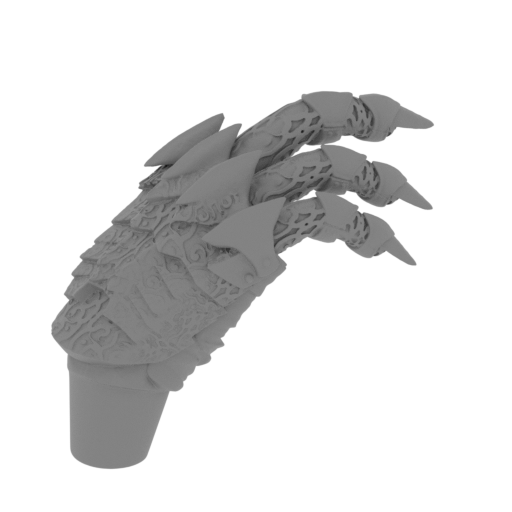 | 9_v2_1_hand_R_FDM(repaired).stl 35.62 x 40.49 x 34.13 mm | 1.4 x 1.59 x 1.34 in | Size: 35.62 x 40.49 x 34.13 mm | 1.4 x 1.59 x 1.34 in | File size: 34.31 mb | Printing Time / Filament: 2 h 8 min / 1 m | ||
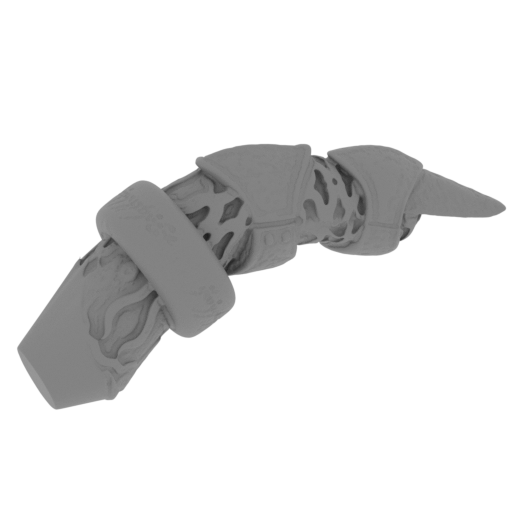 | 9_v2_2_finger_FDM(repaired) (repaired).stl 16.39 x 16.34 x 10.11 mm | 0.65 x 0.64 x 0.4 in | Size: 16.39 x 16.34 x 10.11 mm | 0.65 x 0.64 x 0.4 in | File size: 11.51 mb | Printing Time / Filament: 11 min / <1 m | ||
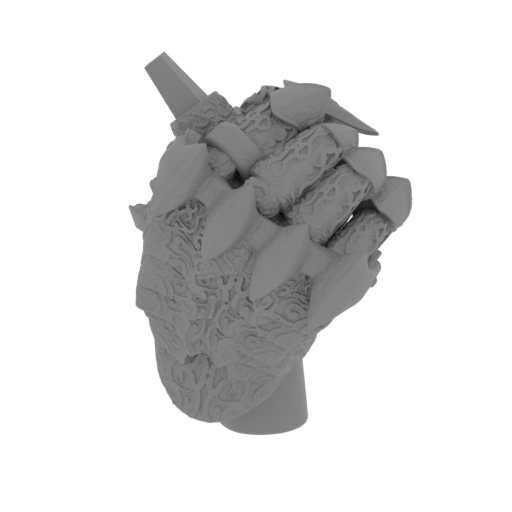 | 10_hand_R_with_mace_FDM(repaired) (repaired).stl 29.67 x 23.97 x 38.56 mm | 1.17 x 0.94 x 1.52 in | Size: 29.67 x 23.97 x 38.56 mm | 1.17 x 0.94 x 1.52 in | File size: 16.66 mb | Printing Time / Filament: 2 h 21 min / 1 m | ||
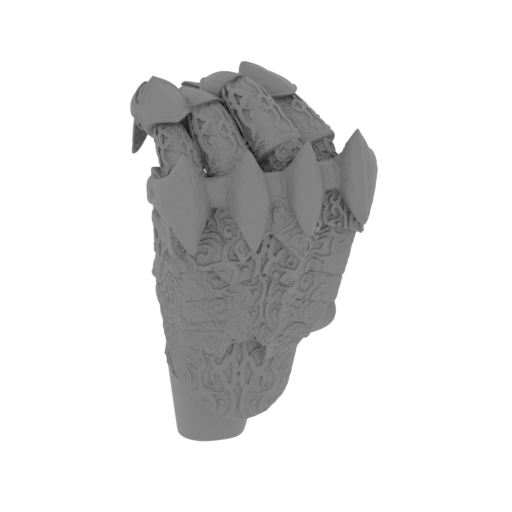 | 11_hand_L_FDM(repaired) (repaired).stl 25.51 x 27.56 x 40.53 mm | 1 x 1.09 x 1.6 in | Size: 25.51 x 27.56 x 40.53 mm | 1 x 1.09 x 1.6 in | File size: 20.39 mb | Printing Time / Filament: 2 h 27 min / 1 m | ||
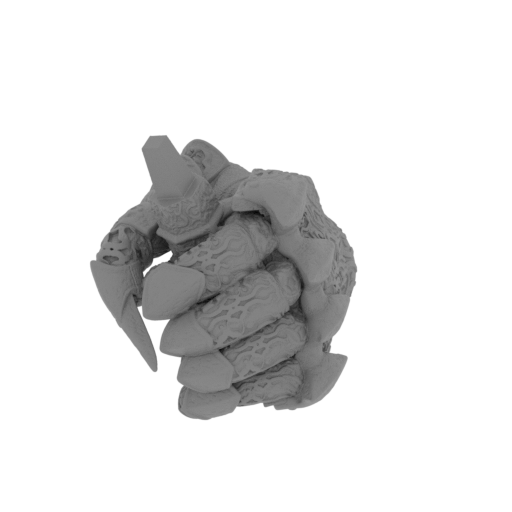 | 11_v2_hand_L_with_mace_FDM(repaired) (repaired).stl 25.49 x 39.47 x 34.24 mm | 1 x 1.55 x 1.35 in | Size: 25.49 x 39.47 x 34.24 mm | 1 x 1.55 x 1.35 in | File size: 18.00 mb | Printing Time / Filament: 2 h 18 min / 1 m | ||
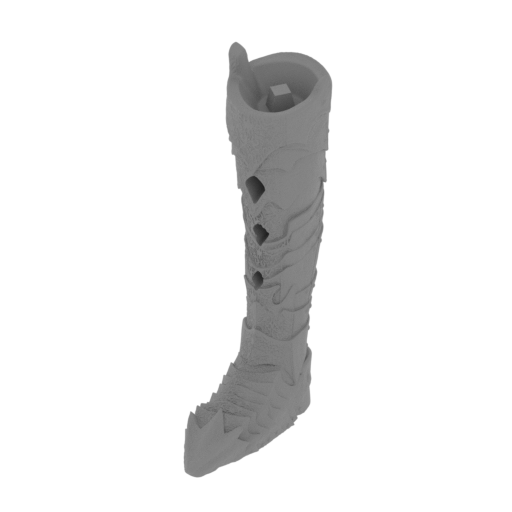 | 12_foot_R_FDM(repaired) (repaired).stl 28.99 x 60.45 x 95.4 mm | 1.14 x 2.38 x 3.76 in | Size: 28.99 x 60.45 x 95.4 mm | 1.14 x 2.38 x 3.76 in | File size: 27.09 mb | Printing Time / Filament: 5 h 34 min / 3 m | ||
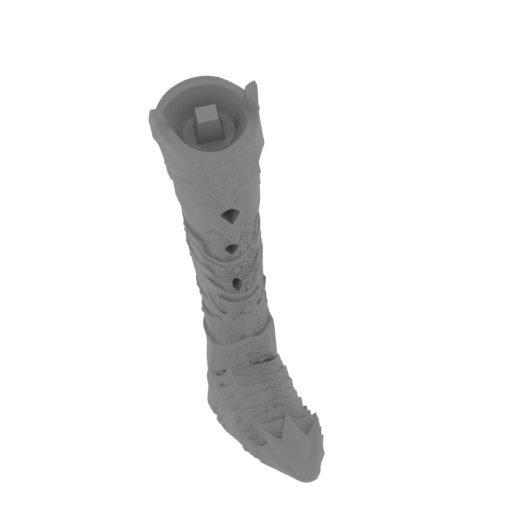 | 13_foot_L_FDM(repaired) (repaired).stl 46.5 x 46.15 x 94.26 mm | 1.83 x 1.82 x 3.71 in | Size: 46.5 x 46.15 x 94.26 mm | 1.83 x 1.82 x 3.71 in | File size: 23.16 mb | Printing Time / Filament: 5 h 53 min / 3 m | ||
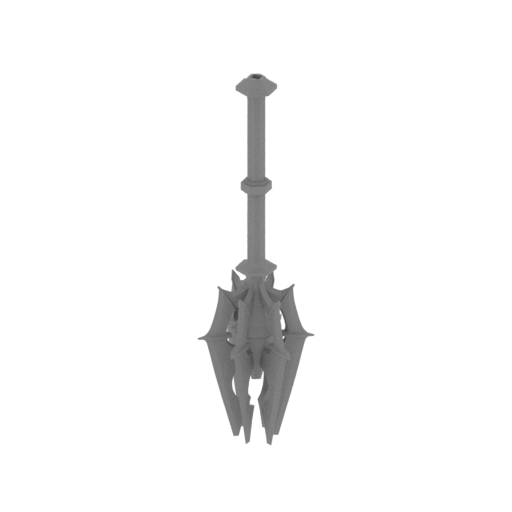 | 14_mace_1_FDM(repaired) (repaired).stl 35.78 x 40.19 x 133.04 mm | 1.41 x 1.58 x 5.24 in | Size: 35.78 x 40.19 x 133.04 mm | 1.41 x 1.58 x 5.24 in | File size: 23.16 mb | Printing Time / Filament: 5 h 38 min / 3 m | ||
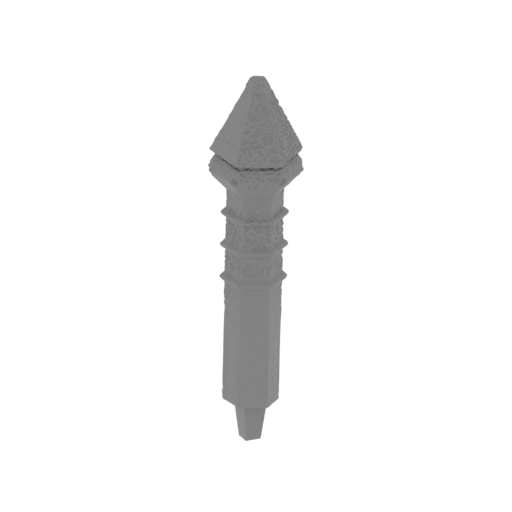 | 15_mace_2_FDM(repaired) (repaired).stl 10.4 x 11.6 x 44.55 mm | 0.41 x 0.46 x 1.75 in | Size: 10.4 x 11.6 x 44.55 mm | 0.41 x 0.46 x 1.75 in | File size: 12.22 mb | Printing Time / Filament: 47 min / <1 m | ||
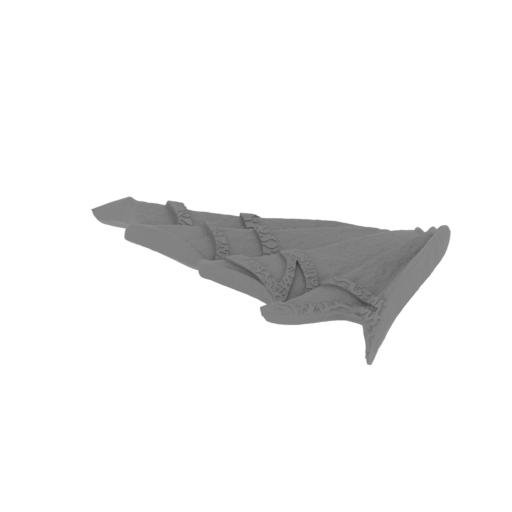 | 16_armor_on_leg_R_FDM(repaired) (repaired).stl 70.01 x 42.87 x 18.09 mm | 2.76 x 1.69 x 0.71 in | Size: 70.01 x 42.87 x 18.09 mm | 2.76 x 1.69 x 0.71 in | File size: 22.89 mb | Printing Time / Filament: 2 h 43 min / 2 m | ||
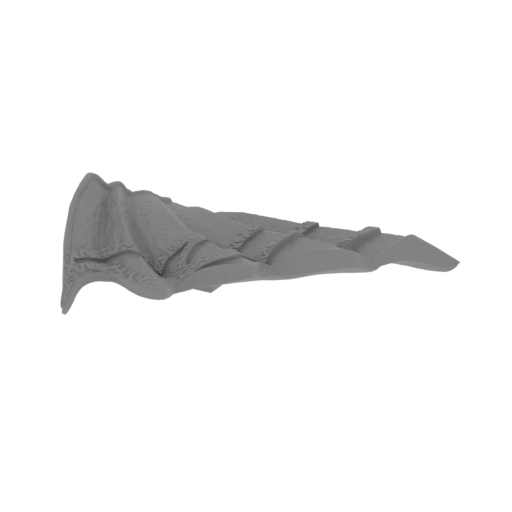 | 17_armor_on_leg_L_FDM(repaired) (repaired).stl 70.26 x 42.57 x 17.05 mm | 2.77 x 1.68 x 0.67 in | Size: 70.26 x 42.57 x 17.05 mm | 2.77 x 1.68 x 0.67 in | File size: 25.62 mb | Printing Time / Filament: 2 h 41 min / 2 m | ||
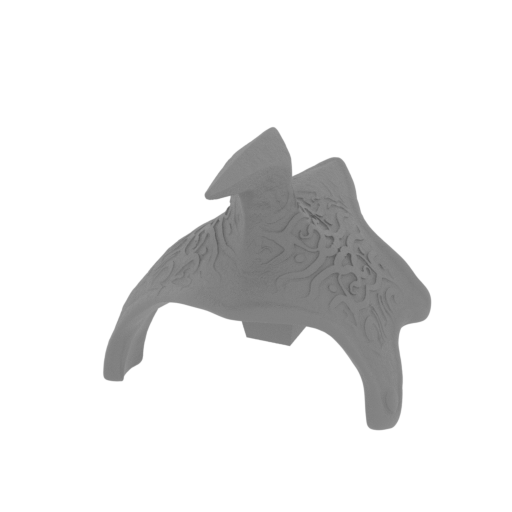 | 18_knee_pad_R_FDM(repaired) (repaired).stl 32.3 x 39.5 x 31.12 mm | 1.27 x 1.56 x 1.23 in | Size: 32.3 x 39.5 x 31.12 mm | 1.27 x 1.56 x 1.23 in | File size: 13.83 mb | Printing Time / Filament: 1 h 19 min / 1 m | ||
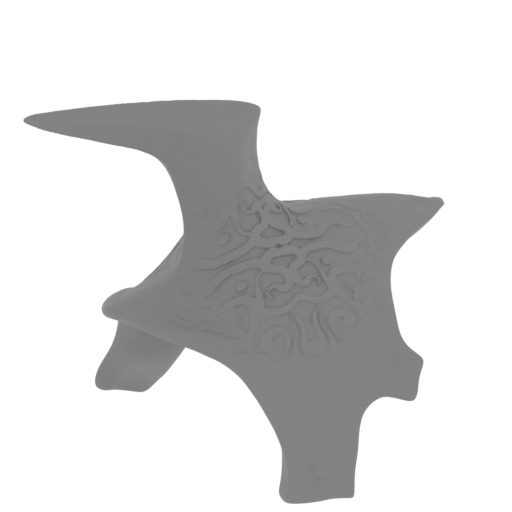 | 19_knee_pad_L_FDM(repaired) (repaired).stl 30.26 x 28.36 x 32.32 mm | 1.19 x 1.12 x 1.27 in | Size: 30.26 x 28.36 x 32.32 mm | 1.19 x 1.12 x 1.27 in | File size: 13.47 mb | Printing Time / Filament: 1 h 12 min / 1 m | ||
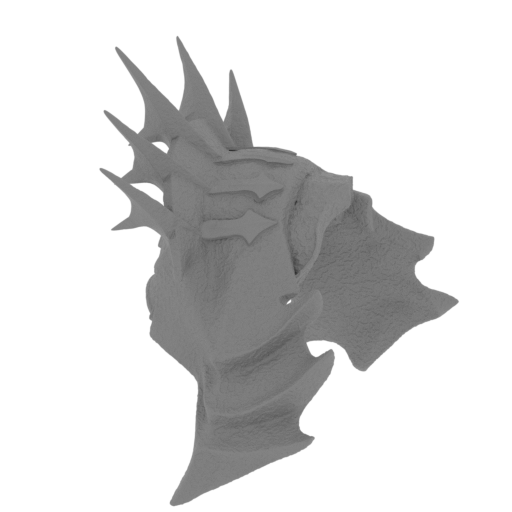 | 20_soulder_strap_L_FDM(repaired) (repaired).stl 50.45 x 61.26 x 63.14 mm | 1.99 x 2.41 x 2.49 in | Size: 50.45 x 61.26 x 63.14 mm | 1.99 x 2.41 x 2.49 in | File size: 21.73 mb | Printing Time / Filament: 5 h 58 min / 4 m | ||
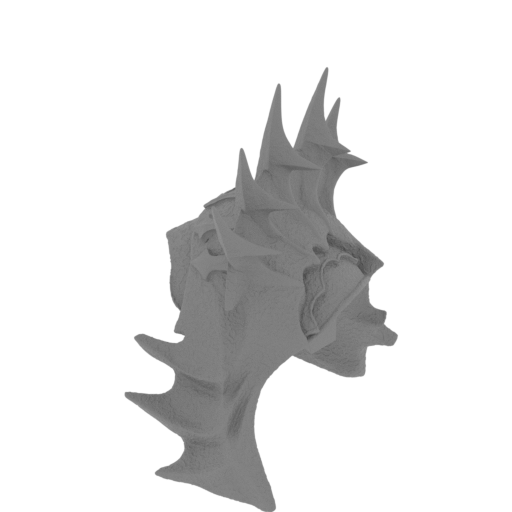 | 21_soulder_strap_R_FDM(repaired) (repaired).stl 37.64 x 61.09 x 68.66 mm | 1.48 x 2.41 x 2.7 in | Size: 37.64 x 61.09 x 68.66 mm | 1.48 x 2.41 x 2.7 in | File size: 20.49 mb | Printing Time / Filament: 5 h 35 min / 3 m | ||
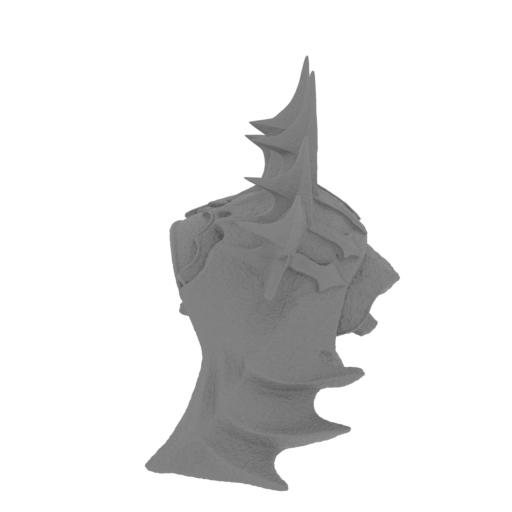 | 22_soulder_strap_on_cloak_L_FDM(repaired) (repaired).stl 45.26 x 67.13 x 68.16 mm | 1.78 x 2.64 x 2.68 in | Size: 45.26 x 67.13 x 68.16 mm | 1.78 x 2.64 x 2.68 in | File size: 21.63 mb | Printing Time / Filament: 5 h 44 min / 4 m | ||
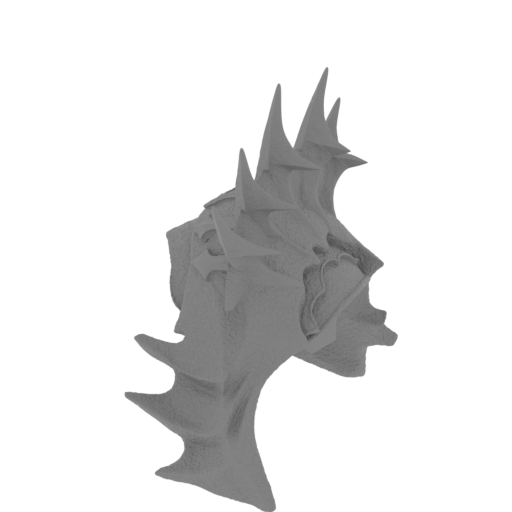 Updated Updated | 23_shoulder_strap_R_on_cloak_FDM(repaired).stl 37.64 x 61.09 x 68.66 mm | 1.48 x 2.41 x 2.7 in | Size: 37.64 x 61.09 x 68.66 mm | 1.48 x 2.41 x 2.7 in | File size: 18.25 mb | Printing Time / Filament: 5 h 33 min / 3 m | ||
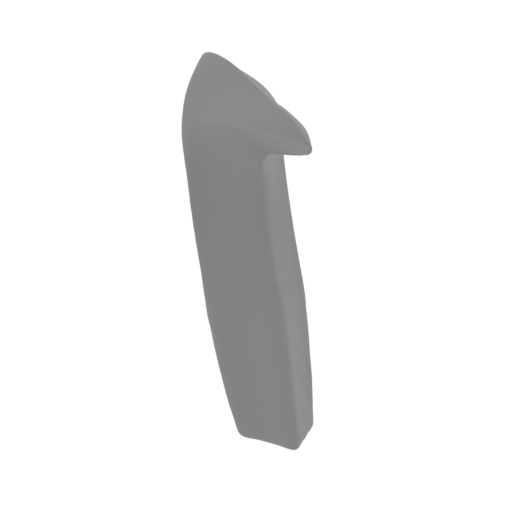 | 24_spike_on_arm_L_1_FDM(repaired).stl 6.52 x 7.76 x 12.24 mm | 0.26 x 0.31 x 0.48 in | Size: 6.52 x 7.76 x 12.24 mm | 0.26 x 0.31 x 0.48 in | File size: 1.15 mb | Printing Time / Filament: 6 min / <1 m | ||
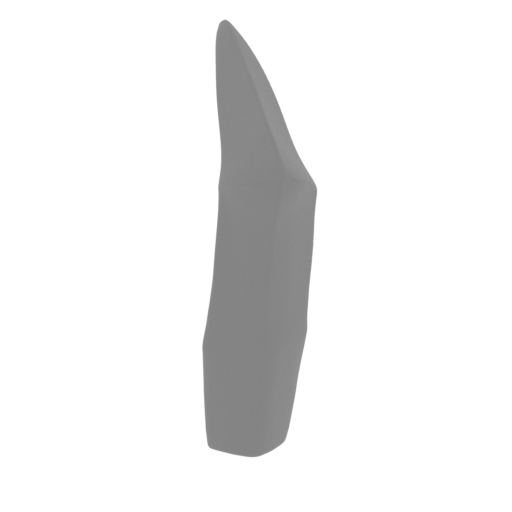 | 25_spike_on_arm_L_2_FDM(repaired).stl 7.29 x 10.9 x 16.71 mm | 0.29 x 0.43 x 0.66 in | Size: 7.29 x 10.9 x 16.71 mm | 0.29 x 0.43 x 0.66 in | File size: 1.71 mb | Printing Time / Filament: 11 min / <1 m | ||
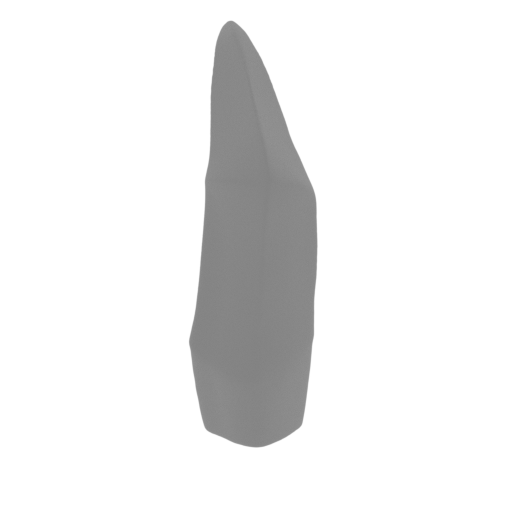 | 26_spike_on_arm_L_3_FDM(repaired).stl 6.94 x 11.7 x 16.2 mm | 0.27 x 0.46 x 0.64 in | Size: 6.94 x 11.7 x 16.2 mm | 0.27 x 0.46 x 0.64 in | File size: 1.70 mb | Printing Time / Filament: 11 min / <1 m | ||
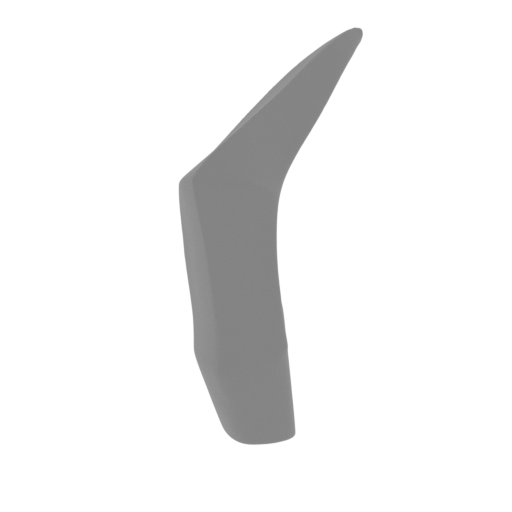 | 27_spike_on_arm_R_1_FDM(repaired).stl 3.55 x 9.82 x 12.01 mm | 0.14 x 0.39 x 0.47 in | Size: 3.55 x 9.82 x 12.01 mm | 0.14 x 0.39 x 0.47 in | File size: 1.24 mb | Printing Time / Filament: 6 min / <1 m | ||
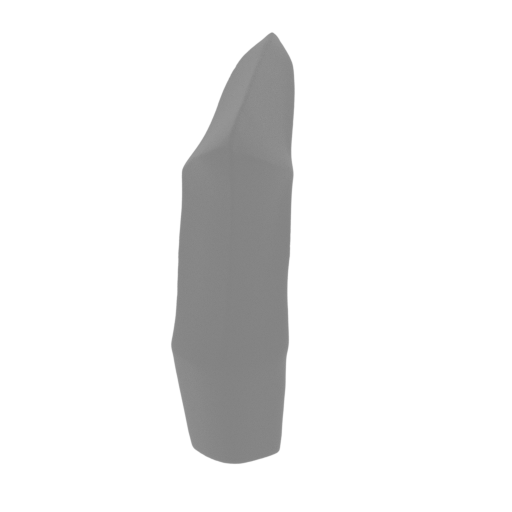 | 28_spike_on_arm_R_2_FDM(repaired).stl 4.63 x 11.13 x 14.81 mm | 0.18 x 0.44 x 0.58 in | Size: 4.63 x 11.13 x 14.81 mm | 0.18 x 0.44 x 0.58 in | File size: 1.77 mb | Printing Time / Filament: 9 min / <1 m | ||
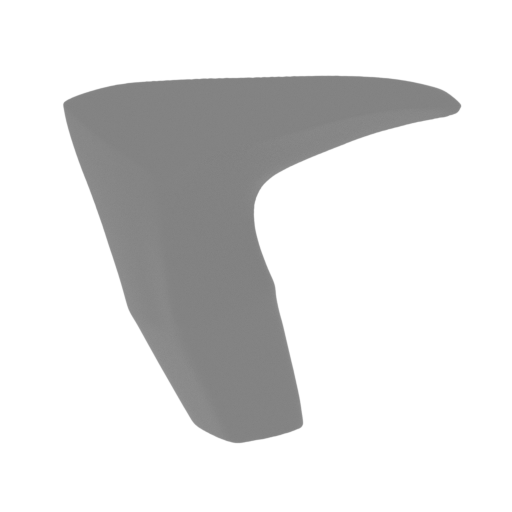 | 29_spike_on_arm_R_3_FDM(repaired).stl 12.77 x 4.59 x 12.64 mm | 0.5 x 0.18 x 0.5 in | Size: 12.77 x 4.59 x 12.64 mm | 0.5 x 0.18 x 0.5 in | File size: 1.43 mb | Printing Time / Filament: 8 min / <1 m | ||
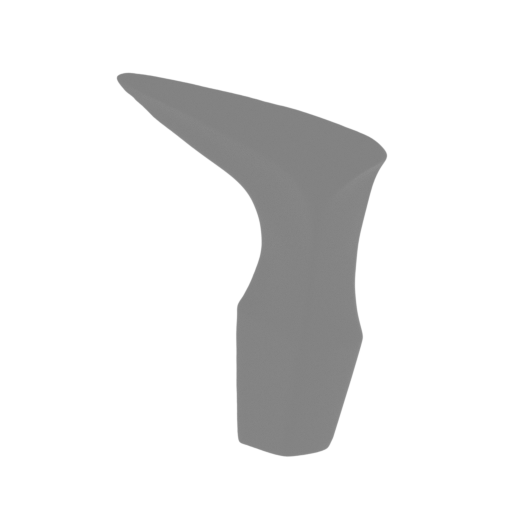 | 30_spike_on_foot_R_1_FDM(repaired).stl 16.04 x 5.82 x 23.57 mm | 0.63 x 0.23 x 0.93 in | Size: 16.04 x 5.82 x 23.57 mm | 0.63 x 0.23 x 0.93 in | File size: 2.89 mb | Printing Time / Filament: 18 min / <1 m | ||
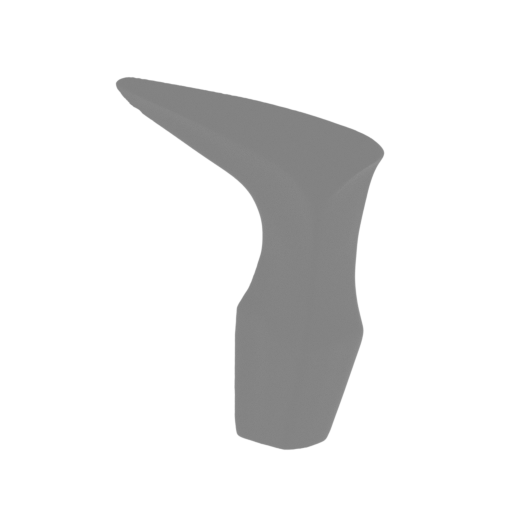 | 31_spike_on_foot_R_2_FDM(repaired).stl 13.12 x 5.19 x 19.65 mm | 0.52 x 0.2 x 0.77 in | Size: 13.12 x 5.19 x 19.65 mm | 0.52 x 0.2 x 0.77 in | File size: 2.28 mb | Printing Time / Filament: 12 min / <1 m | ||
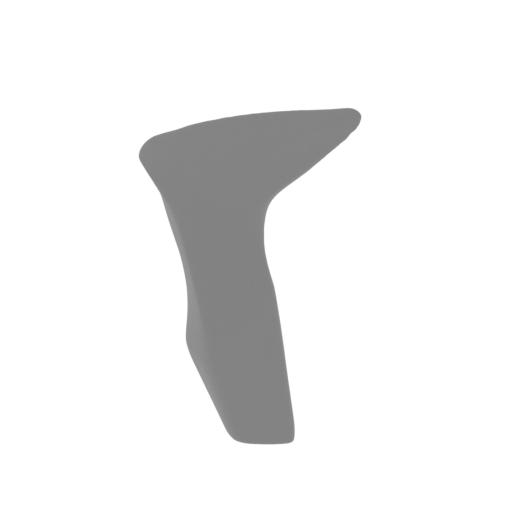 | 32_spike_on_foot_R_3_FDM(repaired).stl 9.4 x 3.49 x 14.53 mm | 0.37 x 0.14 x 0.57 in | Size: 9.4 x 3.49 x 14.53 mm | 0.37 x 0.14 x 0.57 in | File size: 1.43 mb | Printing Time / Filament: 4 min / <1 m | ||
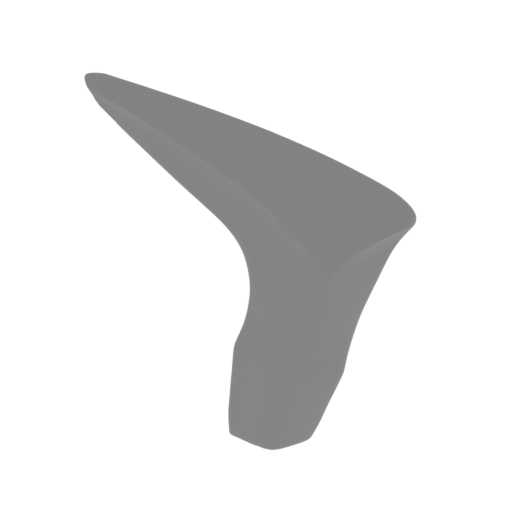 | 33_spike_on_foot_L_1_FDM(repaired).stl 15.33 x 5.59 x 18.31 mm | 0.6 x 0.22 x 0.72 in | Size: 15.33 x 5.59 x 18.31 mm | 0.6 x 0.22 x 0.72 in | File size: 2.45 mb | Printing Time / Filament: 7 min / <1 m | ||
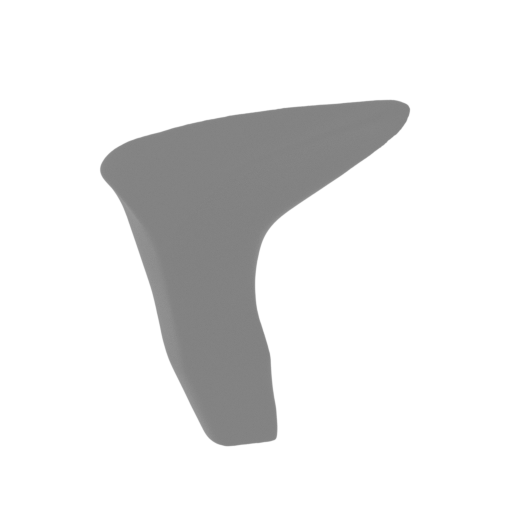 | 34_spike_on_foot_L_2_FDM(repaired).stl 12.49 x 4.18 x 14.75 mm | 0.49 x 0.16 x 0.58 in | Size: 12.49 x 4.18 x 14.75 mm | 0.49 x 0.16 x 0.58 in | File size: 1.84 mb | Printing Time / Filament: 7 min / <1 m | ||
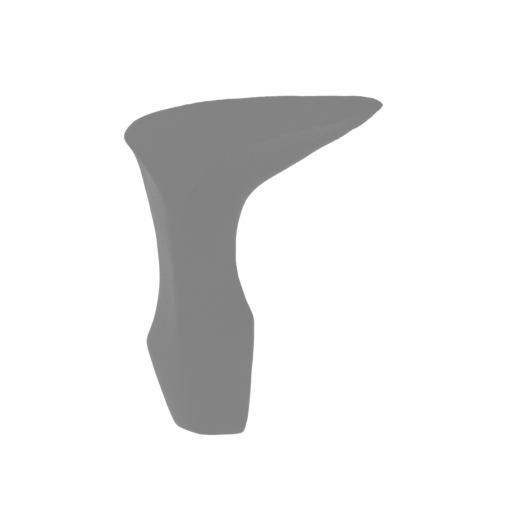 | 35_spike_on_foot_L_3_FDM(repaired).stl 9.03 x 2.82 x 12.81 mm | 0.36 x 0.11 x 0.5 in | Size: 9.03 x 2.82 x 12.81 mm | 0.36 x 0.11 x 0.5 in | File size: 1.39 mb | Printing Time / Filament: 6 min / <1 m | ||
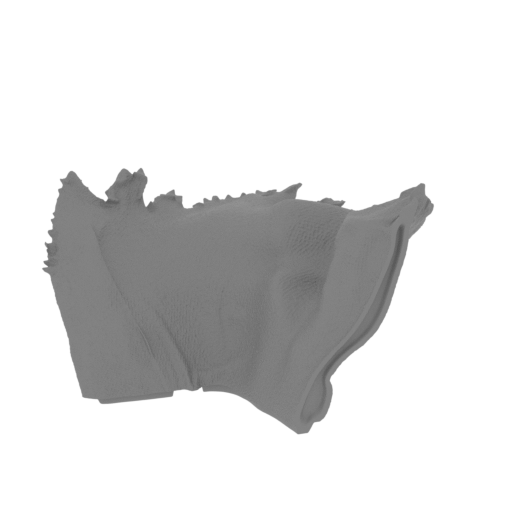 | 36_cloak_1_FDM(repaired) (repaired).stl 138.47 x 103.16 x 85.73 mm | 5.45 x 4.06 x 3.38 in | Size: 138.47 x 103.16 x 85.73 mm | 5.45 x 4.06 x 3.38 in | File size: 37.03 mb | Printing Time / Filament: 29 h 25 min / 23 m | ||
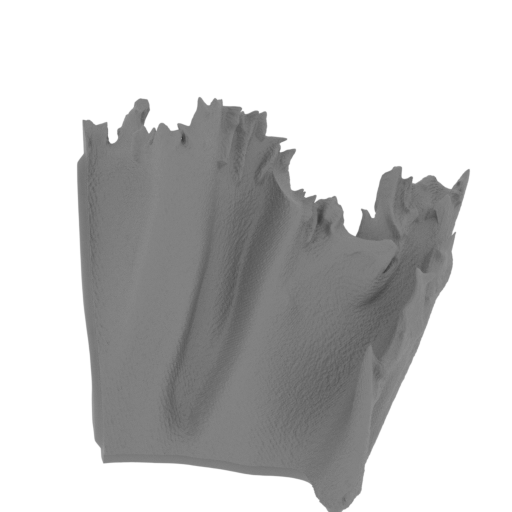 | 37_cloak_2_FDM(repaired) (repaired).stl 101.64 x 107.35 x 100.62 mm | 4 x 4.23 x 3.96 in | Size: 101.64 x 107.35 x 100.62 mm | 4 x 4.23 x 3.96 in | File size: 29.87 mb | Printing Time / Filament: 15 h 47 min / 10 m | ||
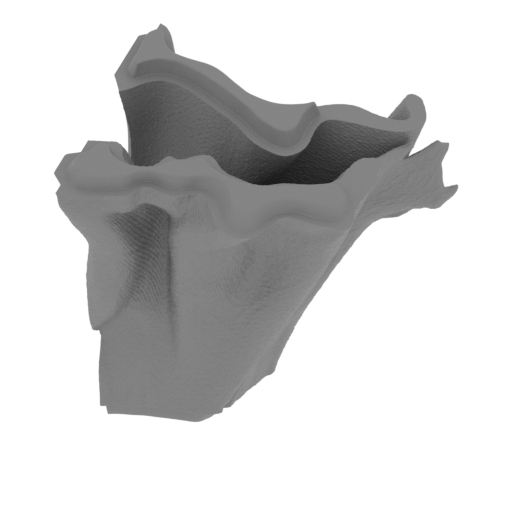 | 38_cloak_3_FDM(repaired) (repaired).stl 124.52 x 116.09 x 146 mm | 4.9 x 4.57 x 5.75 in | Size: 124.52 x 116.09 x 146 mm | 4.9 x 4.57 x 5.75 in | File size: 36.40 mb | Printing Time / Filament: 55 h 12 min / 37 m | ||
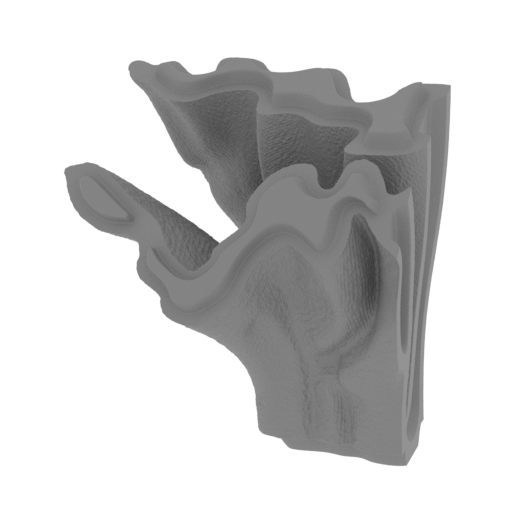 | 39_cloak_4_FDM(repaired) (repaired).stl 128.42 x 99.97 x 117.97 mm | 5.06 x 3.94 x 4.64 in | Size: 128.42 x 99.97 x 117.97 mm | 5.06 x 3.94 x 4.64 in | File size: 36.71 mb | Printing Time / Filament: 38 h 40 min / 25 m | ||
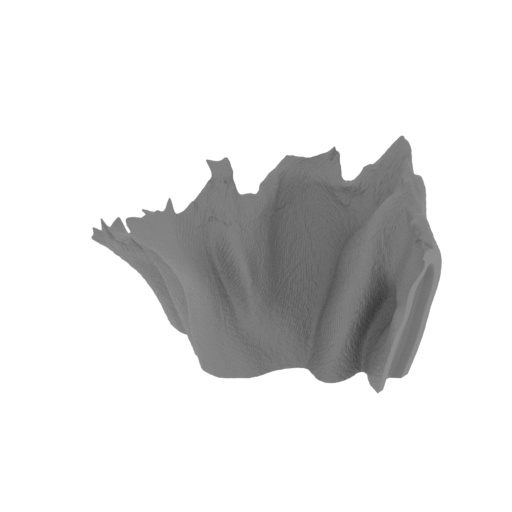 | 40_cloak_5_FDM(repaired) (repaired).stl 179.76 x 102.09 x 108.67 mm | 7.08 x 4.02 x 4.28 in | Size: 179.76 x 102.09 x 108.67 mm | 7.08 x 4.02 x 4.28 in | File size: 27.17 mb | Printing Time / Filament: 27 h 54 min / 16 m | ||
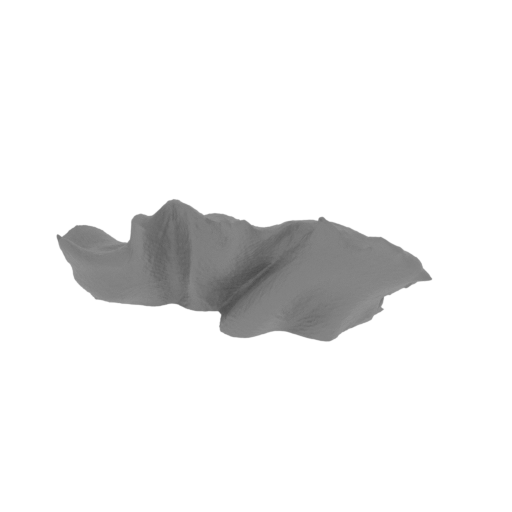 | 41_cloak_6_FDM(repaired) (repaired).stl 169.82 x 70.59 x 65.87 mm | 6.69 x 2.78 x 2.59 in | Size: 169.82 x 70.59 x 65.87 mm | 6.69 x 2.78 x 2.59 in | File size: 32.08 mb | Printing Time / Filament: 15 h 15 min / 8 m | ||
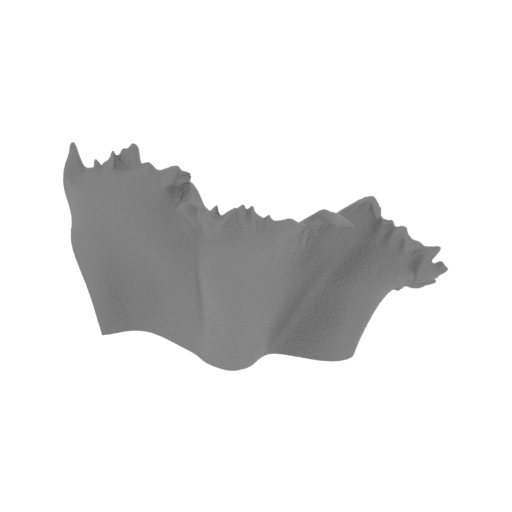 | 42_cloak_7_FDM(repaired) (repaired).stl 176.49 x 82 x 101.89 mm | 6.95 x 3.23 x 4.01 in | Size: 176.49 x 82 x 101.89 mm | 6.95 x 3.23 x 4.01 in | File size: 36.35 mb | Printing Time / Filament: 21 h 32 min / 13 m | ||
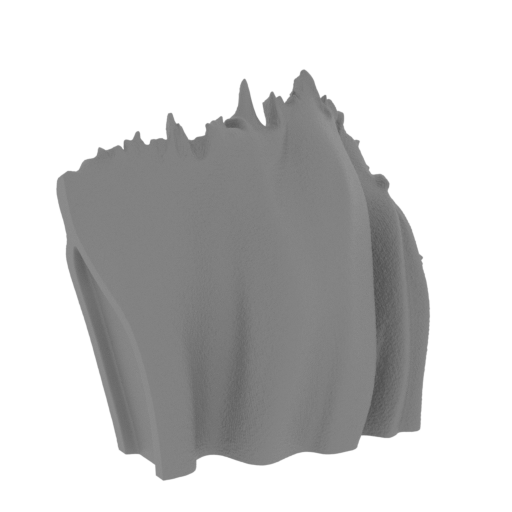 | 43_cloak_8_FDM(repaired) (repaired).stl 130.68 x 152.3 x 132.21 mm | 5.14 x 6 x 5.21 in | Size: 130.68 x 152.3 x 132.21 mm | 5.14 x 6 x 5.21 in | File size: 37.92 mb | Printing Time / Filament: 38 h 56 min / 26 m | ||
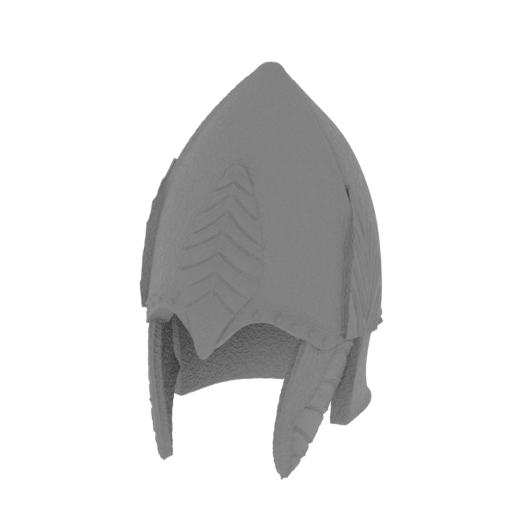 | 44_helmet_1_FDM(repaired) (repaired).stl 30.62 x 38.98 x 49.93 mm | 1.21 x 1.53 x 1.97 in | Size: 30.62 x 38.98 x 49.93 mm | 1.21 x 1.53 x 1.97 in | File size: 24.19 mb | Printing Time / Filament: 3 h 4 min / 2 m | ||
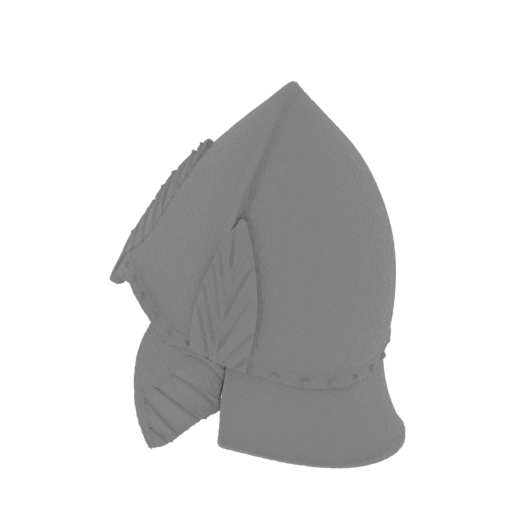 | 45_helmet_2_FDM(repaired) (repaired).stl 37.95 x 29.91 x 48.62 mm | 1.49 x 1.18 x 1.91 in | Size: 37.95 x 29.91 x 48.62 mm | 1.49 x 1.18 x 1.91 in | File size: 21.20 mb | Printing Time / Filament: 2 h 51 min / 2 m | ||
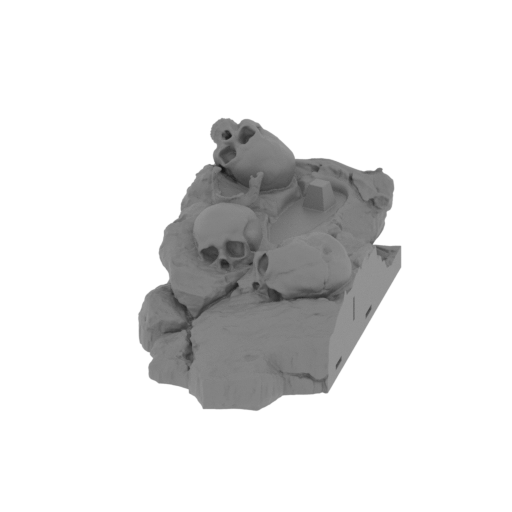 | 46_platform_1_FDM(repaired).stl 91.57 x 150.96 x 63.74 mm | 3.61 x 5.94 x 2.51 in | Size: 91.57 x 150.96 x 63.74 mm | 3.61 x 5.94 x 2.51 in | File size: 18.38 mb | Printing Time / Filament: 27 h 25 min / 14 m | ||
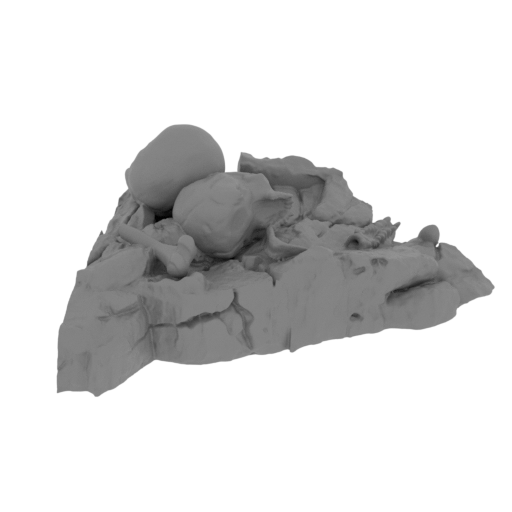 | 47_platform_2_FDM(repaired).stl 118.68 x 126.88 x 57.69 mm | 4.67 x 5 x 2.27 in | Size: 118.68 x 126.88 x 57.69 mm | 4.67 x 5 x 2.27 in | File size: 17.17 mb | Printing Time / Filament: 22 h 21 min / 11 m | ||
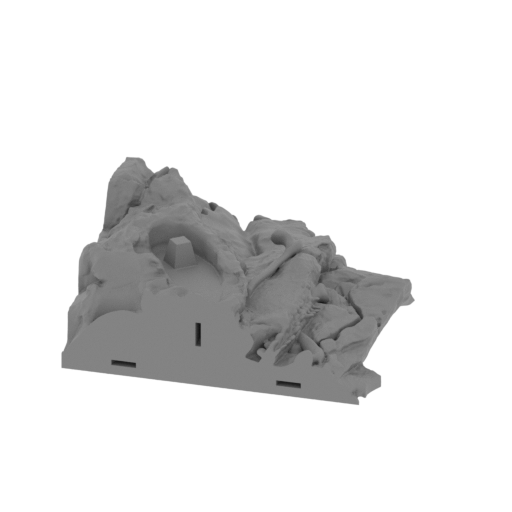 | 48_platform_3_FDM(repaired).stl 137.45 x 149.48 x 46.13 mm | 5.41 x 5.89 x 1.82 in | Size: 137.45 x 149.48 x 46.13 mm | 5.41 x 5.89 x 1.82 in | File size: 17.77 mb | Printing Time / Filament: 30 h 47 min / 16 m | ||
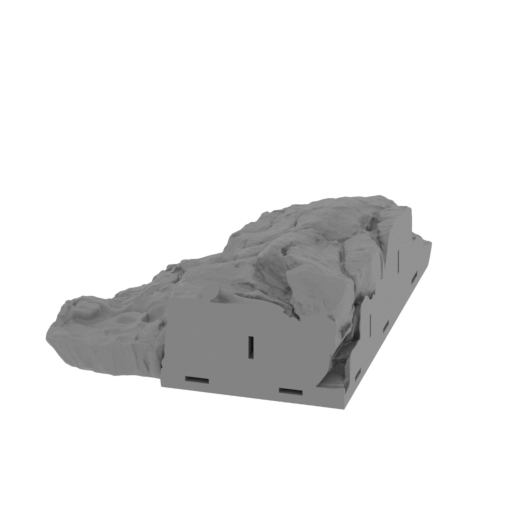 | 49_platform_4_FDM(repaired).stl 126.85 x 154.86 x 52.43 mm | 4.99 x 6.1 x 2.06 in | Size: 126.85 x 154.86 x 52.43 mm | 4.99 x 6.1 x 2.06 in | File size: 19.65 mb | Printing Time / Filament: 32 h 33 min / 17 m | ||
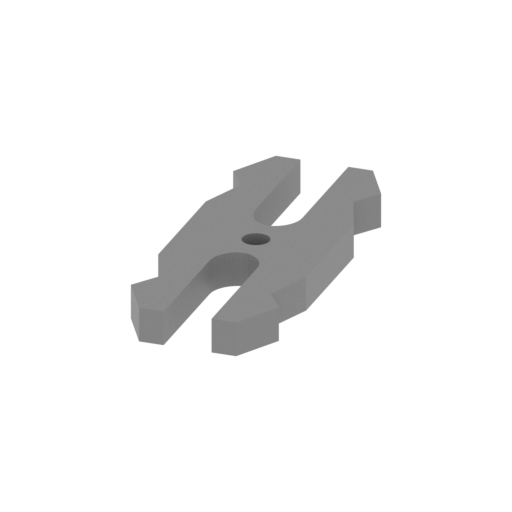 | 50_ge_lock_7S(x5)_FDM(repaired).stl 7.27 x 18.16 x 1.7 mm | 0.29 x 0.71 x 0.07 in | Size: 7.27 x 18.16 x 1.7 mm | 0.29 x 0.71 x 0.07 in | File size: 0.02 mb | Printing Time / Filament: 3 min / <1 m | ||
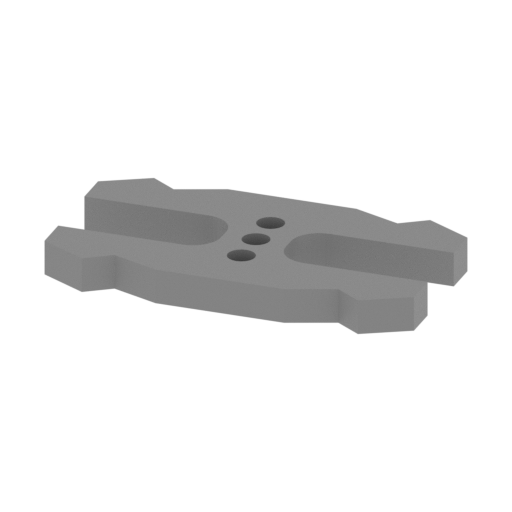 | 51_ge_lock_10H(x14)_FDM(repaired).stl 18.16 x 9.6 x 1.7 mm | 0.71 x 0.38 x 0.07 in | Size: 18.16 x 9.6 x 1.7 mm | 0.71 x 0.38 x 0.07 in | File size: 0.03 mb | Printing Time / Filament: 4 min / <1 m | ||
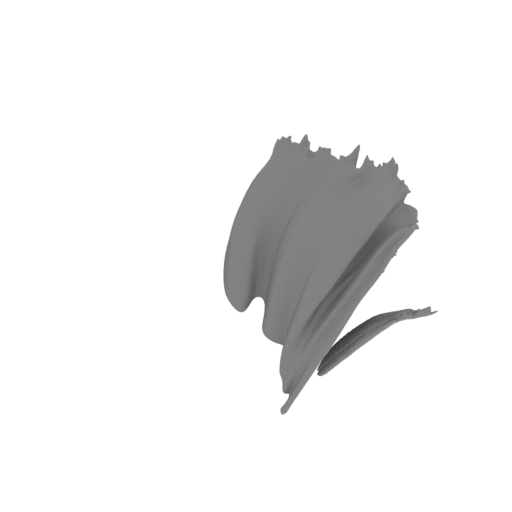 | 52_solid_cloak_FDM(repaired) (repaired).stl 331.85 x 182.66 x 231.61 mm | 13.06 x 7.19 x 9.12 in | Size: 331.85 x 182.66 x 231.61 mm | 13.06 x 7.19 x 9.12 in | File size: 71.22 mb | Printing Time / Filament: 285 h 23 min / 208 m | ||
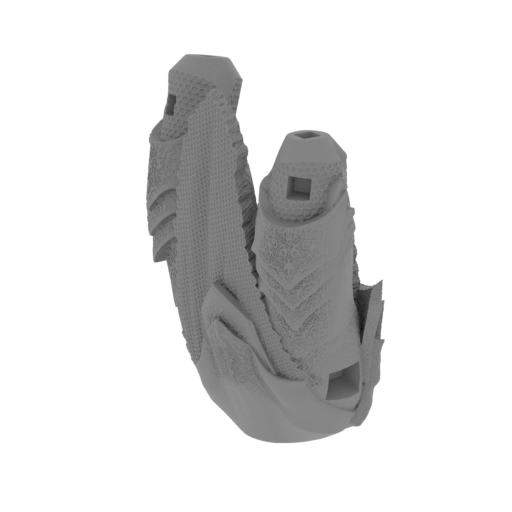 | 53_legs_knee_armor_FDM(repaired) (repaired).stl 78.02 x 71.2 x 115.2 mm | 3.07 x 2.8 x 4.54 in | Size: 78.02 x 71.2 x 115.2 mm | 3.07 x 2.8 x 4.54 in | File size: 68.56 mb | Printing Time / Filament: 22 h 24 min / 13 m | ||
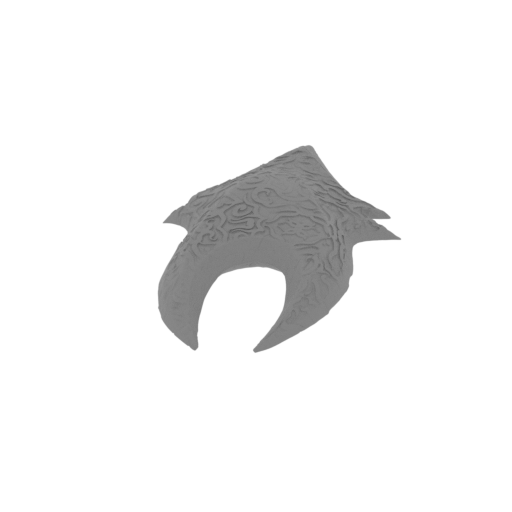 | 54_armor_knee_R_FDM(repaired) (repaired).stl 27.49 x 44.66 x 13.03 mm | 1.08 x 1.76 x 0.51 in | Size: 27.49 x 44.66 x 13.03 mm | 1.08 x 1.76 x 0.51 in | File size: 11.44 mb | Printing Time / Filament: 55 min / 1 m | ||
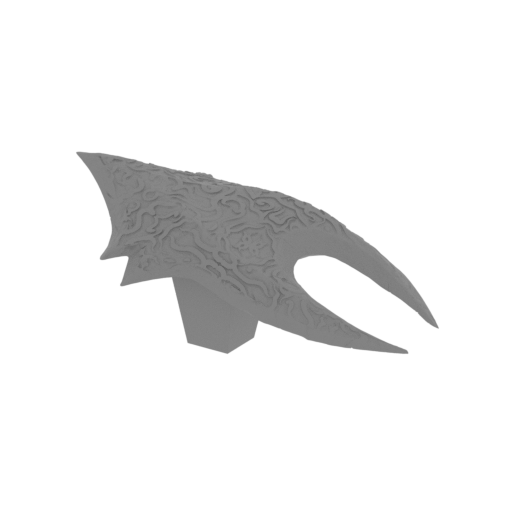 | 55_armor_knee_L_FDM(repaired) (repaired).stl 42.99 x 26.82 x 17.65 mm | 1.69 x 1.06 x 0.69 in | Size: 42.99 x 26.82 x 17.65 mm | 1.69 x 1.06 x 0.69 in | File size: 12.58 mb | Printing Time / Filament: 59 min / 1 m | ||
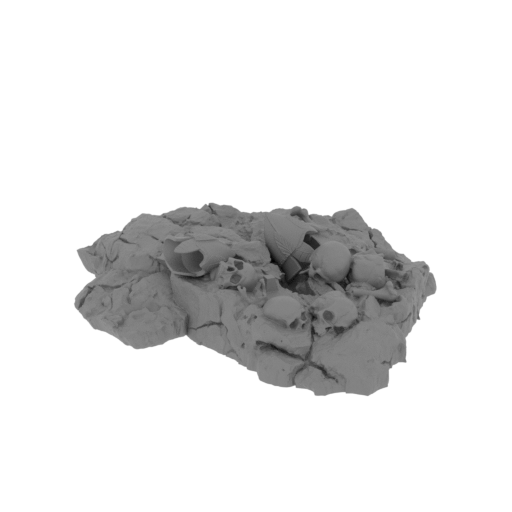 | 56_platform_solid_FDM(repaired).stl 270.19 x 268.02 x 68.12 mm | 10.64 x 10.55 x 2.68 in | Size: 270.19 x 268.02 x 68.12 mm | 10.64 x 10.55 x 2.68 in | File size: 56.14 mb | Printing Time / Filament: 115 h 46 min / 59 m | ||
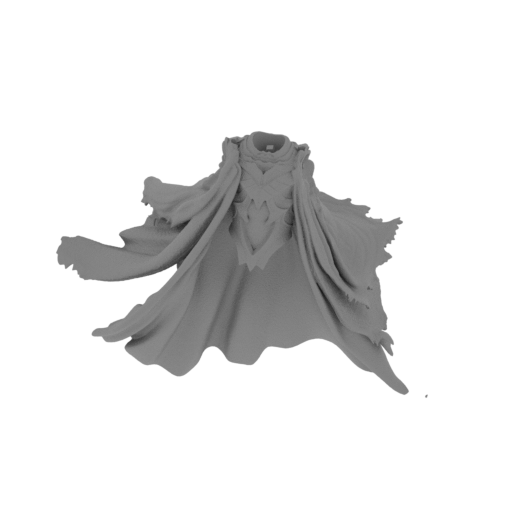 | 57_merged_body_with_full_cloak_FDM(repaired).stl 313.55 x 222.85 x 274.12 mm | 12.34 x 8.77 x 10.79 in | Size: 313.55 x 222.85 x 274.12 mm | 12.34 x 8.77 x 10.79 in | File size: 97.62 mb | Printing Time / Filament: 381 h 49 min / 267 m | ||
 | Keychain (repaired).stl 29.68 x 29.69 x 2.42 mm | 1.17 x 1.17 x 0.1 in | Size: 29.68 x 29.69 x 2.42 mm | 1.17 x 1.17 x 0.1 in | File size: 0.37 mb | Printing Time / Filament: 23 min / <1 m | ||
 | Tag (repaired).stl 150.15 x 18.16 x 4.59 mm | 5.91 x 0.71 x 0.18 in | Size: 150.15 x 18.16 x 4.59 mm | 5.91 x 0.71 x 0.18 in | File size: 1.78 mb | Printing Time / Filament: 1 h 18 min / 1 m | ||
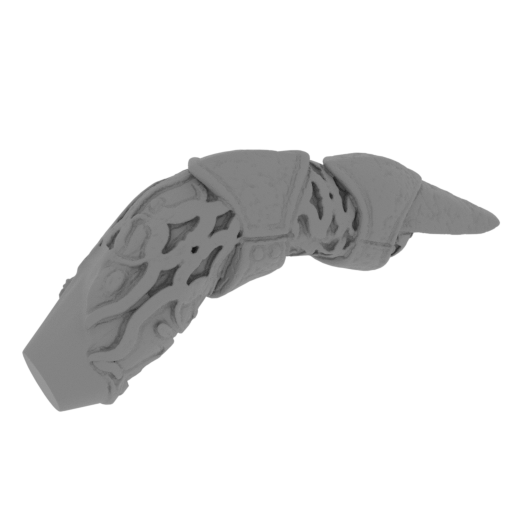 | 9_v2_3_finger_no_ring_FDM(repaired).stl 16.35 x 16.89 x 10.48 mm | 0.64 x 0.66 x 0.41 in | Size: 16.35 x 16.89 x 10.48 mm | 0.64 x 0.66 x 0.41 in | File size: 16.67 mb | Printing Time / Filament: 11 min / <1 m | ||
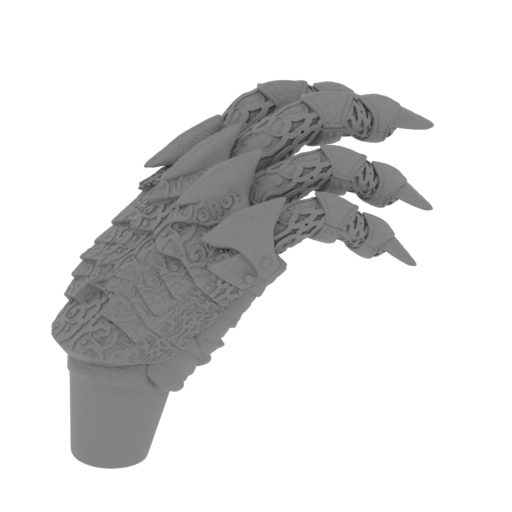 | 9_v3_hand_R_FDM(repaired).stl 35.71 x 40.56 x 34.16 mm | 1.41 x 1.6 x 1.34 in | Size: 35.71 x 40.56 x 34.16 mm | 1.41 x 1.6 x 1.34 in | File size: 26.77 mb | Printing Time / Filament: 2 h 29 min / 2 m | ||
3D model history
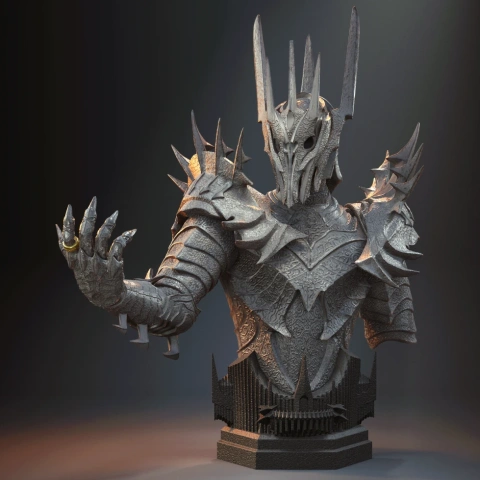
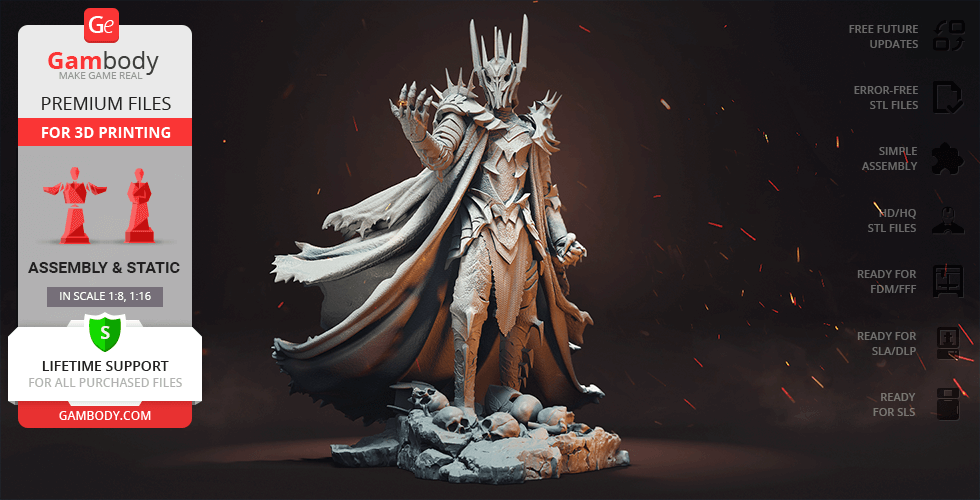
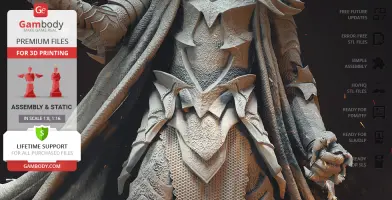
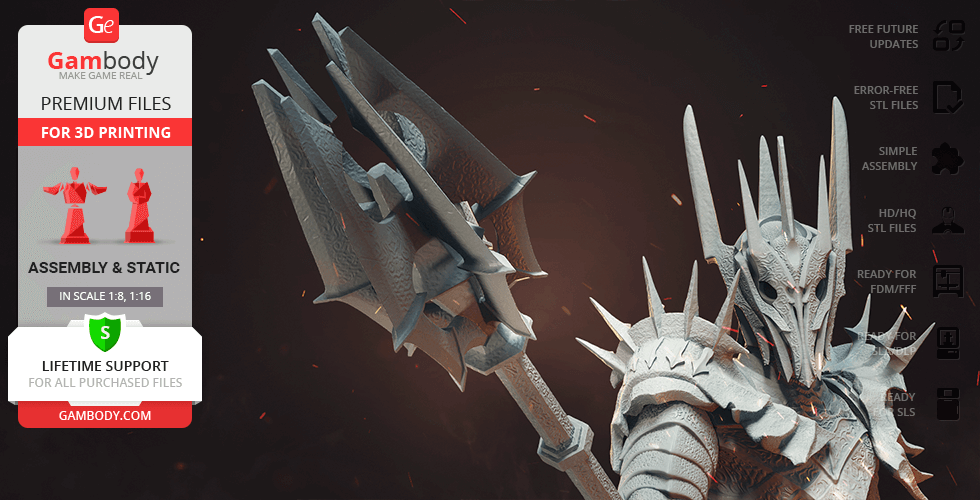
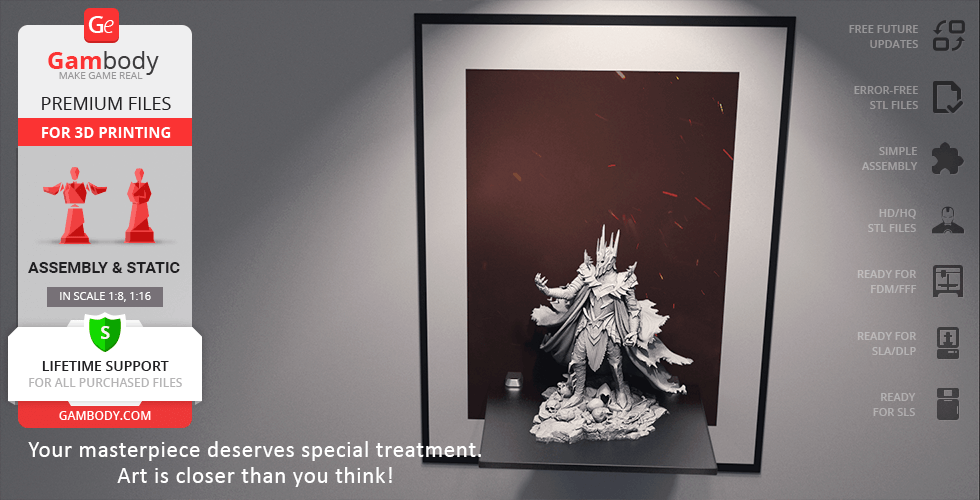
Sauron, the actual Lord of the Rings, is the main antagonist of J.R.R.Tolkien’s legendarium and the evil incarnate of the Middle-earth. The titular character only got a tiny portion of screen time but easily managed to inspire with awe all fans of the fantasy universe, including one of our contributing 3D artists. The incredible project took the author around 190 hours to complete and we are honoured to welcome the very Lord of the Rings to Gambody markerplace! The author of Sauron 3D model demonstrated painstaking attention to detail and unveiled the 3D printer model to meet the wishes of the most passionate fans of the franchise. The Dark Lord is depicted wearing his iconic suit of steel armour as if he’s just emerged on the battlefield where his forces are fighting the Last Alliance of Elves and Men. The mightiest of the Maiar has the horned helmet resting on his head and his pauldrons, cuisses and vambraces are covered with sharp spikes. There are even a fine mail and a skirt to add to the Master’s complex armour! Thanks to the effort of the 3D artist, Sauron 3D print can be assembled both cloaked in its giant tattered cape or without one. Last but definitely not least, are the interchangeable gauntlets of the Sauron 3D model that allow one to recreate the battle on the slopes of Mount Doom at its different stages. Your 3D printed Lord of the Rings model can be displayed either wielding his formidable 6-bladed mace or demonstrating the source of his power - the One Ring. The fragments of a fierce battle added to the model’s platform confirm the enthusiasm of the 3D artist. Not to mention the intricately detailed entwining of the intaglio decoration that winds around Sauron’s armour!
3D printing model features
Model-specific features:
- Can be assembled both cloaked in his giant tattered cape or without it, allowing for versatile display options;
- Features interchangeable gauntlets, allowing Sauron to be displayed either wielding his 6-bladed mace or demonstrating the source of his power - the One Ring;
- Spiky helm, gauntlets, pauldrons, individual spikes, mace, and cloak are provided as separate assembly parts for optimal printing;
- Comes with a thematic display platform featuring fragments of a fierce battle, resembling the slopes of Mount Doom.
Printing & assembly details:
- Provided as error-free STL files compatible with most 3D printers;
- Optimized part division minimizes support material and ensures smooth surface detail;
- The assembly parts in the FFF/FDM version come in the recommended print orientations for easy bed placement;
- Assembly manual in PDF and video formats is included for both FFF/FDM and DLP/SLA versions;
- The model is available in recommended scales of 1:8 for the FFF/FDM version and 1:16 for the DLP/SLA/SLS versions, based on the 2780 mm height of Sauron.
What will you get after purchase?
- 5 versions of Sauron STL files for FFF/FDM, DLP/SLA, DLP/SLA Eco, DLP/SLA Pre-supported, and SLS - files for each version are available for download after the purchase;
- STL files of high-poly Sauron 3D printer model consist of 128 parts;
- Sizes:
- FFF/FDM: 314 mm wide, 380 mm high, 343 mm deep;
- DLP/SLA + Eco, SLS: 157 mm wide, 190 mm high, 172 mm deep;
- Assembly Manual for FFF/FDM 1.0 and DLP/SLA 1.0 versions in PDF format;
- Detailed settings that we provide as a recommendation for Bambu Studio, Cura, Orca Slicer, PrusaSlicer, Simplify3D, and Slic3r for the best print;
- Full technical support from the Gambody Support Team.
Average customer rating (57 reviews)
4.6
Ratings breakdown
Click a star rating to filter reviews
Overall experience
Level of detail in the model
4.6
Model cut quality and assembly guide
4.6
Clarity and accuracy of the model page
4.6



 Verified purchase
 Level of detail in the model
4.7
Model cut quality and assembly guide
5
Clarity and accuracy of the model page
5
Verified purchase Level of detail in the model
5
Model cut quality and assembly guide
5
Clarity and accuracy of the model page
5
Verified purchase Level of detail in the model
5
Model cut quality and assembly guide
5
Clarity and accuracy of the model page
4
 This feedback is from a user who hasn't purchased this model
 Level of detail in the model
3
Model cut quality and assembly guide
3
Clarity and accuracy of the model page
3
 This feedback is from a user who hasn't purchased this model
 Level of detail in the model
5
Model cut quality and assembly guide
5
Clarity and accuracy of the model page
5
Verified purchase Level of detail in the model
5
Model cut quality and assembly guide
5
Clarity and accuracy of the model page
5
Verified purchase Level of detail in the model
5
Model cut quality and assembly guide
5
Clarity and accuracy of the model page
5
This feedback is from a user who hasn't purchased this model Level of detail in the model
4
Model cut quality and assembly guide
4
Clarity and accuracy of the model page
4
This feedback is from a user who hasn't purchased this model Level of detail in the model
5
Model cut quality and assembly guide
5
Clarity and accuracy of the model page
5
Verified purchase Level of detail in the model
3
Model cut quality and assembly guide
3
Clarity and accuracy of the model page
3

 This feedback is from a user who hasn't purchased this model
 Level of detail in the model
5
Model cut quality and assembly guide
5
Clarity and accuracy of the model page
5
This feedback is from a user who hasn't purchased this model Level of detail in the model
4
Model cut quality and assembly guide
4
Clarity and accuracy of the model page
4
This feedback is from a user who hasn't purchased this model Level of detail in the model
5
Model cut quality and assembly guide
5
Clarity and accuracy of the model page
5
Verified purchase Level of detail in the model
5
Model cut quality and assembly guide
5
Clarity and accuracy of the model page
5
Verified purchase Level of detail in the model
2
Model cut quality and assembly guide
2
Clarity and accuracy of the model page
2
Verified purchase Level of detail in the model
5
Model cut quality and assembly guide
5
Clarity and accuracy of the model page
5
Verified purchase Level of detail in the model
4
Model cut quality and assembly guide
4
Clarity and accuracy of the model page
4
Verified purchase Level of detail in the model
5
Model cut quality and assembly guide
5
Clarity and accuracy of the model page
5
Verified purchase Level of detail in the model
5
Model cut quality and assembly guide
5
Clarity and accuracy of the model page
5

 This feedback is from a user who hasn't purchased this model
 Level of detail in the model
5
Model cut quality and assembly guide
5
Clarity and accuracy of the model page
5
Below you'll find detailed slicing settings for Bambu Studio 2.0+, Orca Slicer 2.0+, UltiMaker Cura 5.0+, PrusaSlicer 2.0+, Slic3r 1.3+, Simplify3D 5.0+ to help you get the best results when printing this model. These settings are optimized specifically for this 3D model, but please note they may need slight adjustments depending on your printer or filament. When in doubt, refer to your printer's user manual.
To avoid printing issues and achieve the best quality, we highly recommend applying the following settings:
 Bambu Studio 2.0+
 For better quality use 0.12 mm layer height, for fast printing use 0.2 mm layer height. For pins and the Ge connectors, use 0.2 layer height.
120-150% of your Layer Height
But you can paint the seam if you want.
You have to calibrate this parameter
You have to calibrate this parameter
You have to calibrate this parameter
For pins and power elements of the structure, such as the vehicle frame, use 3 loop
Disabled for vehicles and enabled for characters
For 0,2 Layer Height
The parameters in this tab vary greatly, it all depends on the quality of your printer. For example, if you have a classic Ender3, stick to the minimum parameters, but if you have a newer printer, for example Anycubic cobra 3 v2, you can select the maximum recommended values
Settings for advanced users, change these parameters only if you have sufficient 3D printing expertise
Enable this parameter if your model requires supports
We also recommend placing and removing supports manually in some places using special button
1-2 loops for more thick support
Top Z distance = 1-1.3 layer Height. If the supports are hard to remove, try increasing this setting by 0.1-0,4 mm
Bottom Z distance = 1-1.3 layer Height. If the supports are hard to remove, try increasing this setting by 0.1-0,4 mm
You have to calibrate this parameter which one is better for your filament
Increase this parameter if the supports are hard to remove from walls
For PLA and PETG filament types
5-8 mm is optional for small prints that have bad adhesion to the build plate
You have to calibrate this parameter
Read the description on your filament roll
Read the description on your filament roll and increase this parameter for fast printers
Read the description on your filament roll and increase this parameter for fast printers
 Orca Slicer 2.0+
 For better quality use 0.12 mm layer height, for fast printing use 0.2 mm layer height. For pins and the Ge connectors, use 0.2 layer height.
120-150% of your Layer Height
But you can paint the seam if you want.
0.01-0.05 You have to calibrate this parameter
0.01-0.05 You have to calibrate this parameter
0.1-0.2 You have to calibrate this parameter
For pins and power elements of the structure, such as the vehicle frame, use 3 loop
Disabled for vehicles and ships, enabled for characters
For 0,2 Layer Height
For 0,2 Layer Height
The parameters in this tab vary greatly, it all depends on the quality of your printer. For example, if you have a classic Ender3, stick to the minimum parameters, but if you have a newer printer, for example, Anycubic Kobra 3 Or Bambulab A1, you can select the maximum recommended values.
Settings for advanced users, change these parameters only if you have sufficient 3D printing expertise
Enable this parameter if your model requires supports
We also recommend placing and removing supports manually in some places using special button
Top Z distance = 1-1.3 layer Height. If the supports are hard to remove, try increasing this setting by 0.1-0,4 mm
Bottom Z distance = 1-1.3 layer Height. If the supports are hard to remove, try increasing this setting by 0.1-0,4 mm
Increase this parameter if the supports are hard to remove from walls
For PLA and PETG filament types
5-8 mm is optional for small prints that have bad adhesion to the build plate
Read the description on your filament roll
Read the description on your filament roll and increase this parameter for fast printers
You have to calibrate this parameter
Read the description on your filament roll and increase this parameter for fast printers
Read the description on your filament roll
This field is filled in according to your printer specifications when you add it to the slicer.
You can add custom G-code here for the start and end of the print. However, be careful - this is for advanced users only!
You have to calibrate your printer using Ge retraction test models
Retraction Length: For direct-drive setups use 0.5 mm to 2.5 mm; for Bowden extruders use 5 to 7 mm
This is how fast the filament is pulled back—40-60 mm/s for direct drive and 30-50 mm/s for Bowden setups.
You have to calibrate this parameter: Reduce it until the printer starts to hit the parts with the nozzle during printing, then increase it by 0.2.
 UltiMaker Cura 5.0+
 For better quality use 0.12 mm layer height, for fast printing use 0.2 mm layer height. For pins and the Ge connectors, use 0.2 layer height.
120-150% of your Layer Height
To increase the strength of the print parts, use wall line count: 3
For pins and connectors use 50% Infill
These parameters are for standard PLA plastic. If you are using a different type of plastic, check the printing temperature recommended by the manufacturer. Also, read the description on your filament spool. For fast printers, add +30 °C to the current parameters.
The parameters in this tab vary greatly, it all depends on the quality of your printer. For example, if you have a classic Ender3, stick to the minimum parameters, but if you have a newer printer, for example Anycubic cobra 3 v3, you can select the maximum recommended values
Settings for advanced users, change these parameters only if you have sufficient 3D printing expertise.
You need to calibrate this parameter using Gambody test models. These values are average values for a Direct Drive extruder; for a Bowden extruder, the values should be increased.
You need to calibrate this parameter using Gambody test models. These values are average values for a Direct Drive extruder; for a Bowden extruder, the values should be increased.
Use this value other than 0 if your nozzle catches on the internal infill during travel moves. Try to keep this value as low as possible in height.
Use normal supports to support large, straight surfaces (most mechanical or technical parts).
You have to calibrate this parameter according to the capabilities of your printer and your filament, using a Gambody test models.
Use 1 instead of 0 if your supports are thin and tall. They will be harder to remove, but much stronger.
Top Z distance = 1-1.3 layer Height. If the supports are hard to remove, try increasing this setting by 0.1-0,4 mm
Increase this parameter if the supports are hard to remove from walls
Use tree supports to support complex objects, such as characters.
You have to calibrate this parameter according to the capabilities of your printer and your filament, using a Gambody test models.
Top Z distance = 1-1.3 layer Height. If the supports are hard to remove, try increasing this setting by 0.1-0,4 mm
Increase this parameter if the supports are hard to remove from walls
Use a skirt for all parts when printing on outdated printers.
Use a brim when printing thin but tall parts, as well as parts with a small bed adhesion area.
 PrusaSlicer 2.0+
 For better quality use 0.12 mm layer height, for fast printing use 0.2 mm layer height. For pins and the Ge connectors, use 0.2 layer height.
120-150% of your Layer Height
for 0.2 Layer Height
But you can paint the seam if you want.
(for PLA and PETG)
(5-8 mm is optional for small prints that have bad adhesion to the build plate)
Enable this parameter if your model requires supports
(45-50 degree)You have to calibrate this parameter according to the capabilities of your printer
and your filament, using a Gambody test models.
Top contact Z distance = 1-1.3 layer Height. If the supports are hard to remove, try
increasing this setting by 0.1-0,4 mm
Top contact Z distance = 1-1.3 layer Height. If the supports are hard to remove, try
increasing this setting by 0.1-0,4 mm
Increase this parameter if the supports are hard to remove from walls
The parameters in this tab vary greatly, it all depends on the quality of your printer. For example, if you have a classic Ender3, stick to the minimum parameters, but if you have a newer printer, for example Anycubic cobra 3 v3, you can select the maximum recommended values
Settings for advanced users, change these parameters only if you have sufficient 3D printing expertise. Use the minimum value for outdated printers without acceleration calibration, and the maximum value for modern printers if you need it.
These settings only work for 3D printers with multiple extruders
You can try setting all parameters in this section, except the First layer, to values between 0.75% of your nozzle diameter and 1.25% of your nozzle diameter. Adjusting them will help you work out the optimal parameters for the best quality for your print. As for the First layer, you can set it to 150% of the diameter of your nozzle for better adhesion to the build plate (for a nozzle with a diameter of 0.4 mm, the First layer extrusion width can be from 0.3 mm to 0.5 mm)
For better printing quality you have to calibrate this parameter using Gambody test model.
Check your filament manufacturer's temperature recommendations on the spool.
Cooling parameters depends on the material you use for printing.
*for PLA
 Slic3r 1.3+
 For better quality use 0.12 mm layer height, for fast printing use 0.2 mm layer height. For pins and the Ge connectors, use 0.2 layer height.
120-150% of your Layer Height
For 0.12 Layer Height
For 0.12 Layer Height
For pins and connectors use 50% Infill
Use skirt for outdated 3d printers
(5-8 mm is optional for small prints that have bad adhesion to the build plate)
Enable this parameter if your model requires supports
(45-60 degree)You have to calibrate this parameter according to the capabilities of your printer and your filament, using a Gambody test models
Contact Z distance = 1-1.3 layer Height. If the supports are hard to remove, try increasing this setting by 0.1-0,4 mm
The parameters in this tab vary greatly, it all depends on the quality of your printer. For example, if you have a classic Ender3, stick to the minimum parameters, but if you have a newer printer, for example Anycubic cobra 3 v3, you can select the maximum recommended values
Settings for advanced users, change these parameters only if you have sufficient 3D printing expertise. Use the minimum value for outdated printers without acceleration calibration, and the maximum value for modern printers if you need it.
You have to calibrate this parameter from 0.9 to 1.1 according to the capabilities of your printer and your filament, using a Gambody test models.
Check your filament manufacturer's temperature recommendations on the spool.
Cooling parameters depends on the material you use for printing.
Calibrate this value if you need to reduce or improve the adhesion between the plastic and the heat bed
Your current nozzle diameter
You need to calibrate this parameter using Gambody test models. These values are average values for a Direct Drive extruder; for a Bowden extruder, the values should be increased.
 Simplify3D 5.0+
 Your current nozzle diameter
You have to calibrate this parameter using Gambody test models.
You need to calibrate this parameter using Gambody test models. These values are average values for a Direct Drive extruder; for a Bowden extruder, the values should be increased.
For better quality use 0.12 mm layer height, for fast printing use 0.2 mm layer height. For pins and the Ge connectors, use 0.2 layer height.
For 0,2 Layer Height
For 0,2 Layer Height
To increase the strength of the print parts, use Outline Perimeters: 3
You can enable this parameter to print rounded or spherical models, as well as character models.
Use this option only if your parts are too tight. but better calibrate your printer extrusion
Use this option only if your parts are too tight. but better calibrate your printer extrusion
Use 2 and more if you want to create skirt instead brim
1-2 for skirt and 10-20 for brim
Use for wipe nozzle if you need
Use For ABS filament
For pins and connectors use 50% Infill
Top Z distance = 1-1.3 layer Height. If the supports are hard to remove, try increasing this setting by 0.1-0,4 mm
Calibrate your filament and detect optimal temperature for it
Average temperature for PLA filament
The parameters in this tab vary greatly, it all depends on the quality of your printer. For example, if you have a classic Ender3, stick to the minimum parameters, but if you have a newer printer, for example Anycubic cobra 3 v3, you can select the maximum recommended values
Settings for advanced users, change these parameters only if you have sufficient 3D printing expertise.
DLP/SLA
STL files are pre-supported, hollowed out, and have drain holes where needed;
Can be displayed wielding the mace or holding up the One Ring, either cloaked in a cape or without one;
Comes with a platform resembling the battle scene on the slopes of Mount Doom;
The assembly parts are connected using specially designed integrated connectors that fit securely into the corresponding slots. Optionally, for added strength and rigidity, the static assembly joints can be glued together;
SLS
Contains 6 parts: Sauron wielding the mace or holding up the One Ring, either cloaked in a cape or without one, with a separate platform part;
The assembly parts are connected using specially designed integrated connectors that fit securely into the corresponding slots. Optionally, for added strength and rigidity, the static assembly joints can be glued together;
DLP/SLA
Contains some hollowed out parts to save resin;
Can be displayed wielding the mace or holding up the One Ring, either cloaked in a cape or without one;
Comes with a platform resembling the battle scene on the slopes of Mount Doom;
The assembly parts are connected using specially designed integrated connectors that fit securely into the corresponding slots. Optionally, for added strength and rigidity, the static assembly joints can be glued together;
DLP/SLA
Can be displayed wielding the mace or holding up the One Ring, either cloaked in a cape or without one;
Comes with a platform resembling the battle scene on the slopes of Mount Doom;
The assembly parts are connected using specially designed integrated connectors that fit securely into the corresponding slots. Optionally, for added strength and rigidity, the static assembly joints can be glued together;
FFF/FDM
Can be displayed wielding the mace or holding up the One Ring, either cloaked in a cape or without one;
Comes with a platform resembling the battle scene on the slopes of Mount Doom;
The assembly parts are connected using specially designed integrated connectors that fit securely into the corresponding slots. Some model parts use separate connectors (part "50_ge_lock_7S(x5)", requires 5 copies;
part "51_ge_lock_10H(x14)", requires 14 copies);