Community (fb)

 es
es  ua
ua 





Files
3D model format
Stereolithography (.stl)
Total files

Slicer settings
not available
Mesh error check
Netfabb
Support
Lifetime support from Gambody team
Update requests
Available to verified buyers
Model complexity
Advanced: may require tuning print settings or support placement, plus precise fitting, gluing, or sanding.
Model versions
FFF/FDM
Assembly method
Connectors
Features
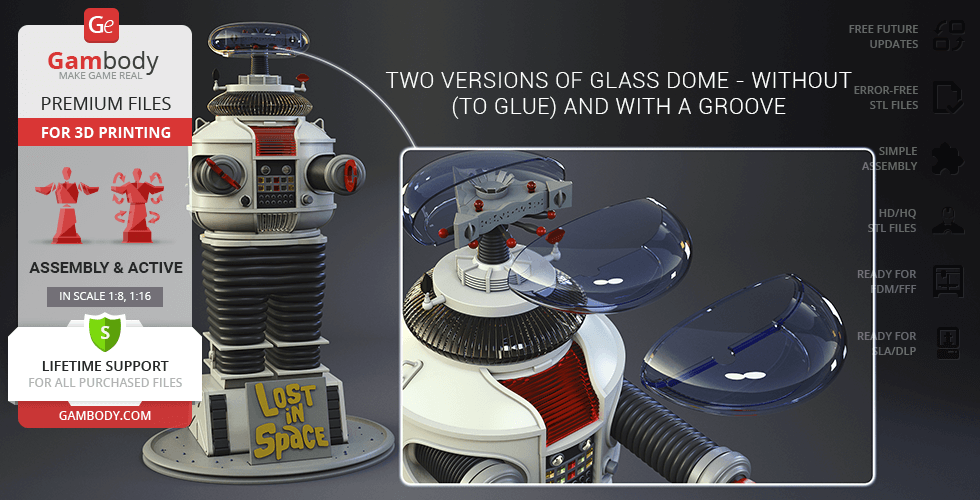
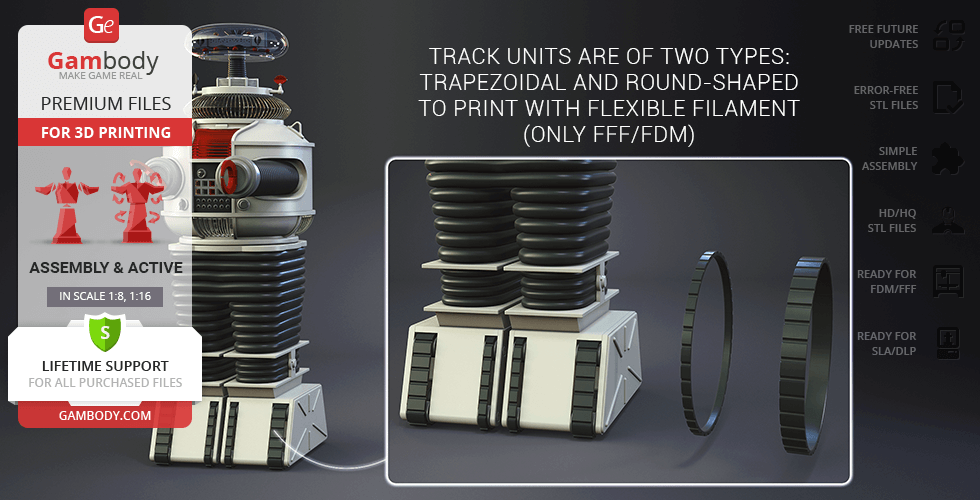
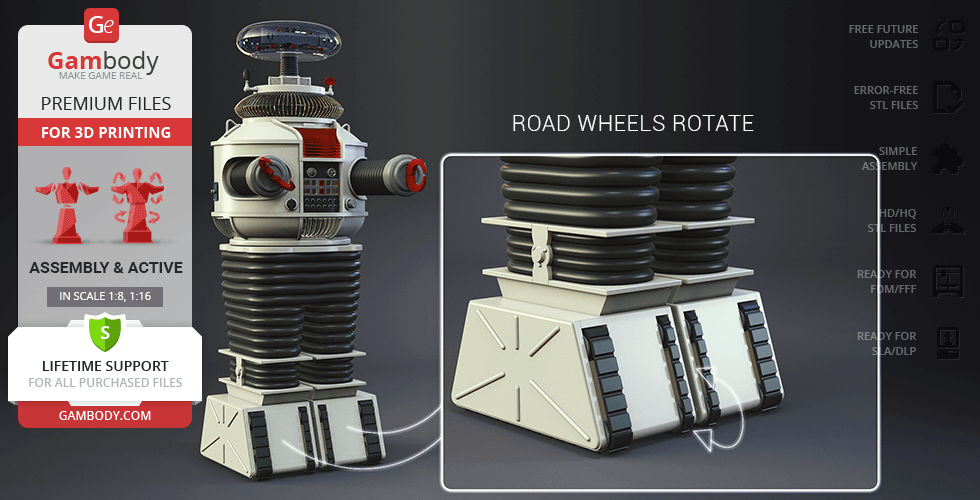
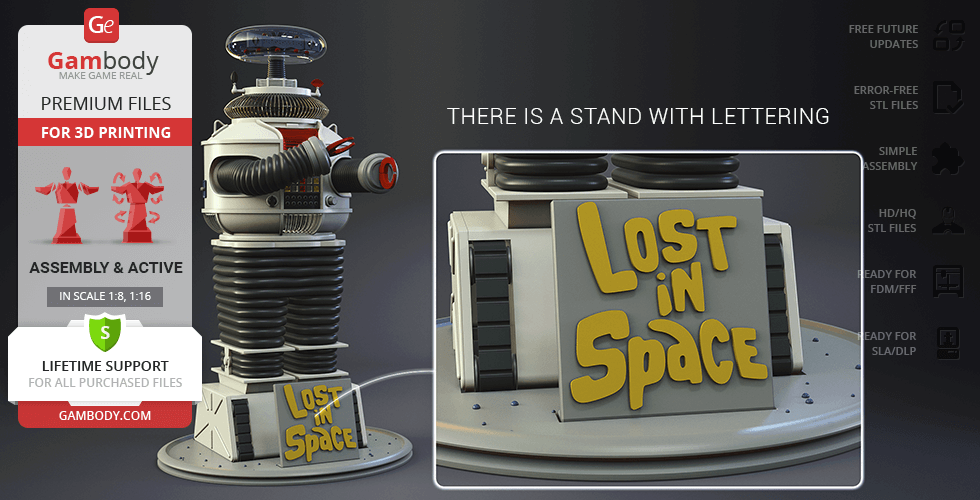
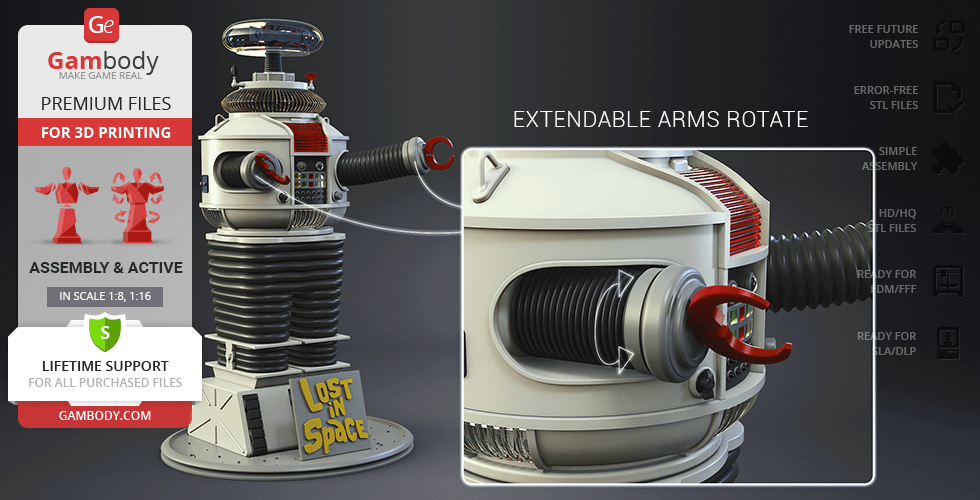
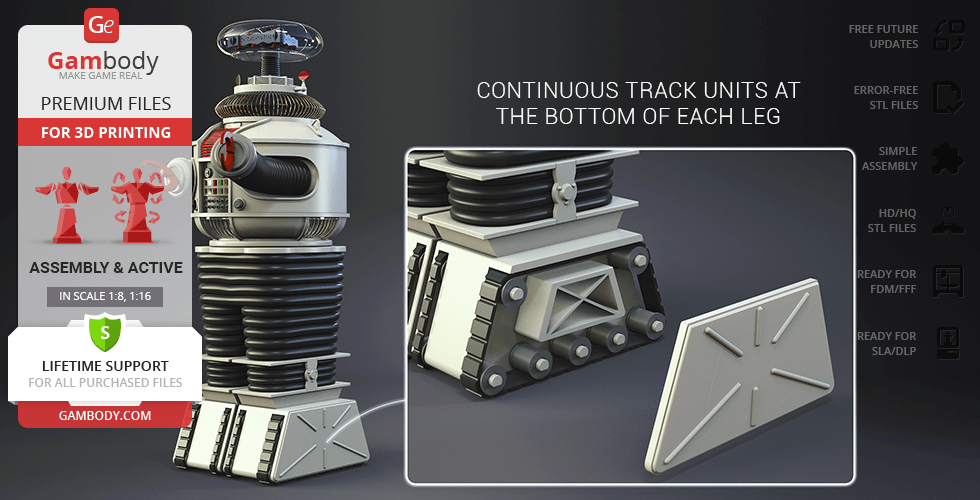
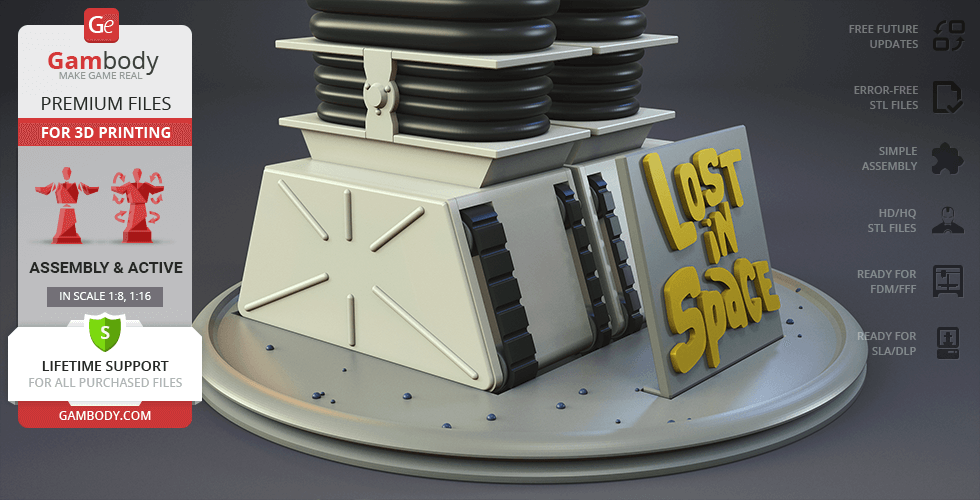
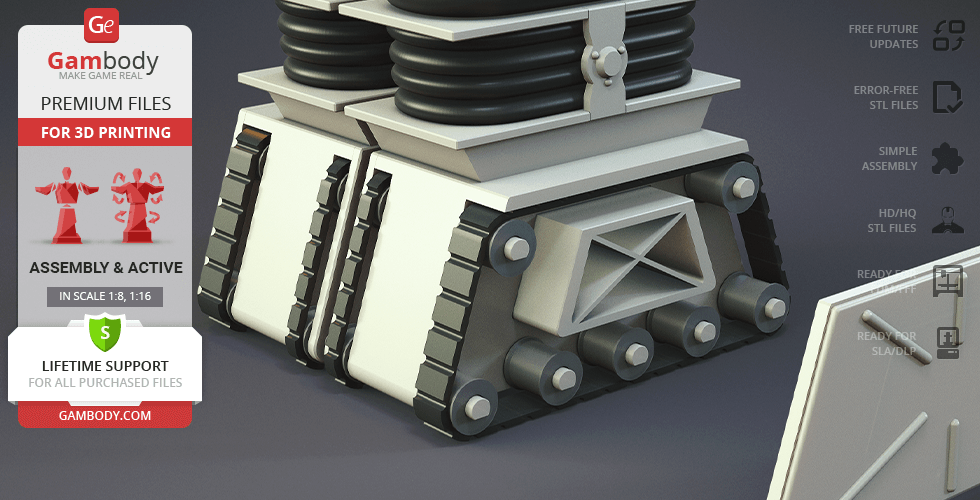
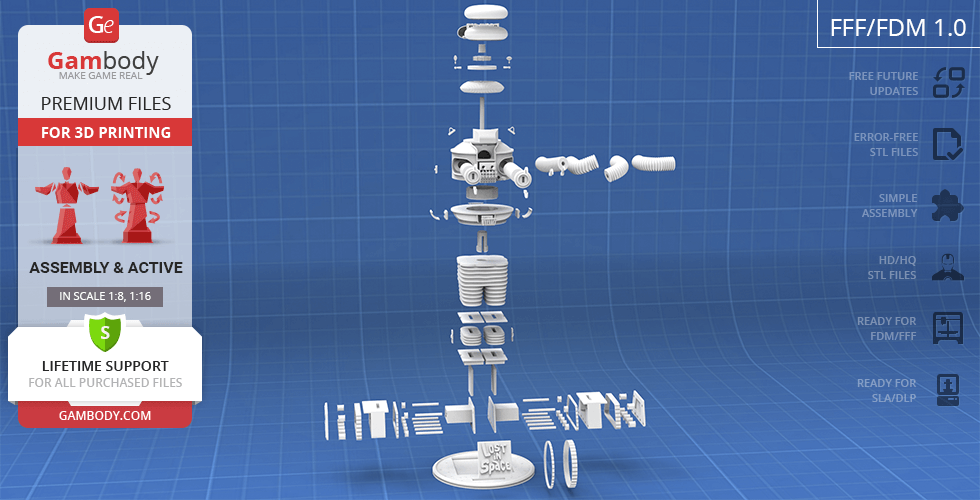
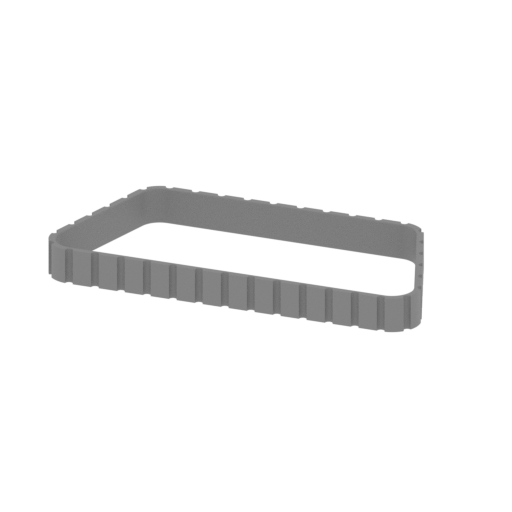
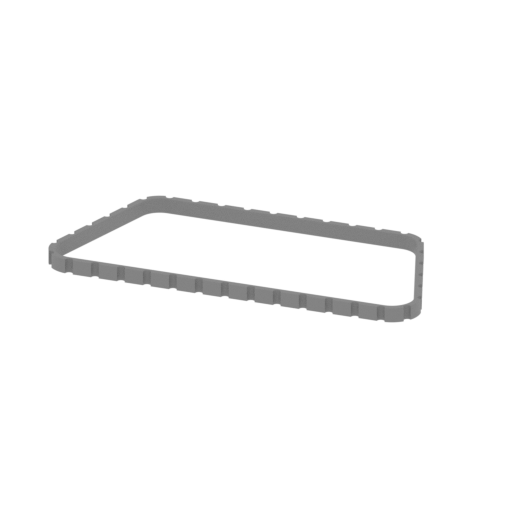
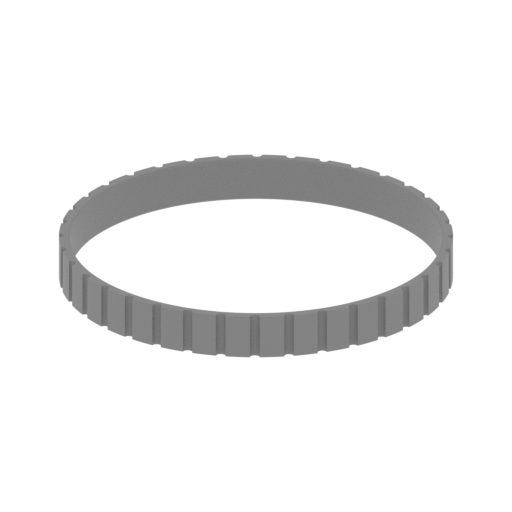
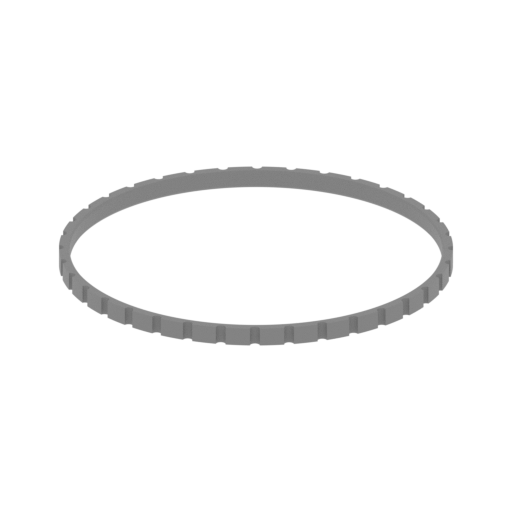
Alternative extendable arms; Extendable arms rotate; Three variants of mechanical claws; Two versions of glass dome: with and without a groove for glueing; Track units are of two types: trapezoidal and round-shaped to print with a flexible filament; Continuous track units at the bottom of each leg; Road wheels rotate; Stand with lettering; Tunnels for LED wiring; The assembly parts are connected using specially designed integrated connectors that fit securely into the corresponding slots.
DLP/SLA
Eco parts
Assembly method
Connectors, Glue
Features
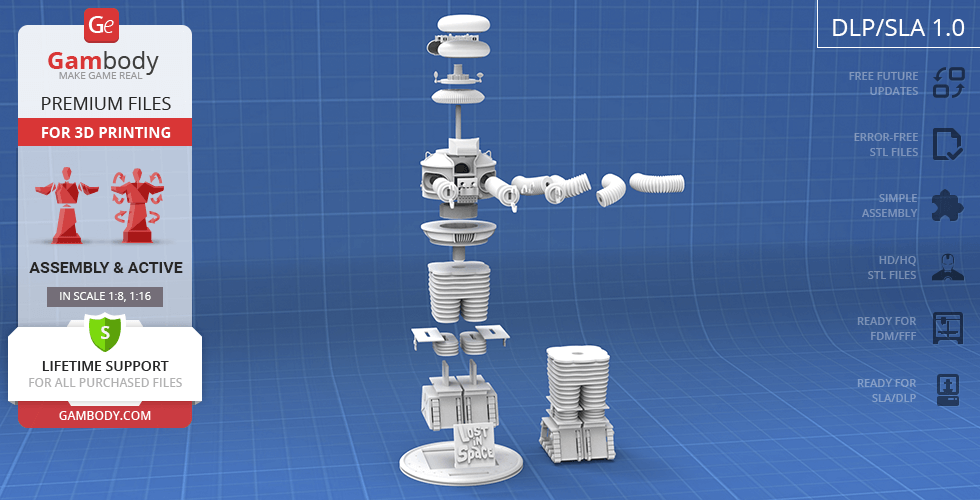
Alternative extendable arms; Extendable arms rotate; Three variants of mechanical claws; Two versions of glass dome: with and without a groove for glueing; Continuous track units at the bottom of each leg; Road wheels rotate; Stand with lettering; Tunnels for LED wiring; The assembly parts are connected using specially designed integrated connectors that fit securely into the corresponding slots.
Additional details
Part of diorama
No
Special pack included
No
You will get instant access to the STL files of The Robot B-9 3D Printer Files | Assembly + Action after completing your purchase. Simply add the model to your cart and check out using PayPal, credit or debit card, Apple Pay, Google Pay, Alipay, or other available payment methods.
Watch the assembly video for The Robot B-9 3D Printer Files | Assembly + Action, and explore more tutorials, behind-the-scenes content, 3D printing timelapses, and painting guides on the official Gambody YouTube channel.
This 3D model of The Robot Model B-9 consists of files in StereoLithography (.Stl) format that is optimized for 3D printing.
Before printing the files, we strongly recommend reading the PRINTING DETAILS section.
WHAT WILL YOU GET AFTER PURCHASE?
- 2 versions of The Robot Lost in Space STL files for FFF/FDM and DLP/SLA - files for all versions are available for download after the purchase;
- STL files of high-poly The Robot Lost in Space Model for 3D printing consist of 111 files;
- Sizes for:
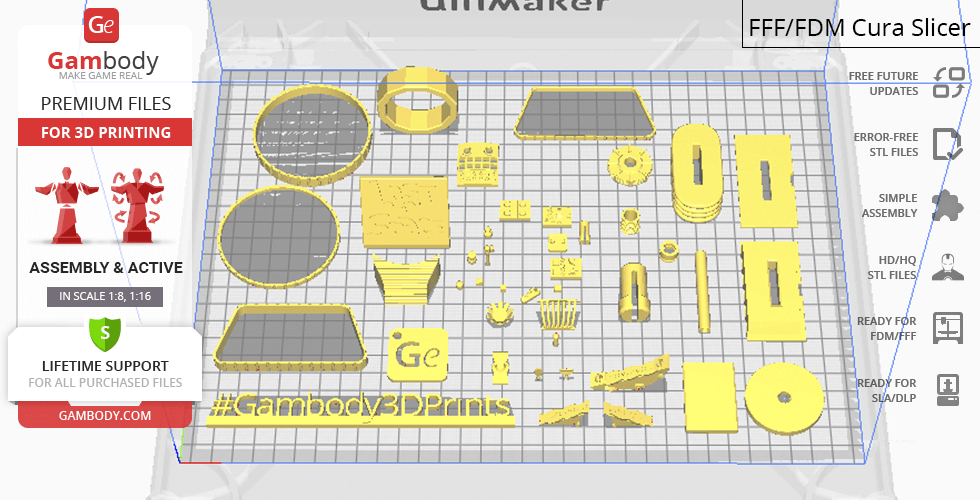
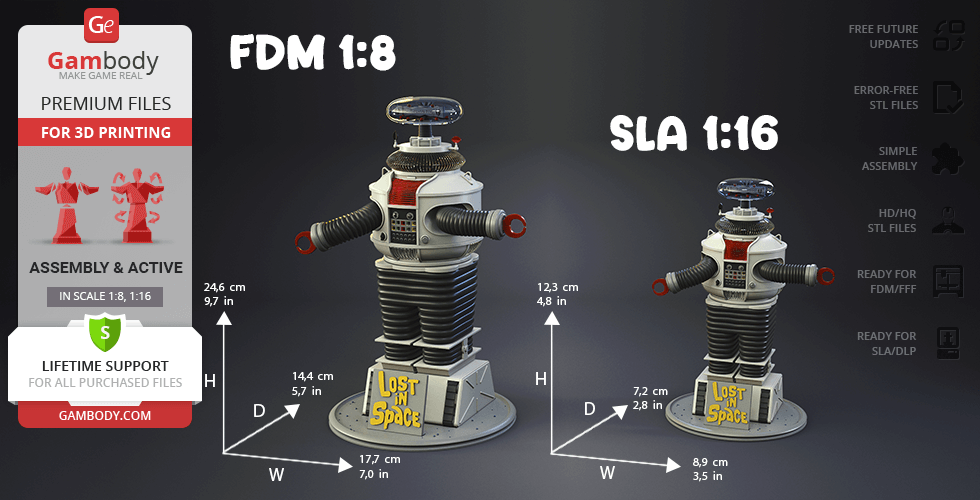
- FFF/FDM: 246 mm tall, 177 mm wide, 144 mm deep;
- DLP/SLA: 123 mm tall, 89 mm wide, 72 mm deep;
- Assembly Manual for FFF/FDM 1.0 and DLP/SLA 1.0 versions in PDF and video formats;
- Detailed settings that we provide as a recommendation for Cura, Simplify3D, Slic3r and PrusaSlicer for the best print;
- Full technical support from the Gambody Support Team.
Detailed information about this 3D printing model is available in the DESCRIPTION section.
Before printing, take a look at Printing Details for recommended settings and tips to achieve better results.
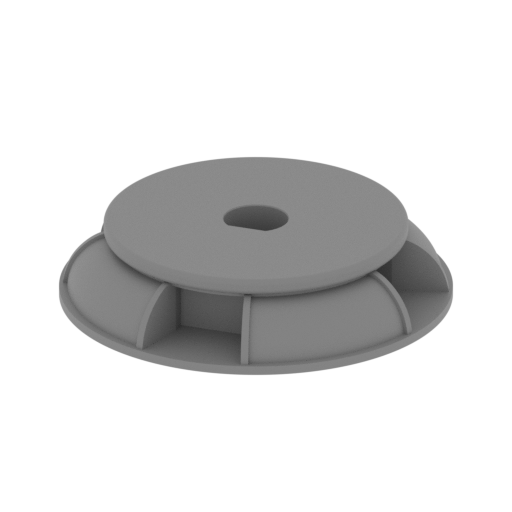
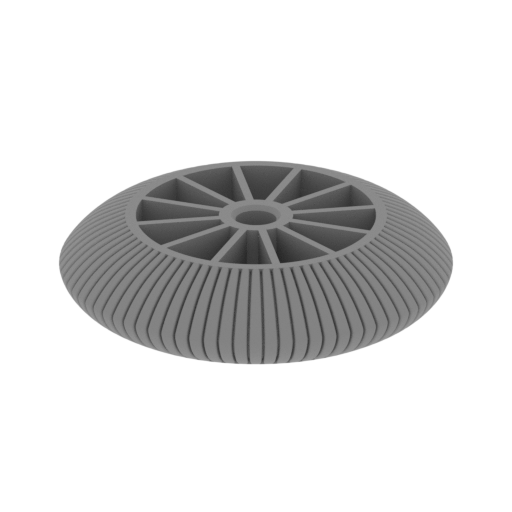
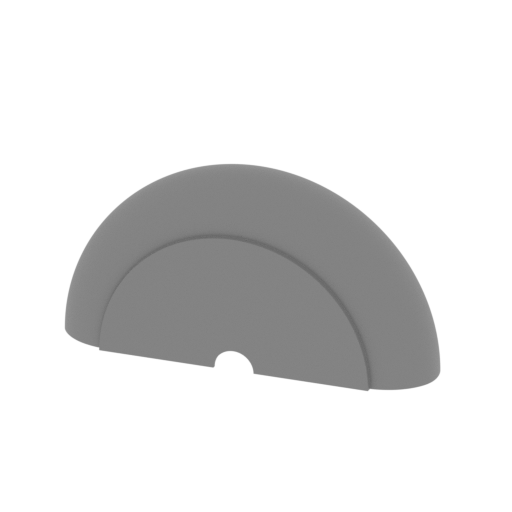
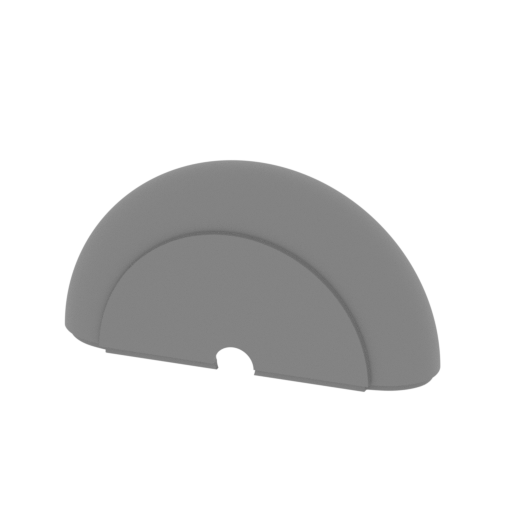
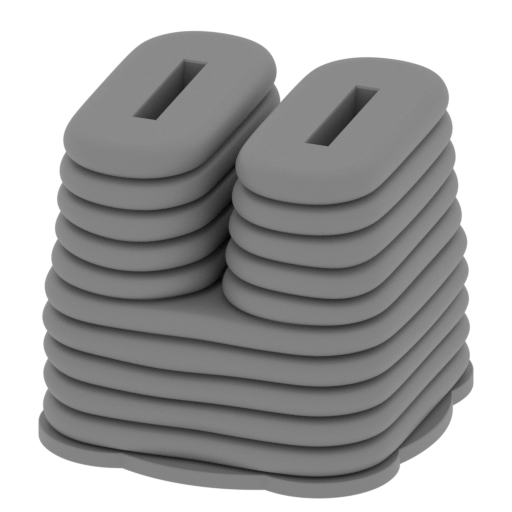
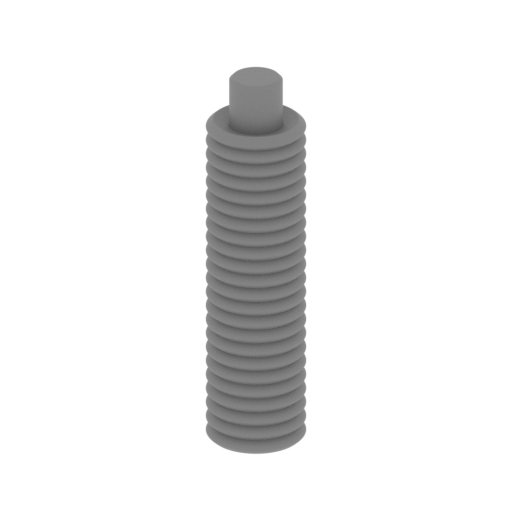
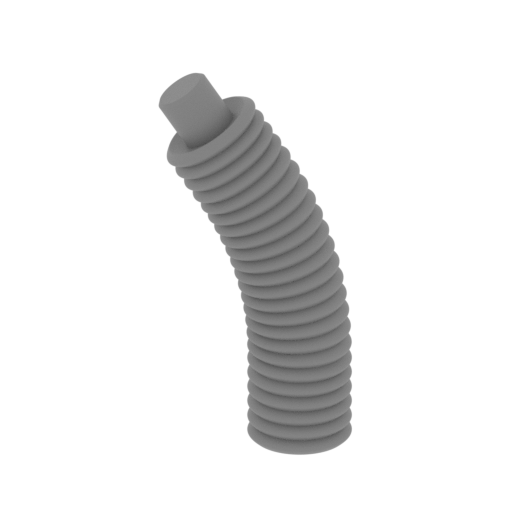
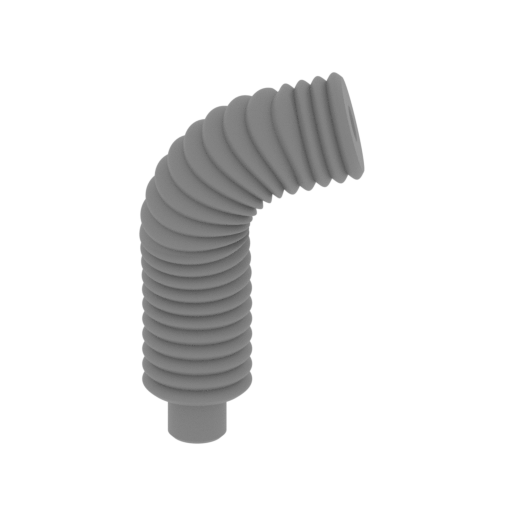
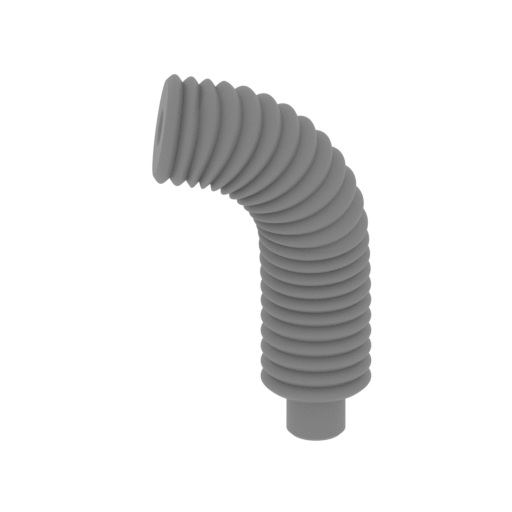
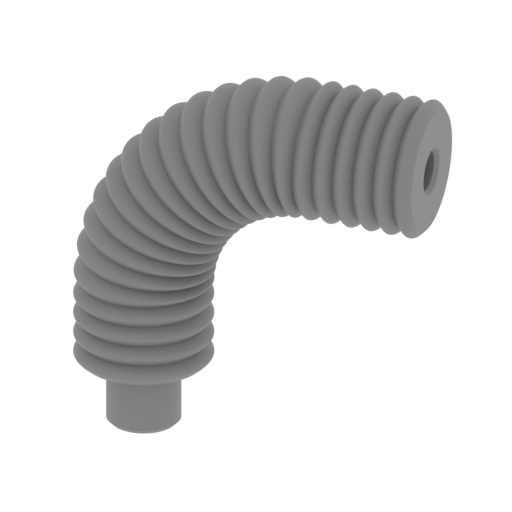
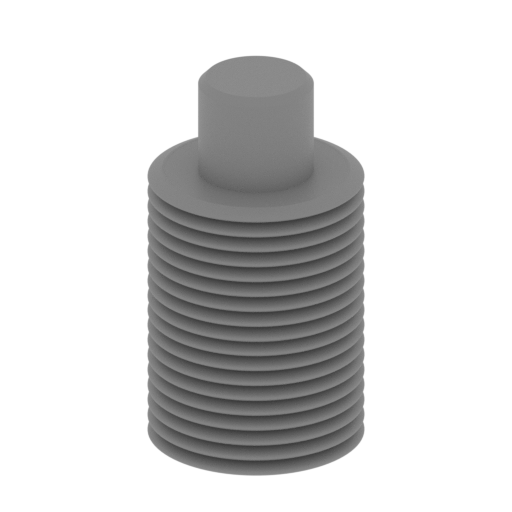
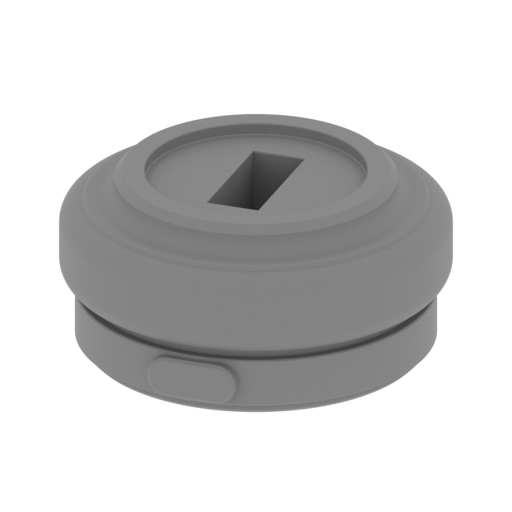
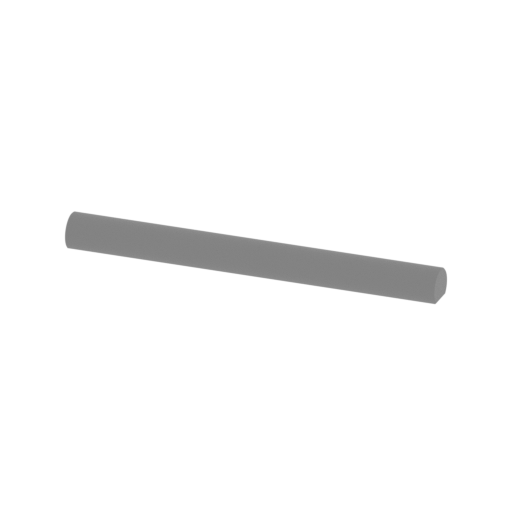
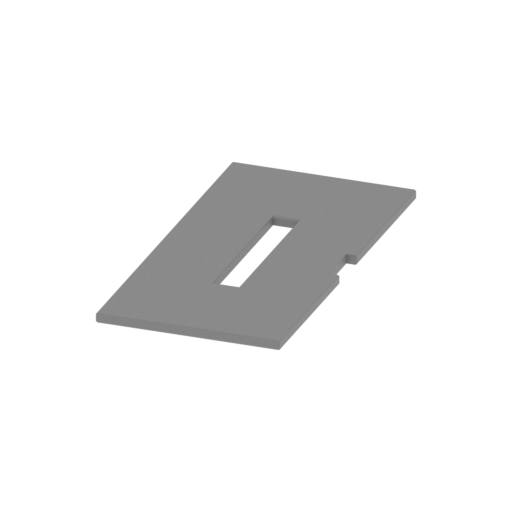
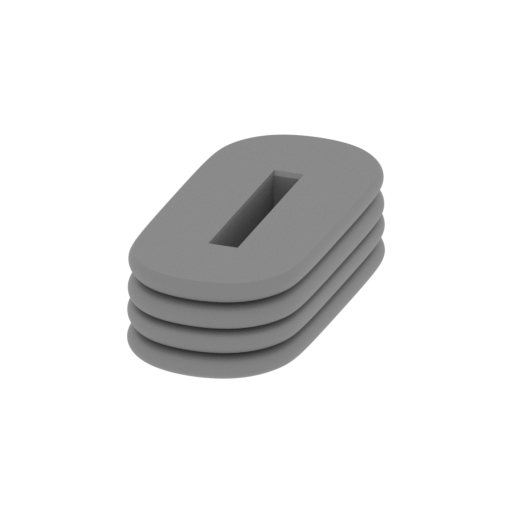
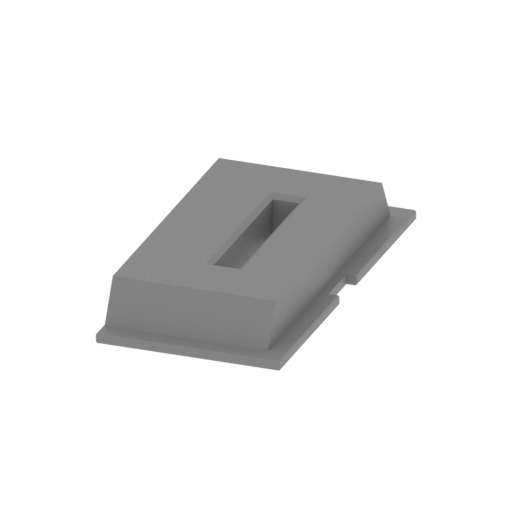
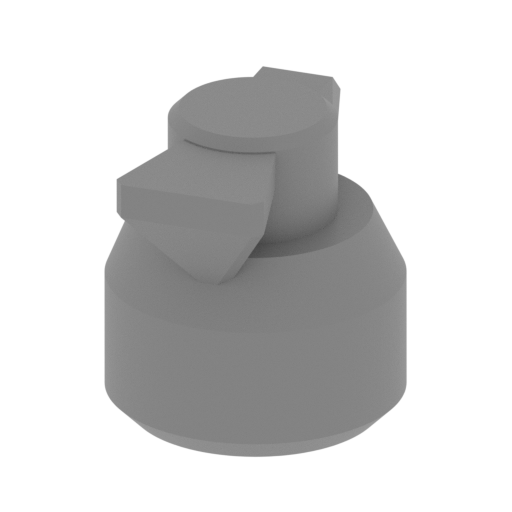
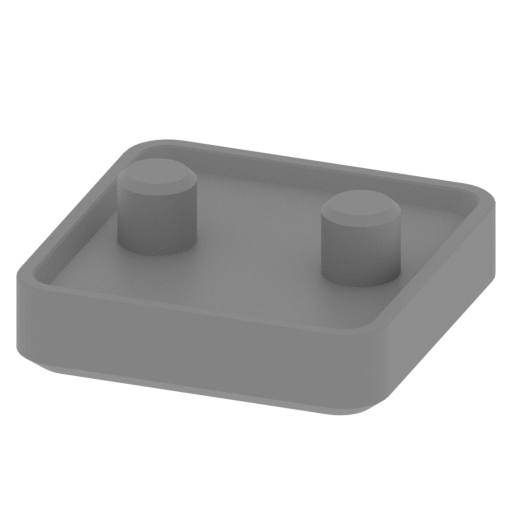
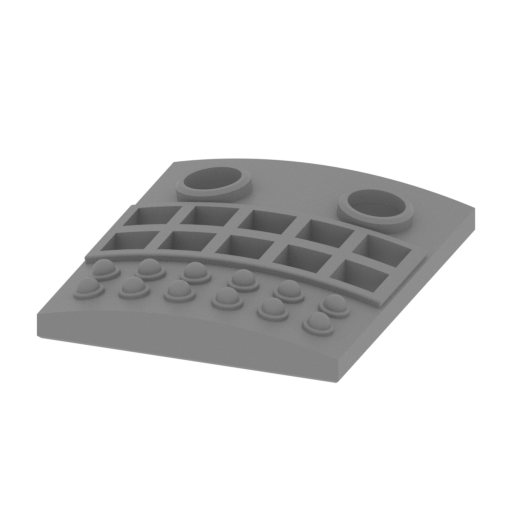
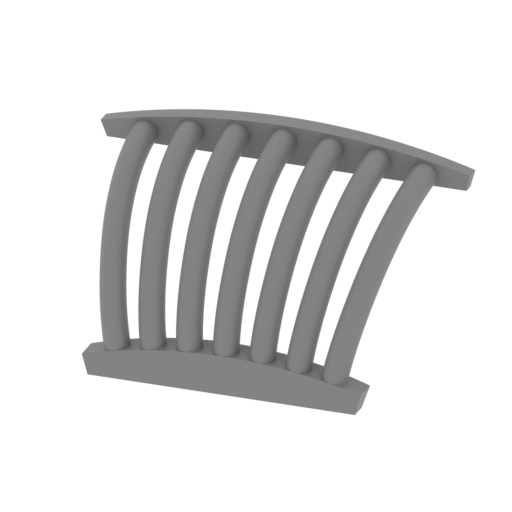
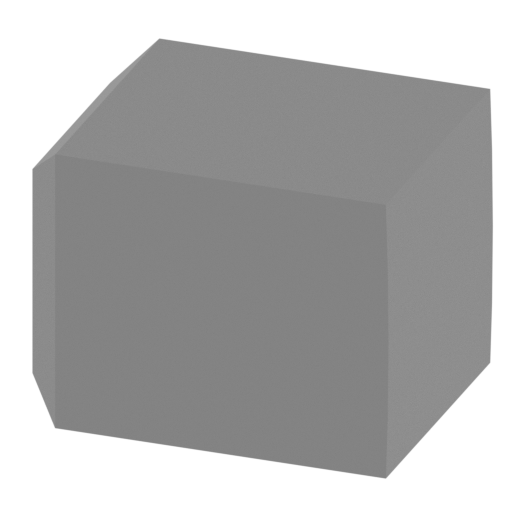
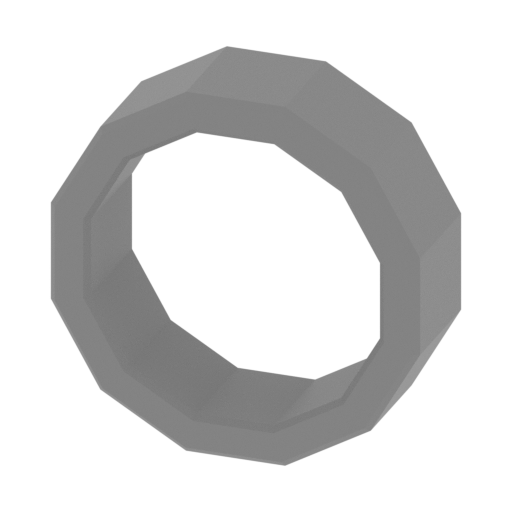
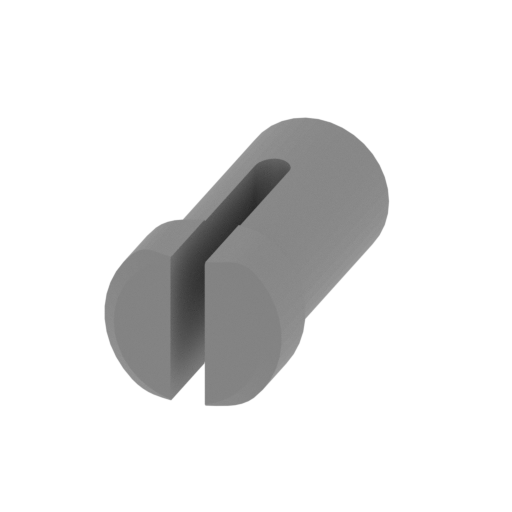
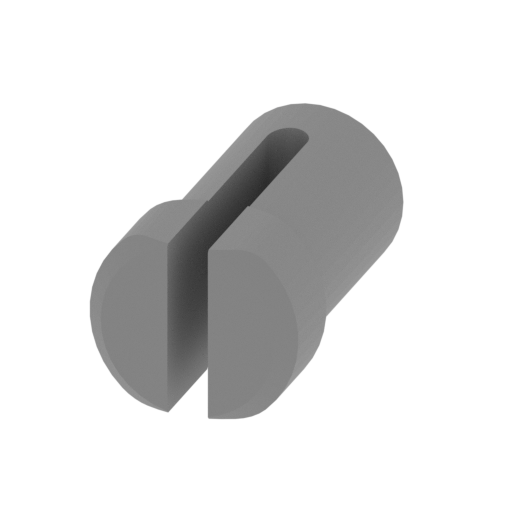
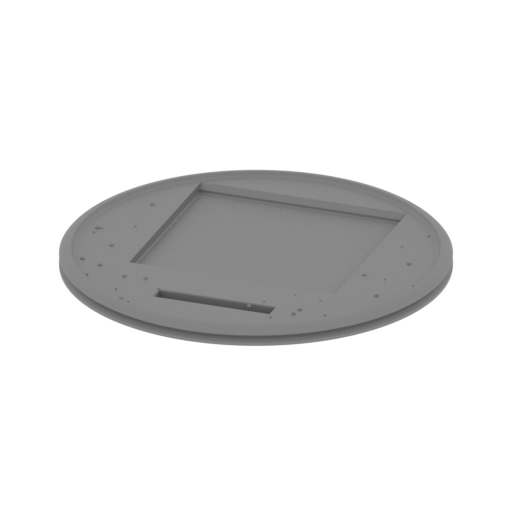
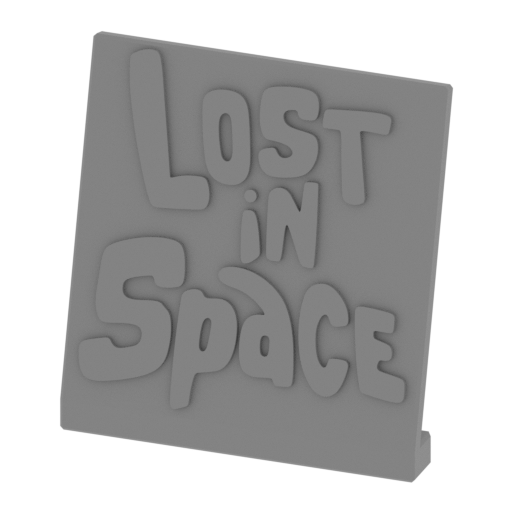
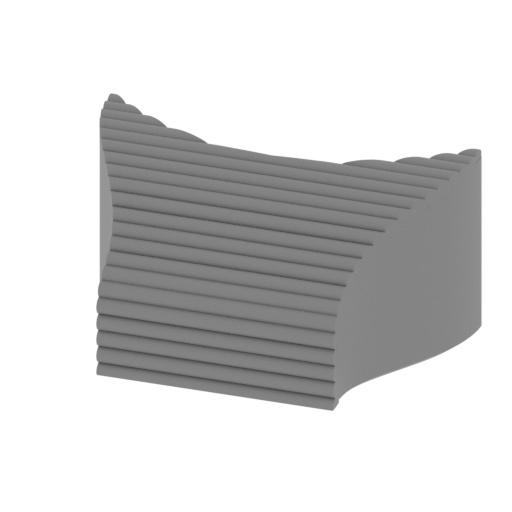
3D model history
Identify yourself!
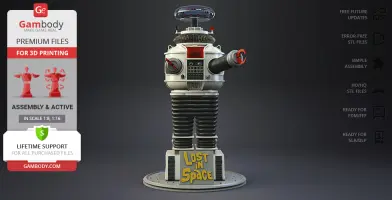
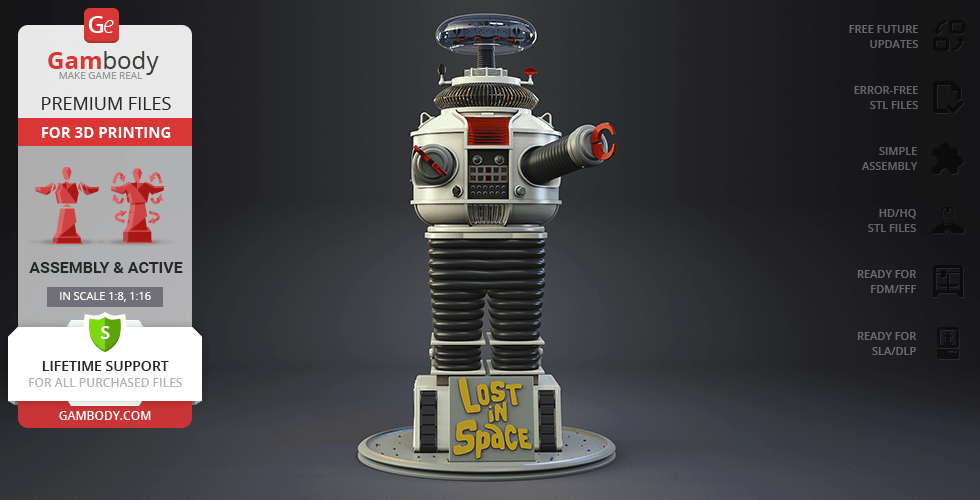
Robot model B9, designed and computerized as a mechanized electronic aid for Earth voyagers engaged in astral expeditions.
The B9 Environmental Control Robot is known and loved by all Lost in Space science fiction series fans. The machine possesses superhuman strength and innovative weaponry, but what makes B-9 so special is his ability to display human characteristics, such as laughter, sadness, and mockery. The Robot assisted the Robinson family in their exploration of the Earth-like planet orbiting the star Alpha Centauri and was in charge of protecting the youngest member of the crew, Will Robinson. Charismatic, witty, and artistic, The Robot is not afraid to show his character or act funny in the company of his friends.
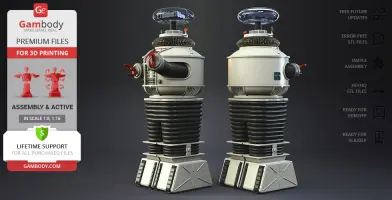
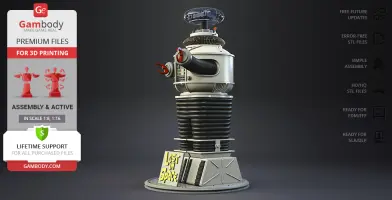
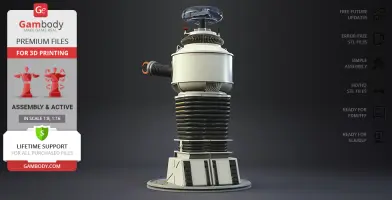
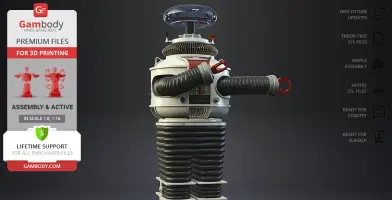
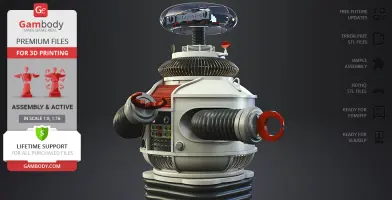
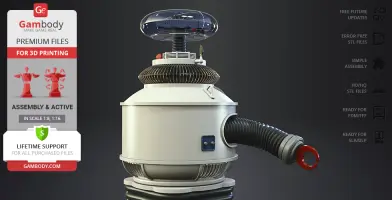
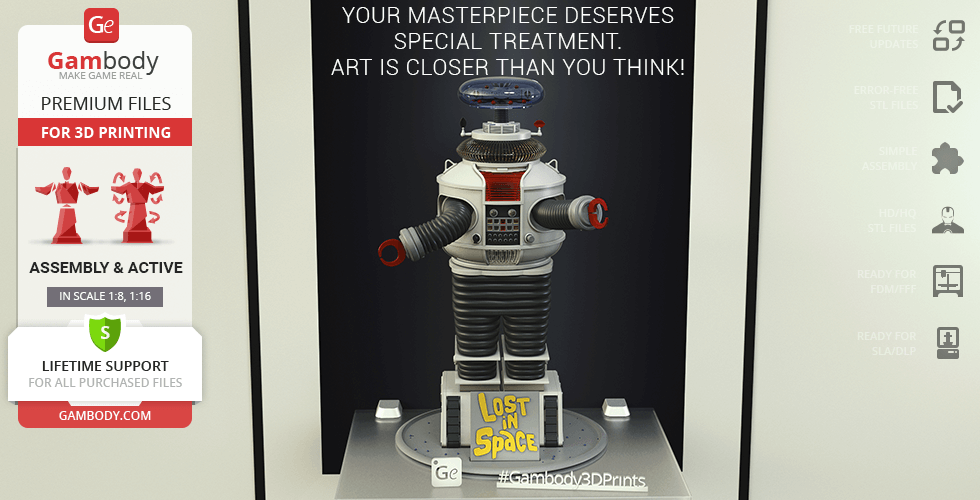
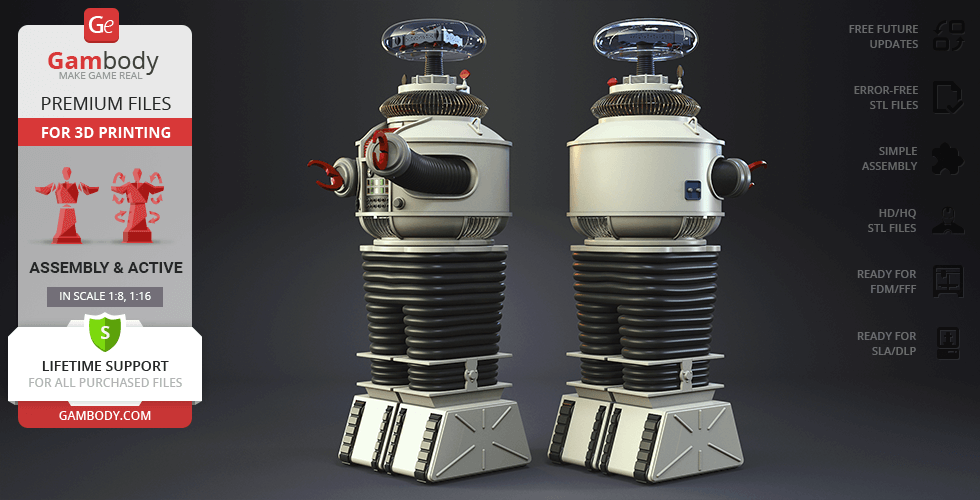
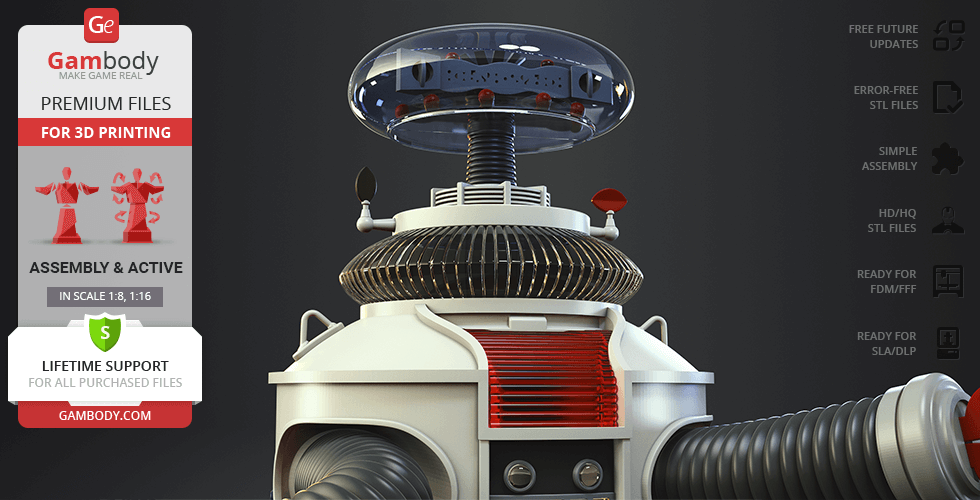
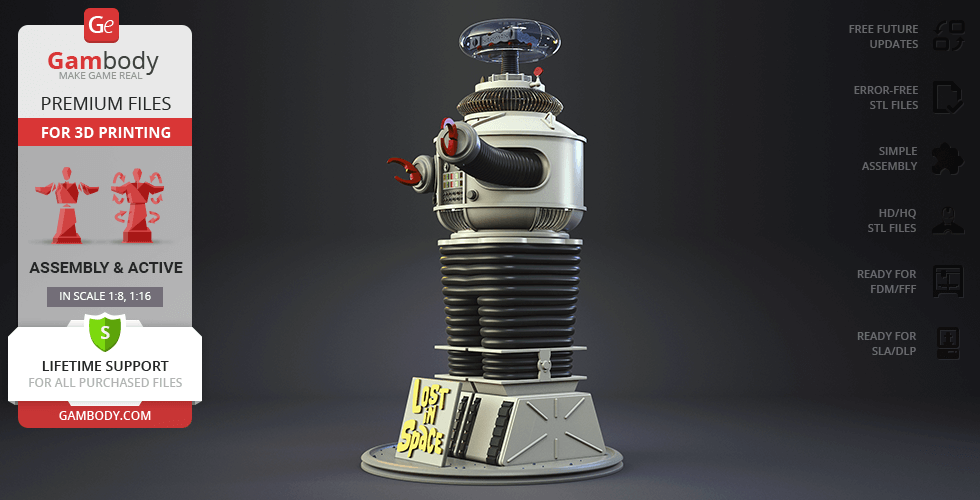
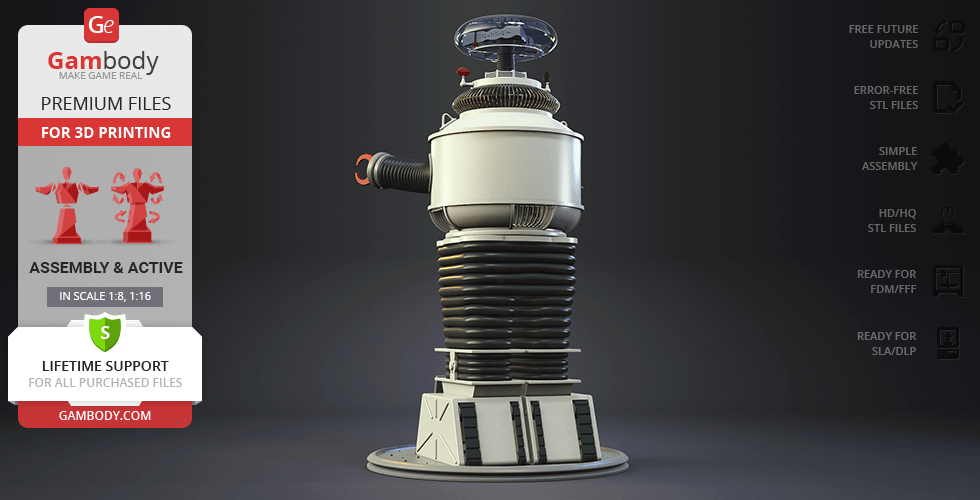
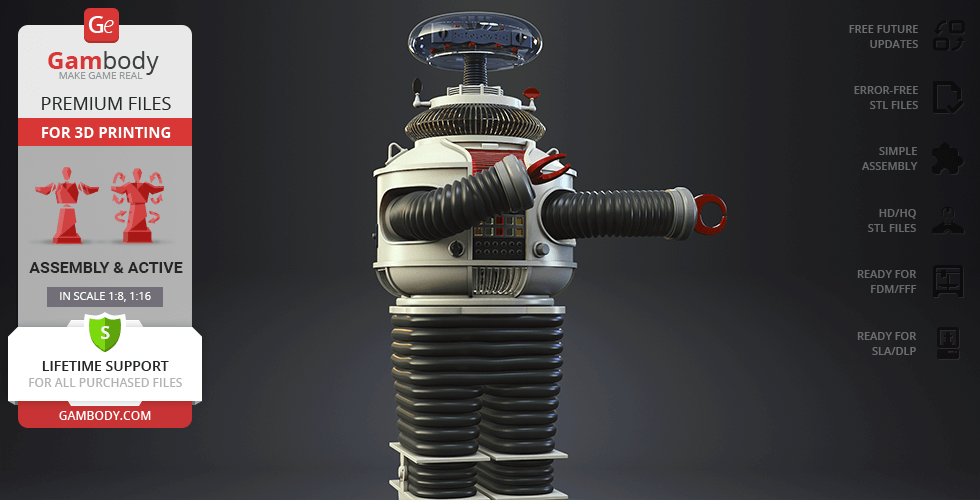
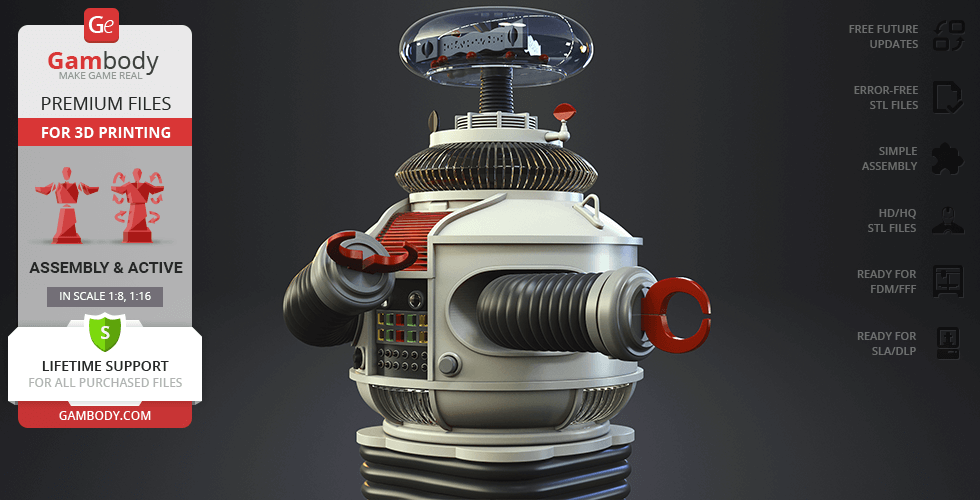
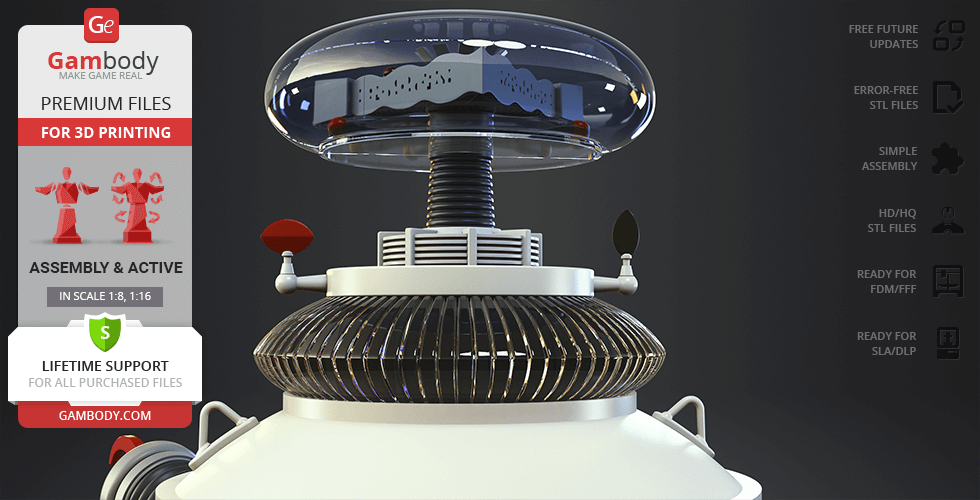
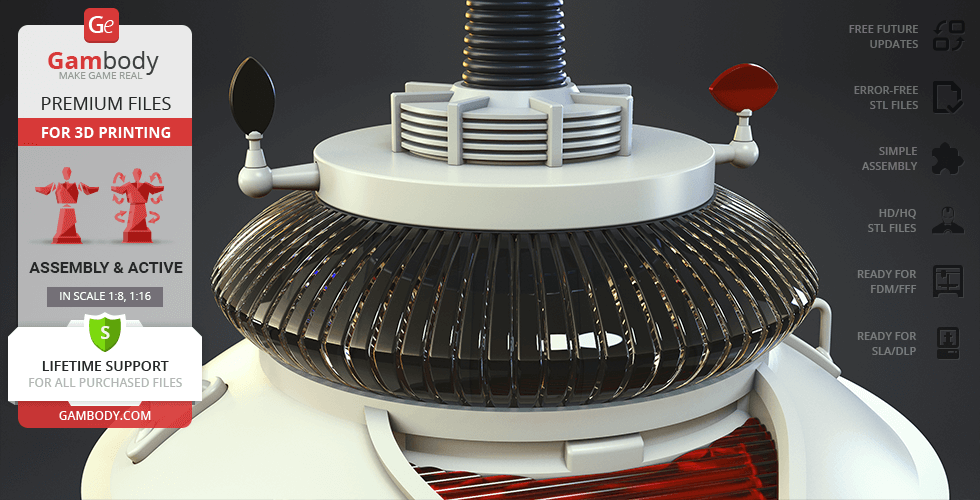
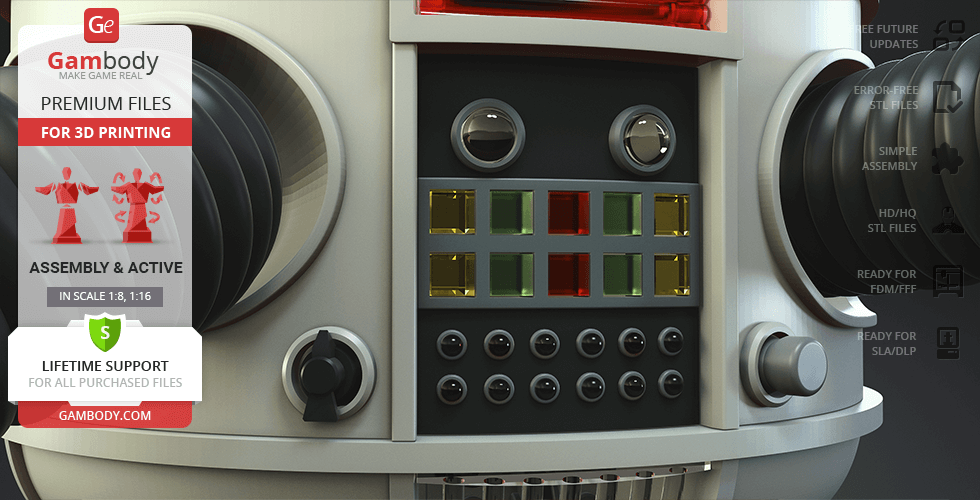
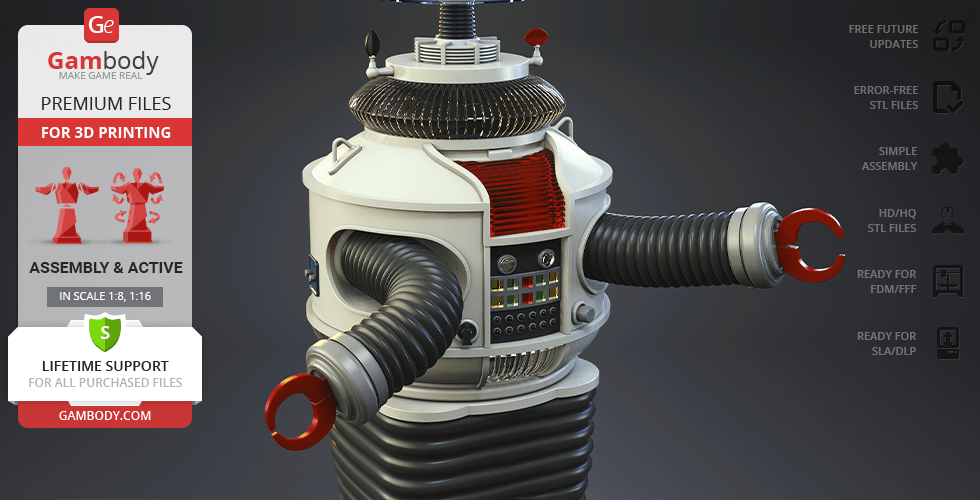
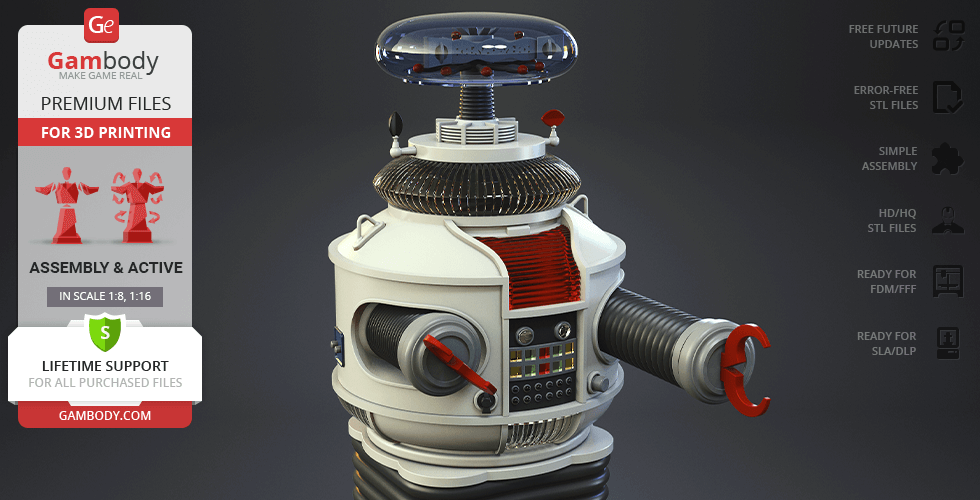
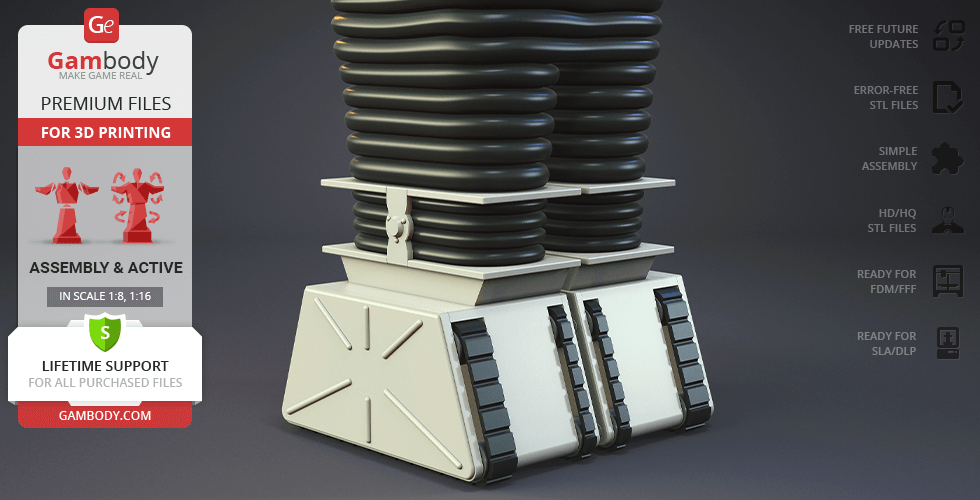
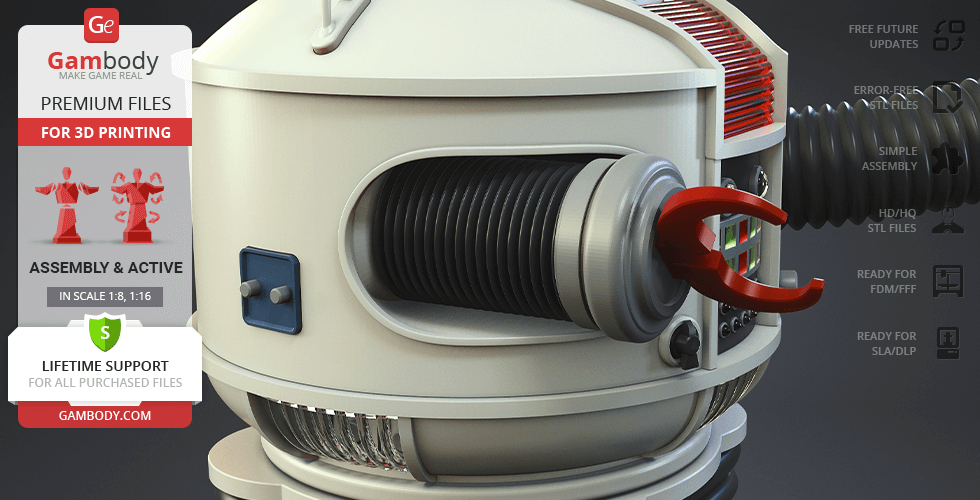
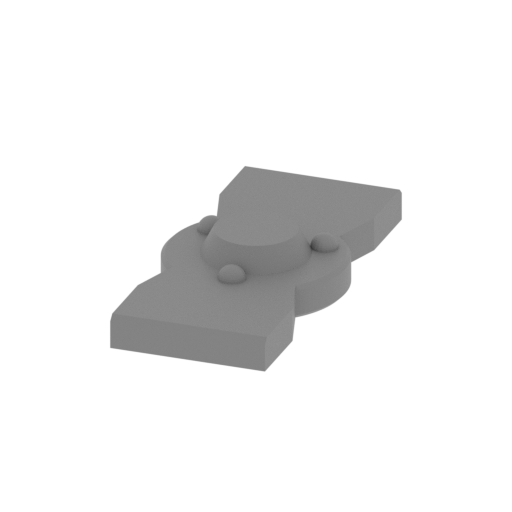
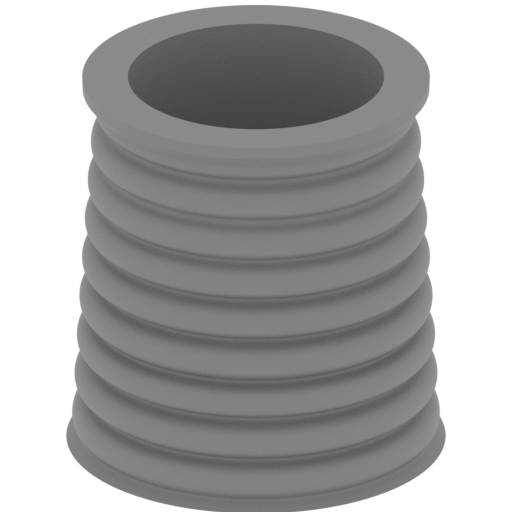
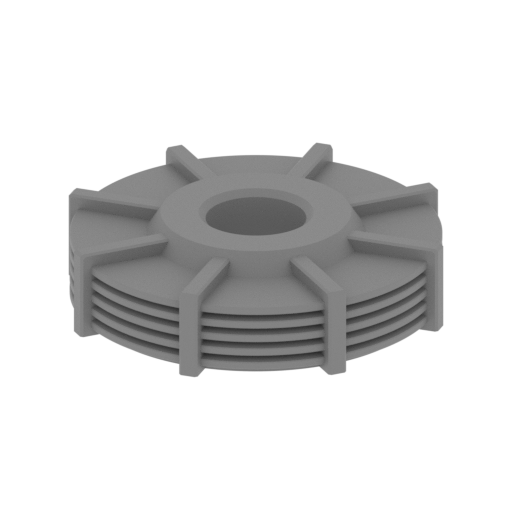
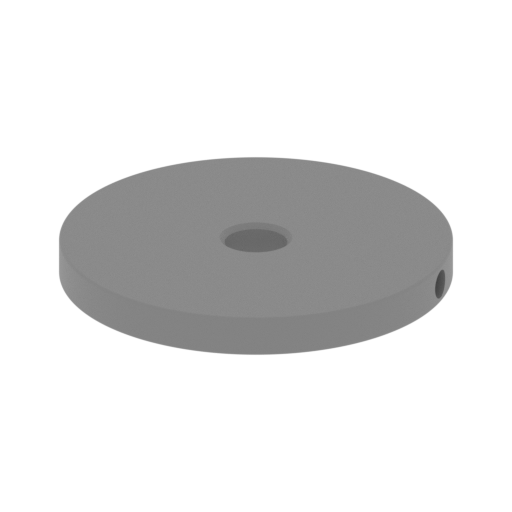
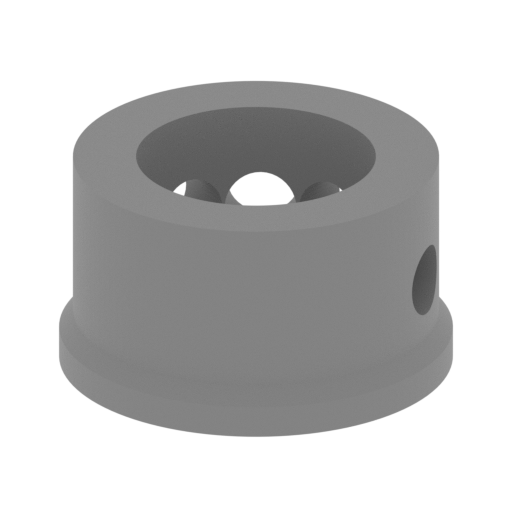
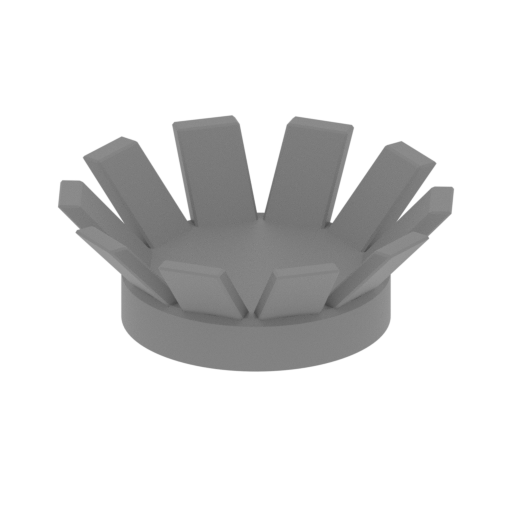
Inspired by one of the most popular characters from the iconic Lost in Space TV series our contributing 3D artist created this outstanding model for 3D printing. The robot has a classical design, it consists of a glass bubble dome, fluted ring collar, cylindrical trunk section with extendable arms, and legs connected to the trapezoidal continuous track units. The model has a range of active elements and alternative parts for you to ease the assembly and provide wide options for exhibiting. Authentic and highly detailed, the Robot Model B-9 for 3D printing is a must for all robot lovers!
3D printing model features
Model-specific features:
- This Robot Model B-9, inspired by the iconic Lost in Space TV series, is a complex, articulated model that perfectly captures the charismatic and witty electronic aid.
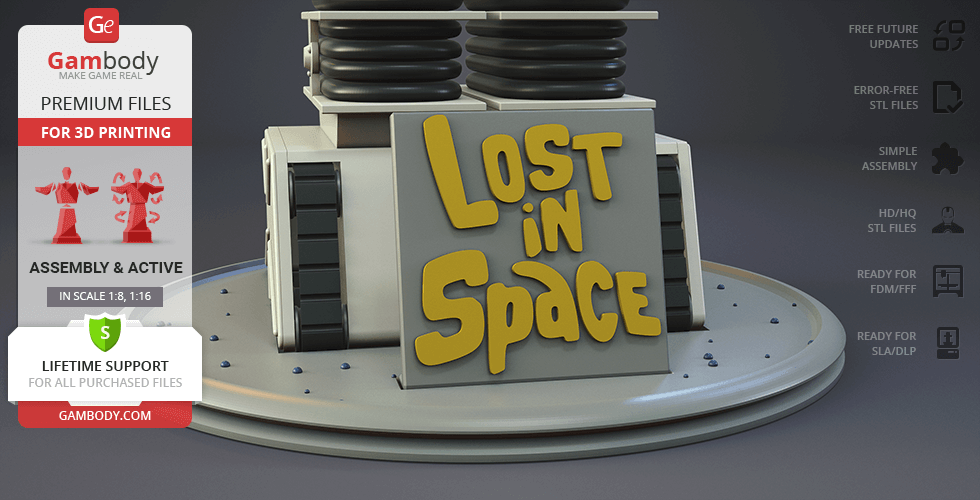
- Both the extendable arms and the road wheels rotate for dynamic posing.
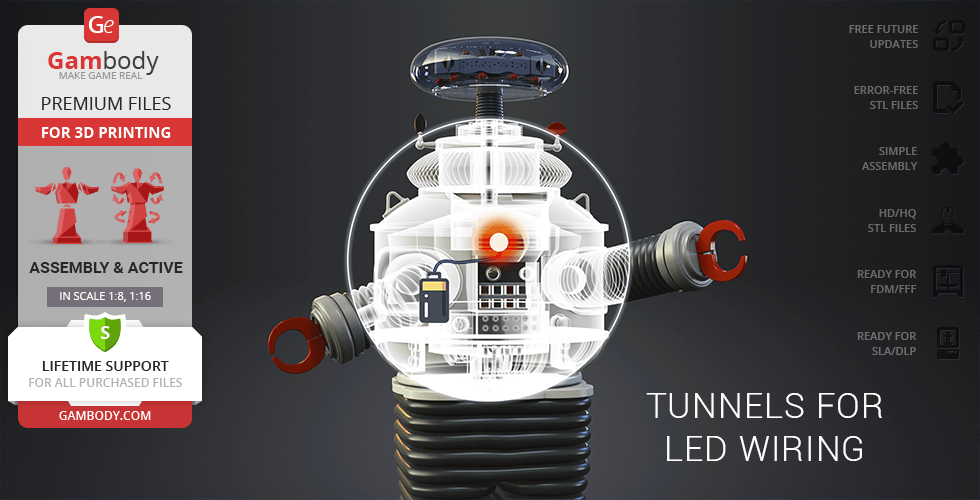
- The model includes tunnels for LED wiring throughout the body to recreate the Robot's signature internal glow.
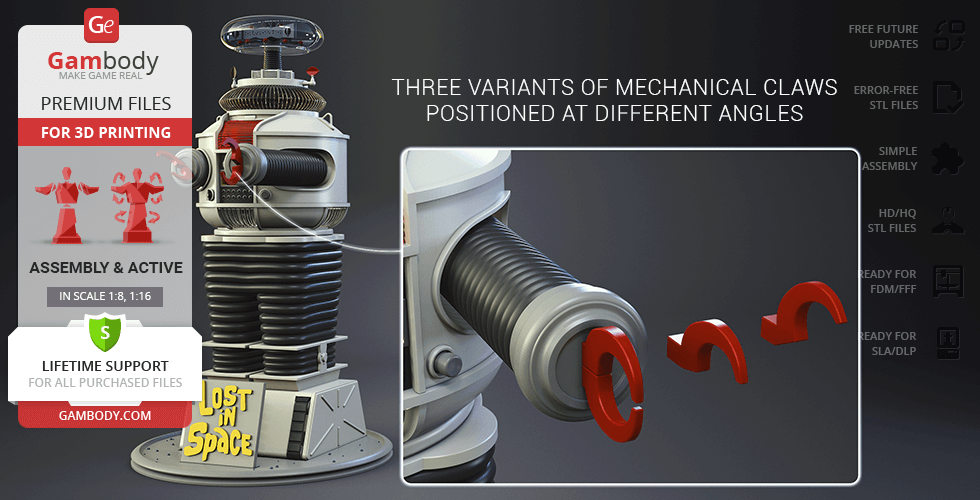
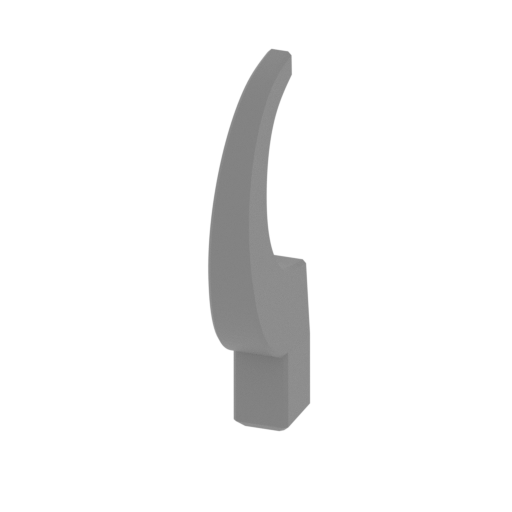
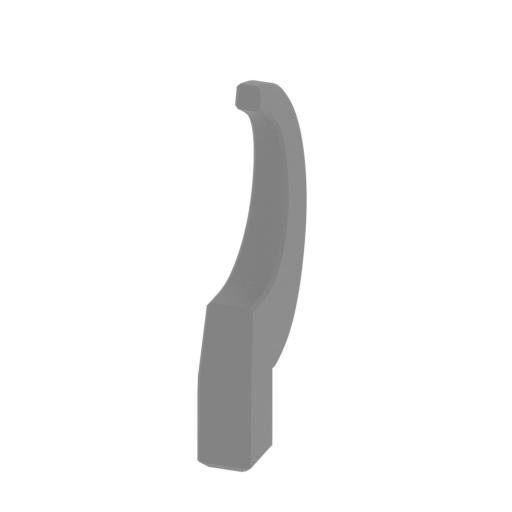
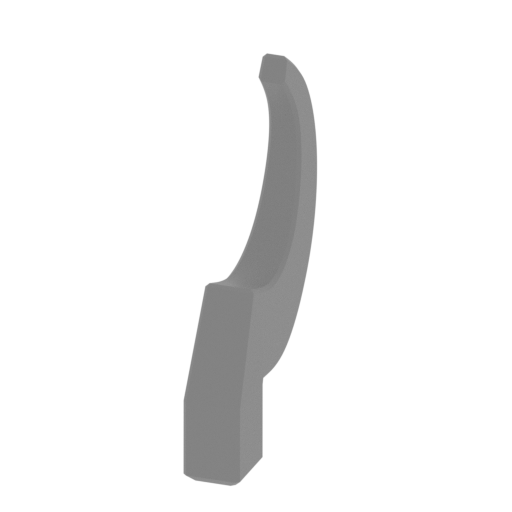
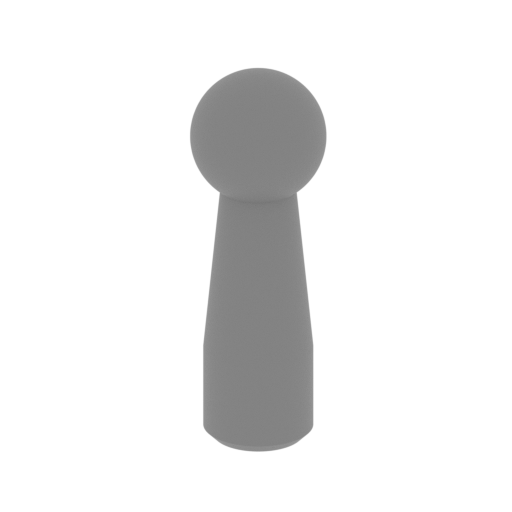
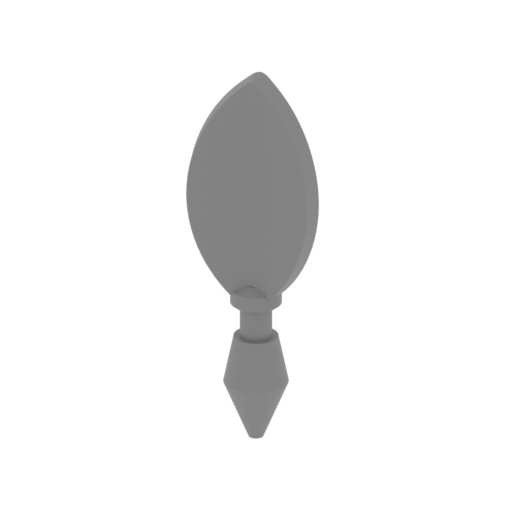
- Includes three variants of mechanical claws and two different versions of the glass dome: with and without a groove for gluing.
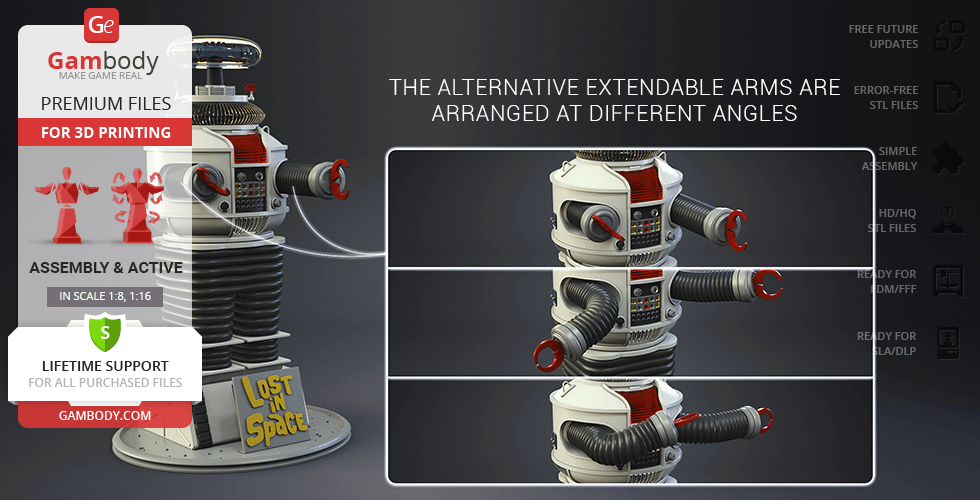
- Features alternative extendable arms for posing variety.
- The continuous track units include two types: the trapezoidal shape and an optional round-shaped unit designed to be printed with flexible filament.
- Comes with a specialized stand with lettering.
Printing & assembly details:
- Provided as error-free STL files compatible with most 3D printers;
- Optimized part division minimizes support material and ensures smooth surface detail;
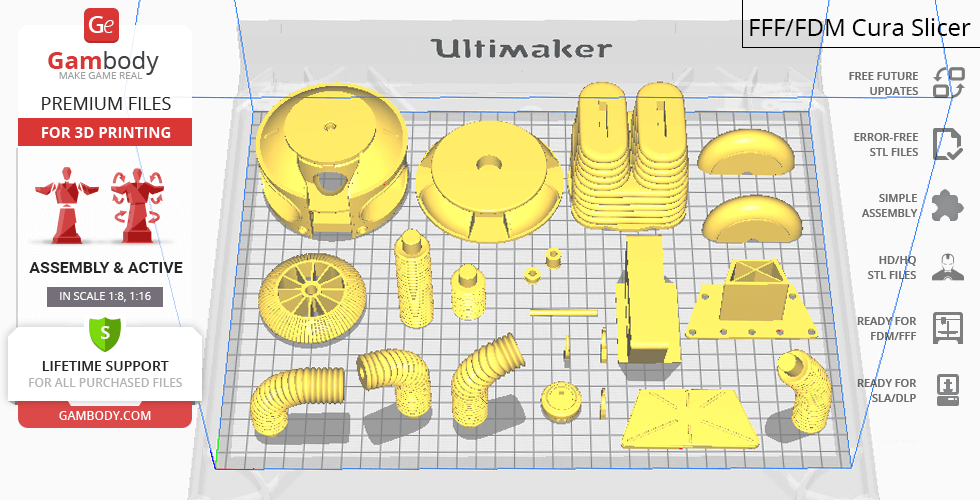
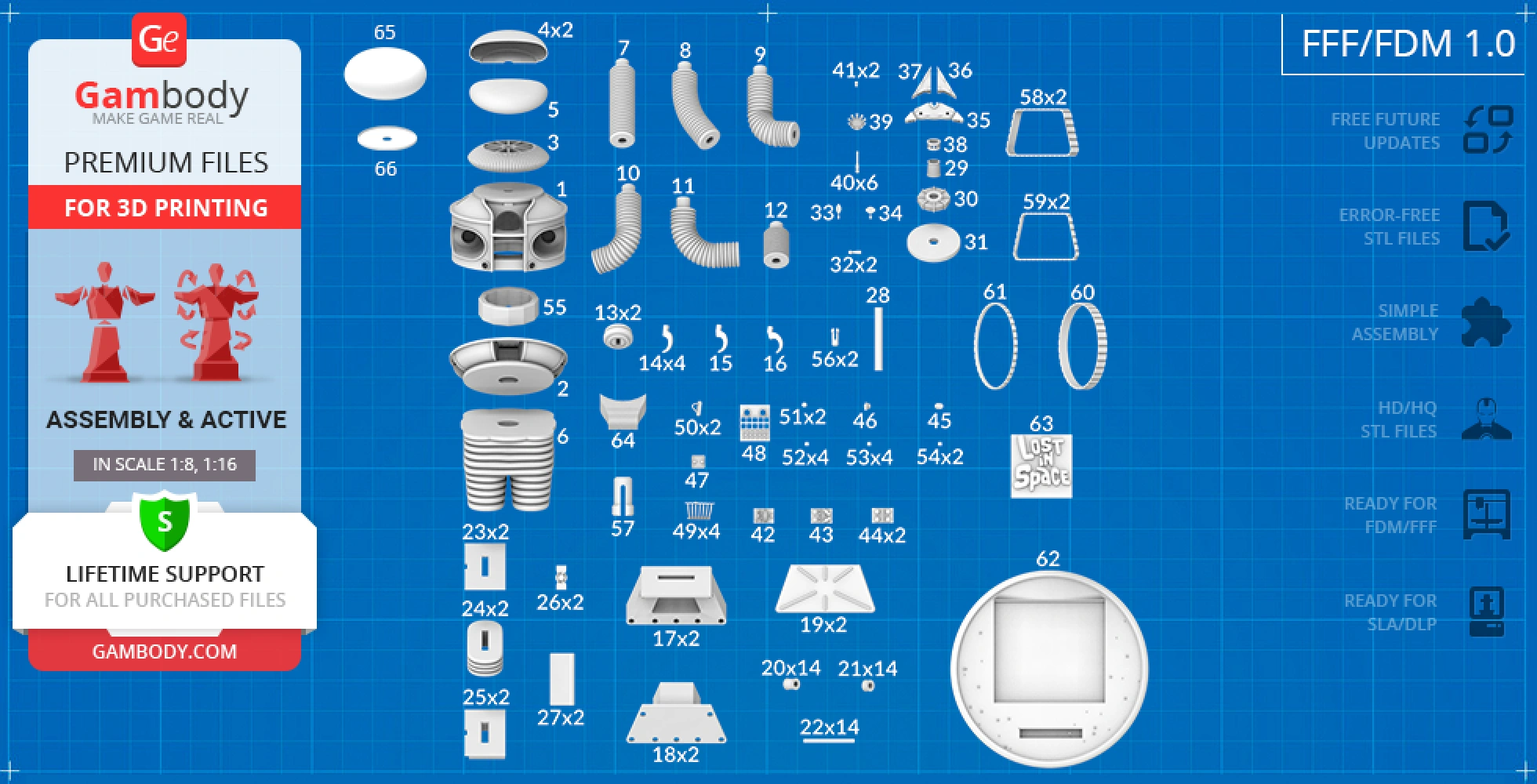
- The assembly parts in the FFF/FDM version come in the recommended print orientations for easy bed placement;
- Assembly manual in PDF and video formats is included for both FFF/FDM and DLP/SLA versions;
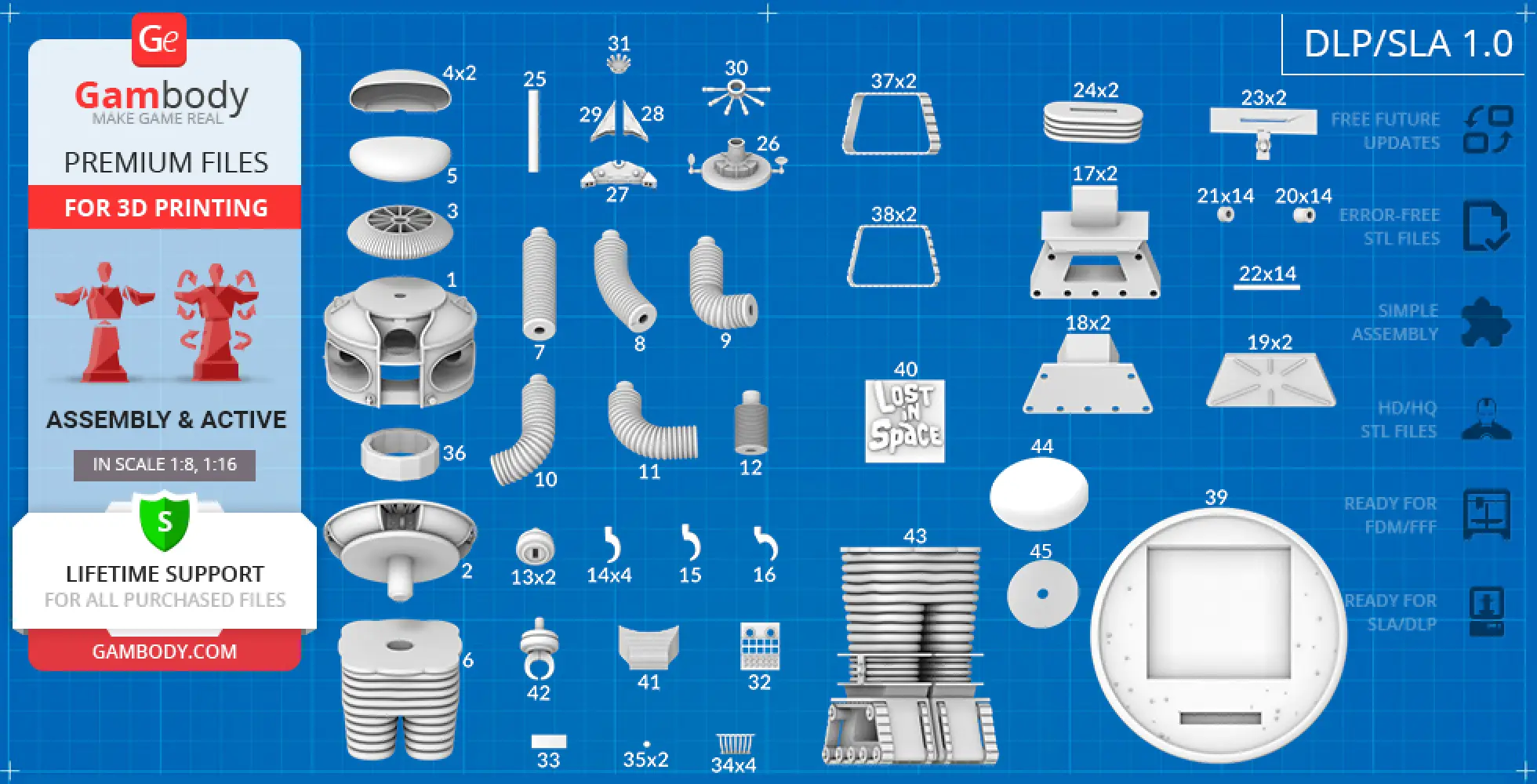
- The model is available in recommended scales of 1:8 for the FFF/FDM version and 1:16 for the DLP/SLA version.
What will you get after purchase?
- 2 versions of Robot B-9STL files for FFF/FDM and DLP/SLA — files for all versions are available for download after the purchase;
- STL files of high-poly Robot B-9 model for 3D printing consist of 111 files;
- Sizes for:
- FFF/FDM Model Size: 177 mm wide, 246 mm high, 144 mm deep;
- DLP/SLA Model Size: 89 mm wide, 123 mm high, 72 mm deep;
- Assembly Manual for 1.0 FFF/FDM and 1.0 DLP/SLA versions in PDF and video formats;
- Detailed settings that we provide as a recommendation for Bambu Studio, Cura, Orca Slicer, PrusaSlicer, Simplify3D, and Slic3r for the best print;
- Full technical support from the Gambody Support Team.
Average customer rating (4 reviews)
3.8
Ratings breakdown
Click a star rating to filter reviews
Overall experience
Level of detail in the model
3.8
Model cut quality and assembly guide
3.8
Clarity and accuracy of the model page
3.8


Level of detail in the model
4
Model cut quality and assembly guide
4
Clarity and accuracy of the model page
4
 Verified purchase
 Level of detail in the model
4
Model cut quality and assembly guide
4
Clarity and accuracy of the model page
4
Verified purchase 
Level of detail in the model
2
Model cut quality and assembly guide
2
Clarity and accuracy of the model page
2
 This feedback is from a user who hasn't purchased this model

Level of detail in the model
5
Model cut quality and assembly guide
5
Clarity and accuracy of the model page
5
This feedback is from a user who hasn't purchased this model To avoid printing issues and achieve the best quality, we highly recommend applying the following settings:
Generic
Below you can find printing recommendations for Bambu Studio, Cura, Orca Slicer, PrusaSlicer, Simplify3D, and Slic3r software.
Disclaimer: The following printing settings are a recommendation, not an obligation. The parameters can vary depending on the peculiarities of your 3D printer, the material you use, and especially the particular assembly part you are working with. Each part that any model comprises often needs preliminary review, and you are free to tweak the settings the way you find suitable.
Note:
You can scale up the model (downscaling for FFF/FDM 3D printers is not recommended!);
All connectors should be printed at 100% Infill.
Bambu Lab printing recommendations:
These basic 3D printing settings recommendations for beginners were tested in Bambu Studio 1.9.1. Test models were printed on the Bambu Lab A1, Bambu Lab A1 Mini, Creality Ender 3 S1, Anycubic Kobra 2, and Anycubic Vyper using PLA and PETG filaments.
To avoid printing problems, we recommend the following settings:download
Cura printing recommendations:
These are averaged settings which were tested in the Cura 5.2.1 slicer. Test models were printed on Anycubic Vyper, Creality Ender 3 Pro with PLA filament.
To avoid printing problems, we recommend the following settings: download
Orca Slicer printing recommendations:
These basic 3D printing settings recommendations for beginners were tested in Orca Slicer 2.3.0. Test models were printed on Bambu Lab A1, Bambu Lab A1 Mini, Creality Ender 3 V3, and Anycubic Kobra 3 with PLA and PETG filament.
To avoid printing problems, we recommend the following settings: download
PrusaSlicer printing recommendations:
These basic 3D printing settings recommendations for beginners were tested in PrusaSlicer 2.3.1. Test models were printed on Ultimaker 2, Creality Ender 3, Creality Cr-10S pro v2, Anycubic I3 Mega, Anycubic I3 MegaS, Anycubic Vyper with PLA and PETG filaments.
To avoid printing problems, we recommend the following settings: download
Simplify3D printing recommendations:
These are averaged settings which were tested in the Simplify3D 5.0.0 slicer. Test models were printed on Anycubic Vyper, FLSUN v400, Ender3 S1 with PLA filament.
To avoid printing problems, we recommend the following settings: download
Slic3r printing recommendations:
These basic 3D printing settings recommendations for beginners were tested in Slic3r 1.3.0 software. Test models were printed on Ultimaker 2, Creality Ender 3, Creality Cr-10S pro v2, Anycubic I3 Mega, Anycubic I3 MegaS, Anycubic Vyper with PLA and PetG filaments.
To avoid printing problems, we recommend the following settings: download
DLP/SLA
Alternative extendable arms; Extendable arms rotate; Three variants of mechanical claws; Two versions of glass dome: with and without a groove for glueing; Continuous track units at the bottom of each leg; Road wheels rotate; Stand with lettering; Tunnels for LED wiring; The assembly parts are connected using specially designed integrated connectors that fit securely into the corresponding slots.
FFF/FDM
Alternative extendable arms; Extendable arms rotate; Three variants of mechanical claws; Two versions of glass dome: with and without a groove for glueing; Track units are of two types: trapezoidal and round-shaped to print with a flexible filament; Continuous track units at the bottom of each leg; Road wheels rotate; Stand with lettering; Tunnels for LED wiring; The assembly parts are connected using specially designed integrated connectors that fit securely into the corresponding slots.