Community

 es
es  ua
ua 



Files
3D model format
Stereolithography (.stl)
Total files

Slicer settings
Mesh error check
Netfabb
Support
Lifetime support from Gambody team
Update requests
Available to verified buyers
Model complexity
Standard: balanced printing difficulty and moderate part count with assembly steps.
Advanced: may require tuning print settings or support placement, plus precise fitting, gluing, or sanding.
Model versions
FFF/FDM
Assembly method
not specified
Features
DLP/SLA
Assembly method
not specified
Features
FFF/FDM
Assembly method
not specified
Features
DLP/SLA
Assembly method
not specified
Features
FFF/FDM
Assembly method
not specified
Features
Additional details
Part of diorama
No
Add-on pack available
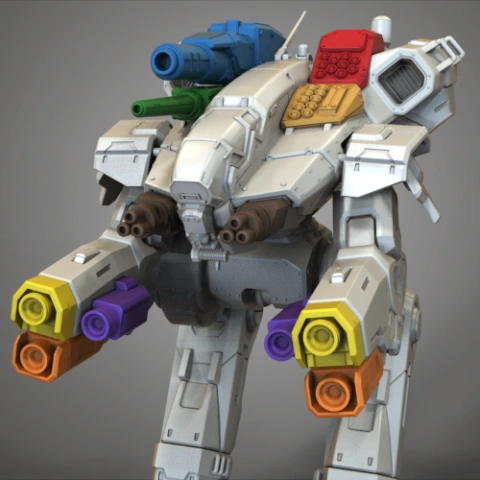
- Yes, Weapon
- MWO Atlas 3D Printing Model | Assembly + Action
You will get instant access to the STL files of MWO Timber Wolf 3D Printing Model | Assembly + Action after completing your purchase. Simply add the model to your cart and check out using PayPal, credit or debit card, Apple Pay, Google Pay, Alipay, or other available payment methods.
Watch the assembly video for MWO Timber Wolf 3D Printing Model | Assembly + Action, and explore more tutorials, behind-the-scenes content, 3D printing timelapses, and painting guides on the official Gambody YouTube channel.
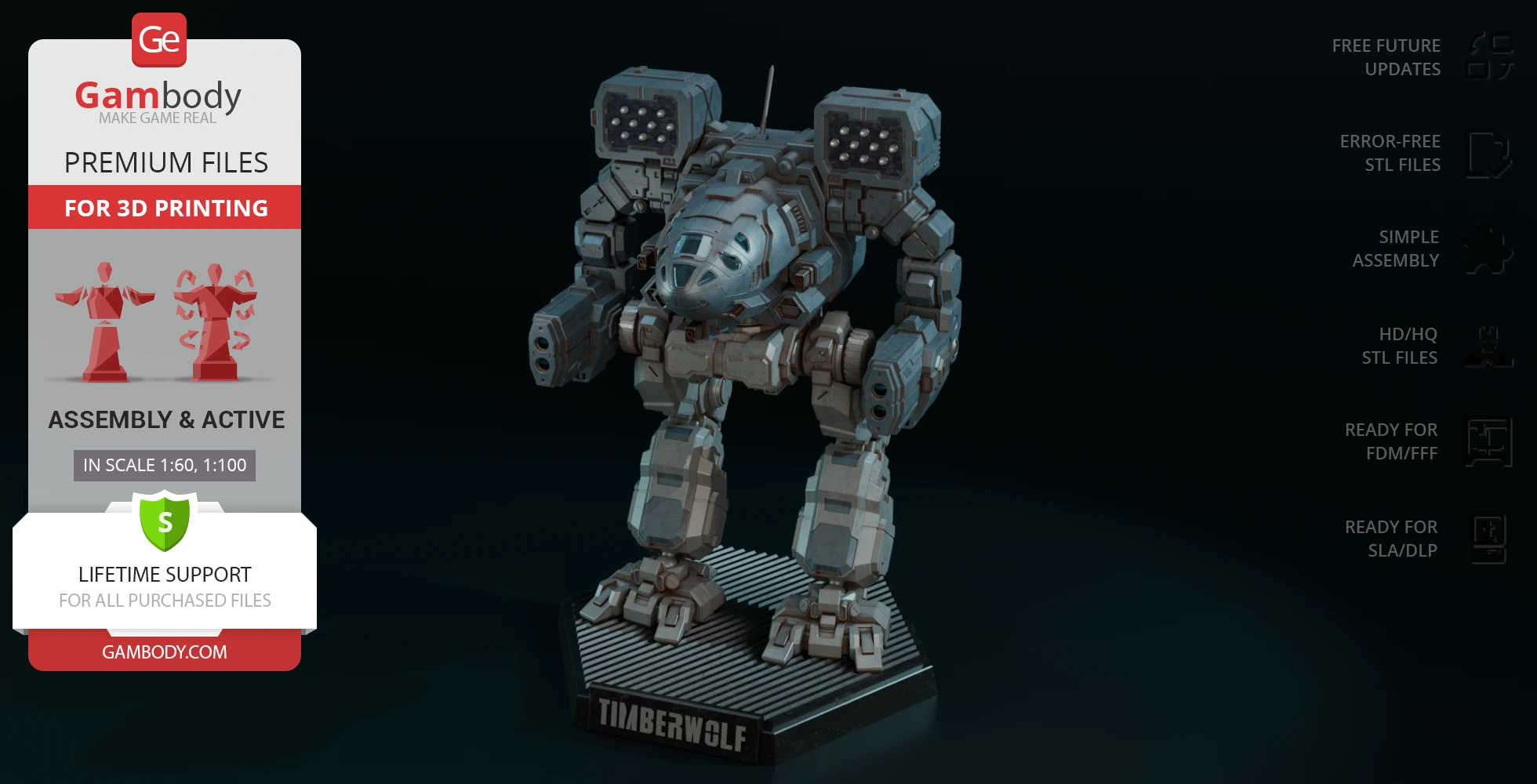
This 3D model of MWO Timber Wolf consists of files in StereoLithography (.Stl) format that is optimized for 3D printing.
Before printing the files, we strongly recommend reading the PRINTING DETAILS section.
WHAT WILL YOU GET AFTER PURCHASE?
- 5 versions of MWO Timber Wolf STL files for FFF/FDM and DLP/SLA - files for all versions are available for download after the purchase;
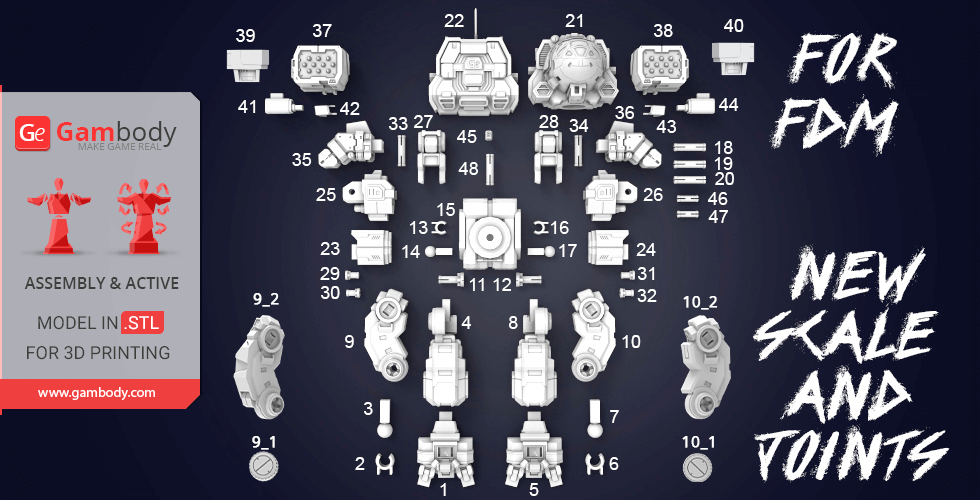
- STL files of high-poly MWO Timber Wolf Model for 3D printing consist of 188 files;
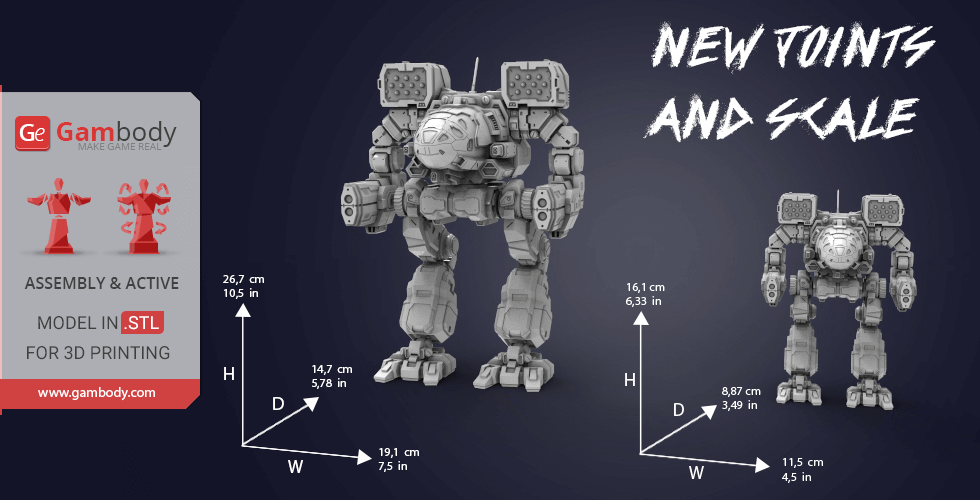
- Sizes for:
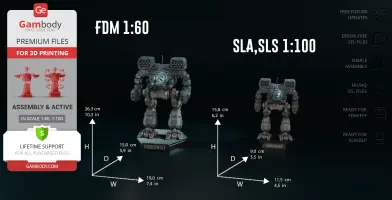
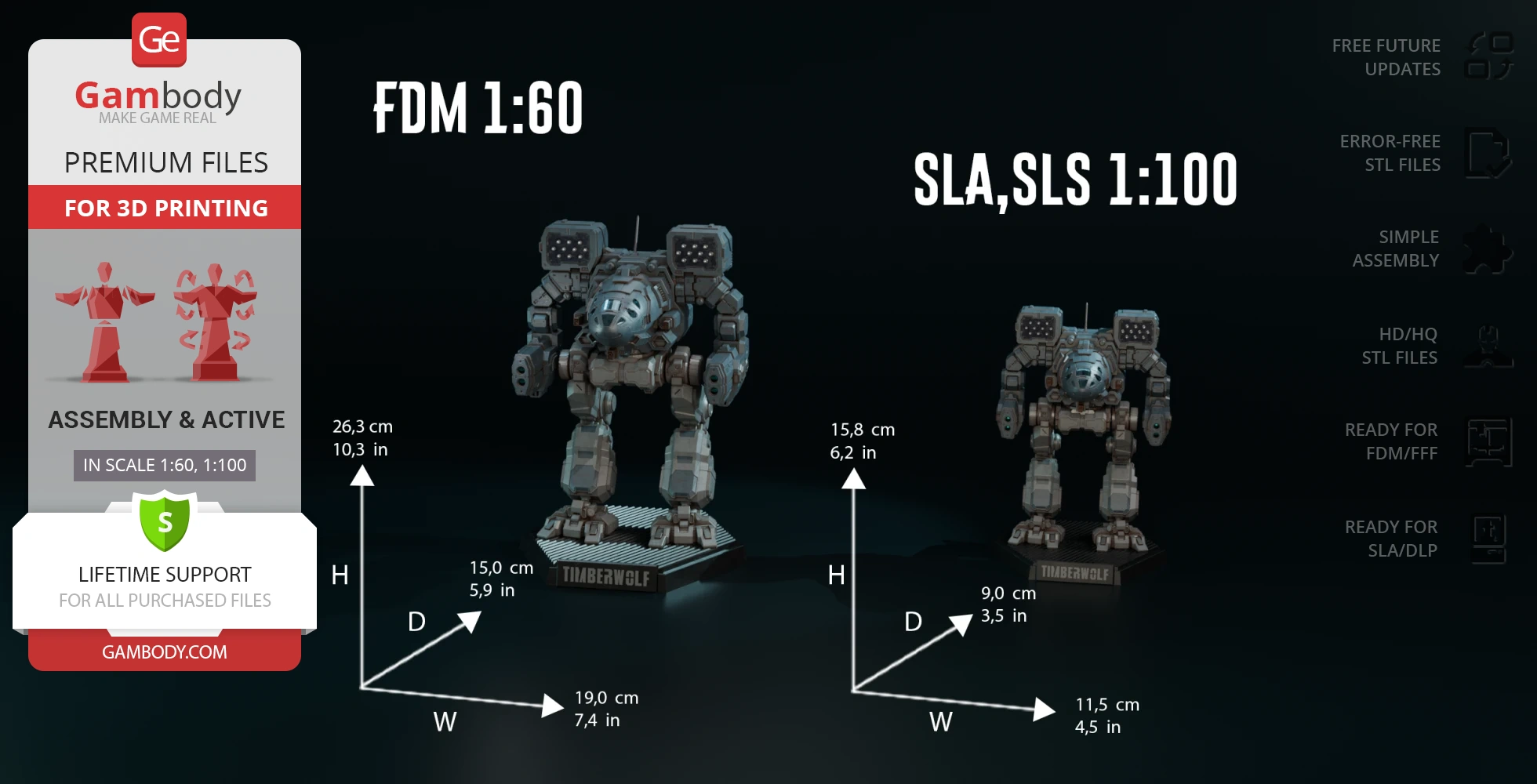
- FFF/FDM 3.0: 263 mm tall, 190 mm wide, 150 mm deep;
- DLP/SLA: 158 mm tall, 115 mm wide, 90 mm deep;
- Assembly Manual for FFF/FDM 3.0 and DLP/SLA 2.0 versions in PDF and video formats;
- Detailed settings that we provide as a recommendation for Cura, Bambu Studio, Simplify3D, Slic3r and PrusaSlicer for the best print;
- Full technical support from the Gambody Support Team.
Detailed information about this 3D printing model is available in the DESCRIPTION section.
Before printing, take a look at Printing Details for recommended settings and tips to achieve better results.
| File name | Size (mm | in) | Size(mb) | Printing Time / Filament | |||
|---|---|---|---|---|---|---|
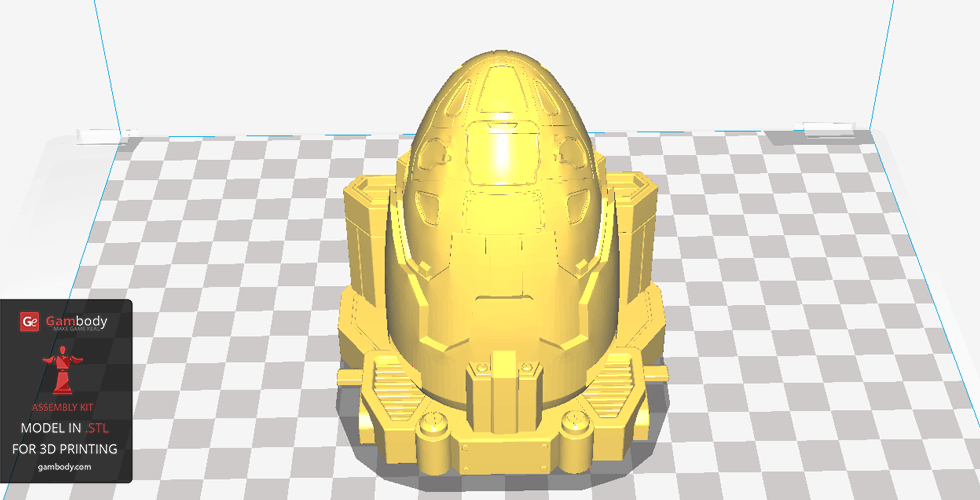
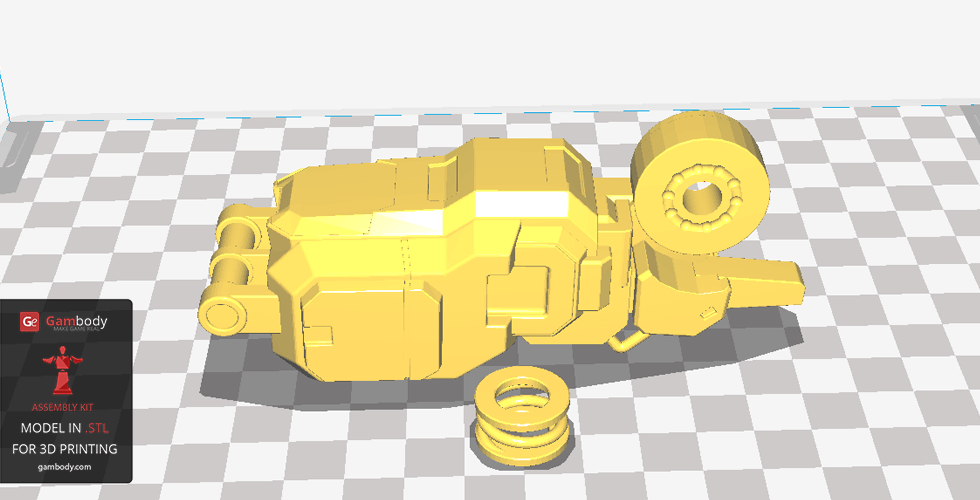
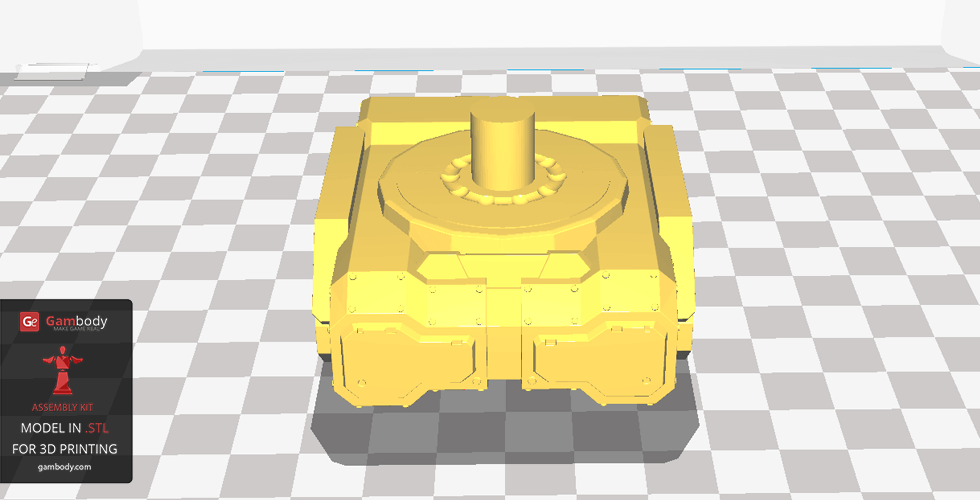
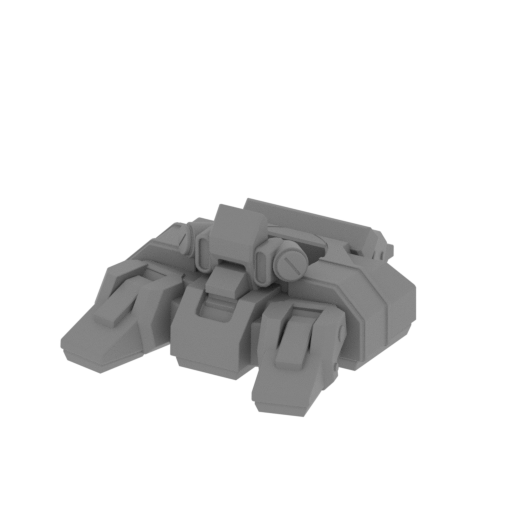 | _01_Foot_x2_FDM.stl 61.49 x 77.51 x 30.79 mm | 2.42 x 3.05 x 1.21 in | Size: 61.49 x 77.51 x 30.79 mm | 2.42 x 3.05 x 1.21 in | File size: 0.82 mb | Printing Time / Filament: 4 h 38 min / 2 m | ||
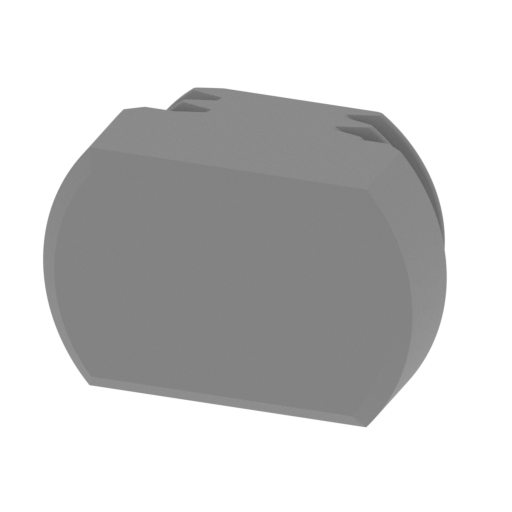 | _04_Foot_join_1_R_x2_FDM.stl 21.13 x 10.71 x 14 mm | 0.83 x 0.42 x 0.55 in | Size: 21.13 x 10.71 x 14 mm | 0.83 x 0.42 x 0.55 in | File size: 1.27 mb | Printing Time / Filament: 23 min / <1 m | ||
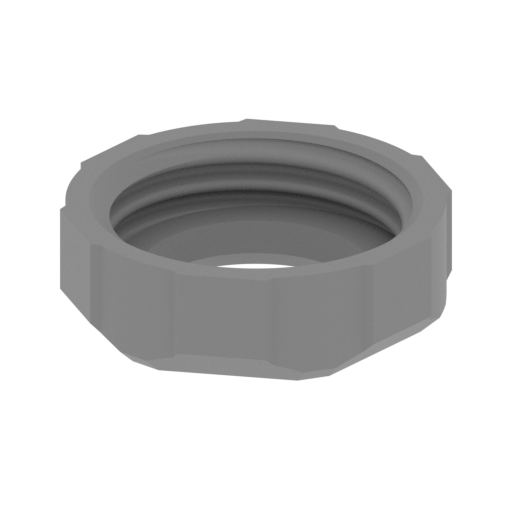 | _05_Foot_join_2_R_x2_FDM.stl 21.71 x 21.84 x 6.84 mm | 0.85 x 0.86 x 0.27 in | Size: 21.71 x 21.84 x 6.84 mm | 0.85 x 0.86 x 0.27 in | File size: 2.13 mb | Printing Time / Filament: 17 min / <1 m | ||
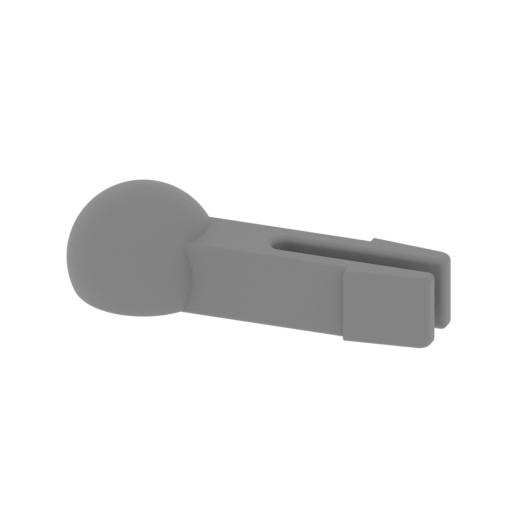 | _09_Leg_Joint_1_FDM_x2.stl 30.78 x 12 x 9 mm | 1.21 x 0.47 x 0.35 in | Size: 30.78 x 12 x 9 mm | 1.21 x 0.47 x 0.35 in | File size: 0.89 mb | Printing Time / Filament: 15 min / <1 m | ||
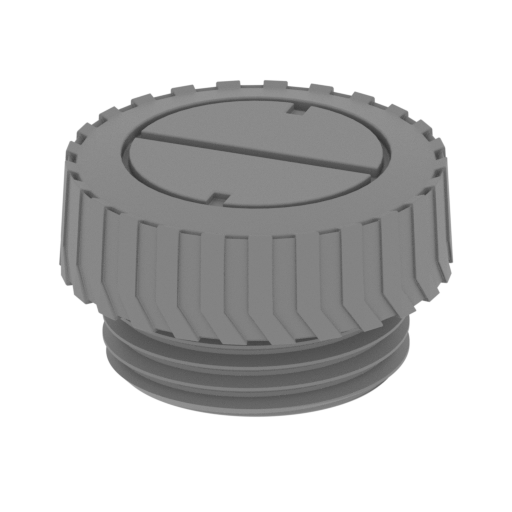 | _10_Leg_join_R_FDM.stl 25.46 x 25.43 x 14.71 mm | 1 x 1 x 0.58 in | Size: 25.46 x 25.43 x 14.71 mm | 1 x 1 x 0.58 in | File size: 1.63 mb | Printing Time / Filament: 55 min / 1 m | ||
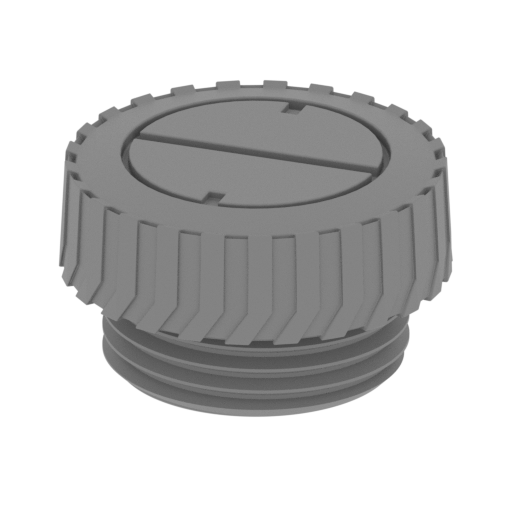 | _11_Leg_join_L_FDM.stl 25.46 x 25.43 x 14.71 mm | 1 x 1 x 0.58 in | Size: 25.46 x 25.43 x 14.71 mm | 1 x 1 x 0.58 in | File size: 1.63 mb | Printing Time / Filament: 56 min / 1 m | ||
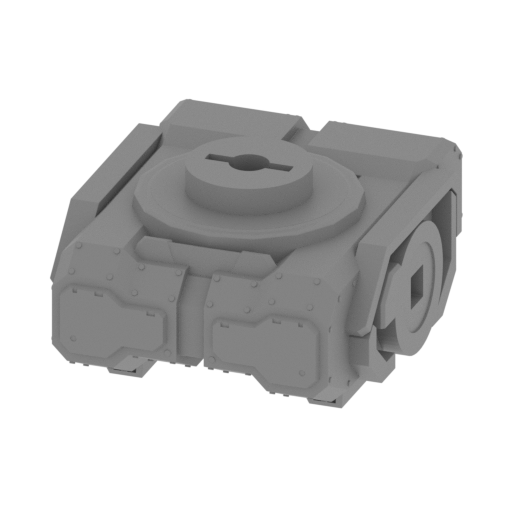 | _12_pelvis_FDM.stl 59.92 x 68.49 x 38.54 mm | 2.36 x 2.7 x 1.52 in | Size: 59.92 x 68.49 x 38.54 mm | 2.36 x 2.7 x 1.52 in | File size: 4.04 mb | Printing Time / Filament: 10 h 44 min / 6 m | ||
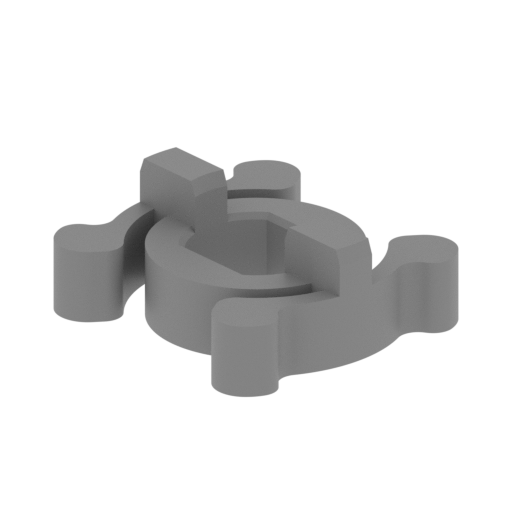 | _13_pelvis_catch_FDM.stl 19.91 x 19.79 x 6.39 mm | 0.78 x 0.78 x 0.25 in | Size: 19.91 x 19.79 x 6.39 mm | 0.78 x 0.78 x 0.25 in | File size: 0.22 mb | Printing Time / Filament: 16 min / <1 m | ||
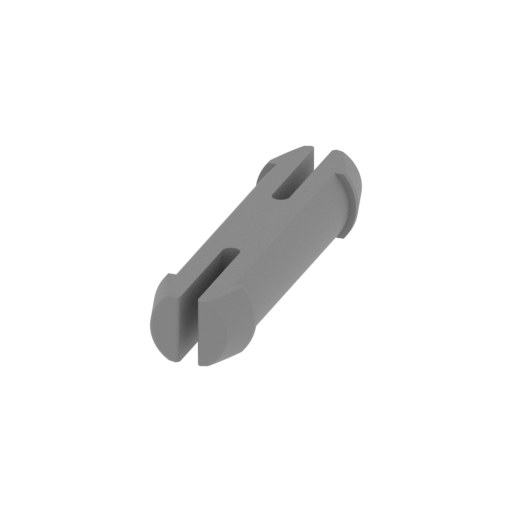 | _14_pelvis_pin_FDM.stl 7.99 x 29.3 x 5.26 mm | 0.31 x 1.15 x 0.21 in | Size: 7.99 x 29.3 x 5.26 mm | 0.31 x 1.15 x 0.21 in | File size: 0.14 mb | Printing Time / Filament: 10 min / <1 m | ||
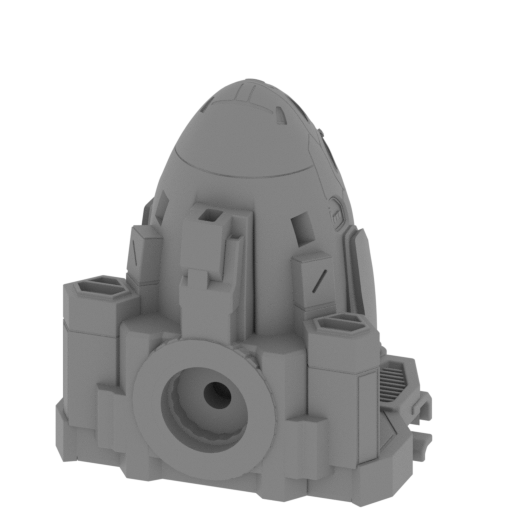 | _15_MainBody_1_FDM.stl 86.52 x 71.67 x 94.78 mm | 3.41 x 2.82 x 3.73 in | Size: 86.52 x 71.67 x 94.78 mm | 3.41 x 2.82 x 3.73 in | File size: 7.94 mb | Printing Time / Filament: 19 h 14 min / 10 m | ||
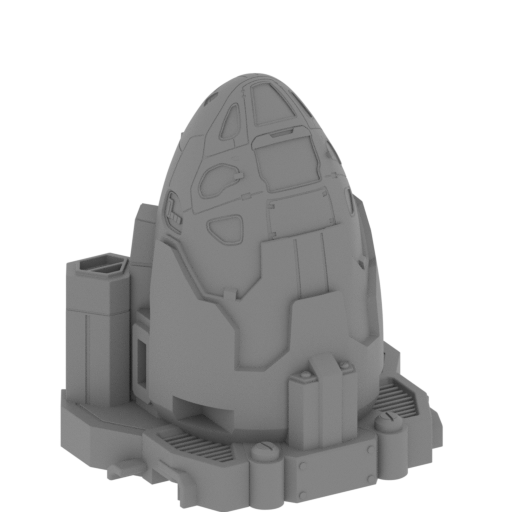 | _16_MainBody_1_v2_FDM.stl 90.38 x 92.22 x 94.79 mm | 3.56 x 3.63 x 3.73 in | Size: 90.38 x 92.22 x 94.79 mm | 3.56 x 3.63 x 3.73 in | File size: 6.91 mb | Printing Time / Filament: 19 h 11 min / 11 m | ||
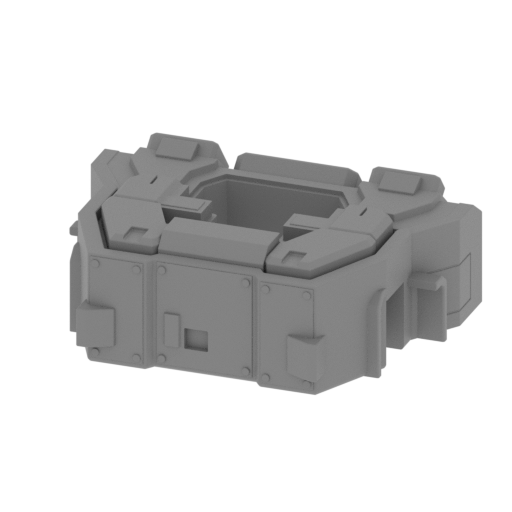 | _17_MainBody_2_FDM.stl 86.52 x 75.62 x 30.49 mm | 3.41 x 2.98 x 1.2 in | Size: 86.52 x 75.62 x 30.49 mm | 3.41 x 2.98 x 1.2 in | File size: 4.25 mb | Printing Time / Filament: 10 h 59 min / 6 m | ||
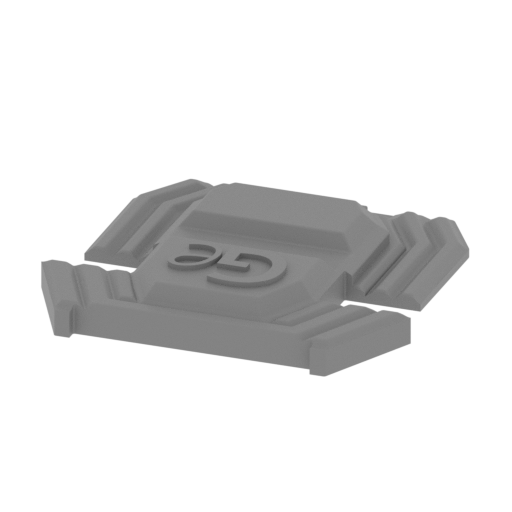 | _18_Body_cap_FDM.stl 38.02 x 37.01 x 5.52 mm | 1.5 x 1.46 x 0.22 in | Size: 38.02 x 37.01 x 5.52 mm | 1.5 x 1.46 x 0.22 in | File size: 0.34 mb | Printing Time / Filament: 39 min / <1 m | ||
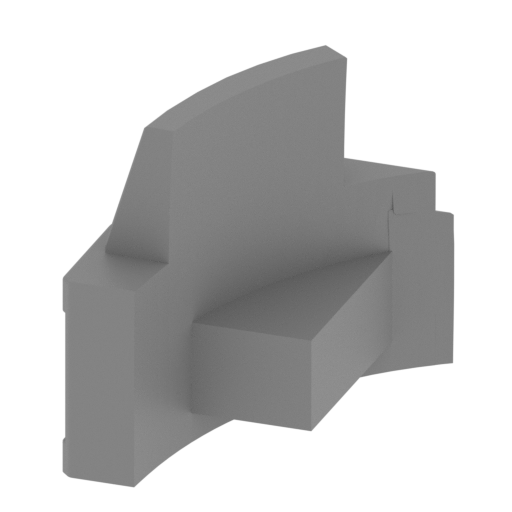 | _19_body_wepon_1_R_FDM.stl 18.03 x 25.65 x 23.37 mm | 0.71 x 1.01 x 0.92 in | Size: 18.03 x 25.65 x 23.37 mm | 0.71 x 1.01 x 0.92 in | File size: 0.08 mb | Printing Time / Filament: 34 min / <1 m | ||
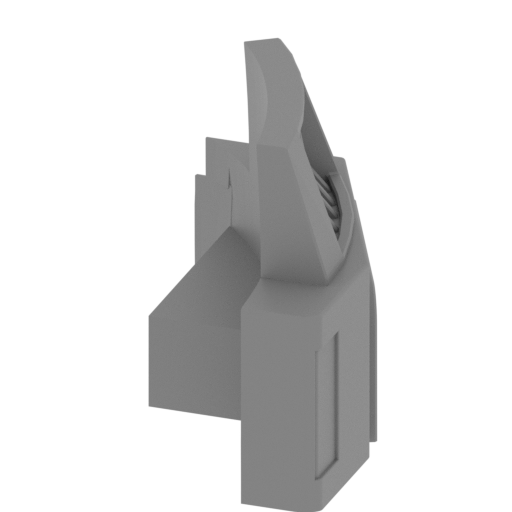 | _20_body_wepon_2_L_FDM.stl 18.02 x 25.65 x 23.37 mm | 0.71 x 1.01 x 0.92 in | Size: 18.02 x 25.65 x 23.37 mm | 0.71 x 1.01 x 0.92 in | File size: 0.08 mb | Printing Time / Filament: 34 min / <1 m | ||
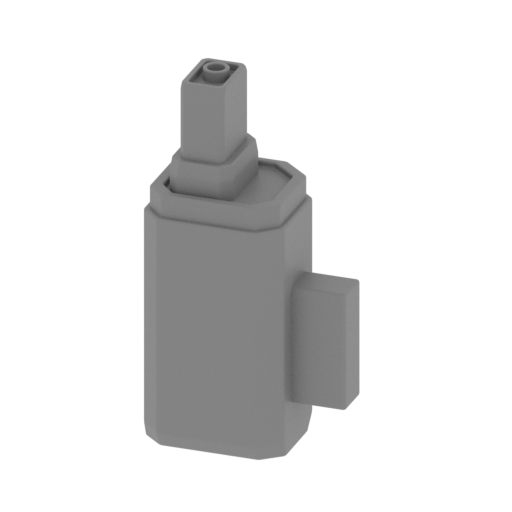 | _21_body_wepon_3_R_FDM.stl 19.03 x 12.2 x 36.13 mm | 0.75 x 0.48 x 1.42 in | Size: 19.03 x 12.2 x 36.13 mm | 0.75 x 0.48 x 1.42 in | File size: 0.26 mb | Printing Time / Filament: 37 min / <1 m | ||
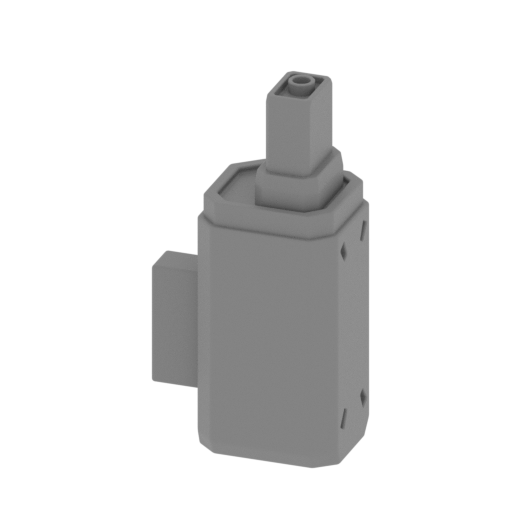 | _22_body_wepon_4_L_FDM.stl 19.03 x 12.2 x 36.13 mm | 0.75 x 0.48 x 1.42 in | Size: 19.03 x 12.2 x 36.13 mm | 0.75 x 0.48 x 1.42 in | File size: 0.26 mb | Printing Time / Filament: 36 min / <1 m | ||
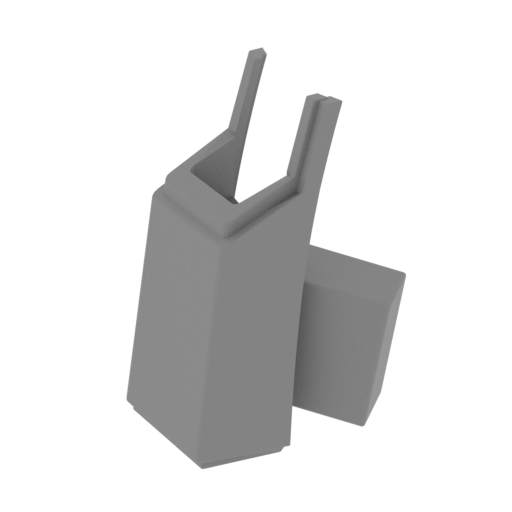 | _23_body_wepon_5_R_FDM.stl 14.29 x 10.36 x 19.57 mm | 0.56 x 0.41 x 0.77 in | Size: 14.29 x 10.36 x 19.57 mm | 0.56 x 0.41 x 0.77 in | File size: 0.07 mb | Printing Time / Filament: 14 min / <1 m | ||
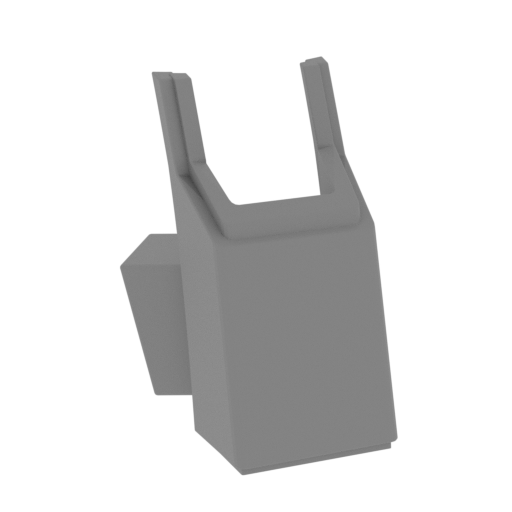 | _24_body_wepon_6_L_FDM.stl 14.29 x 10.36 x 19.57 mm | 0.56 x 0.41 x 0.77 in | Size: 14.29 x 10.36 x 19.57 mm | 0.56 x 0.41 x 0.77 in | File size: 0.07 mb | Printing Time / Filament: 14 min / <1 m | ||
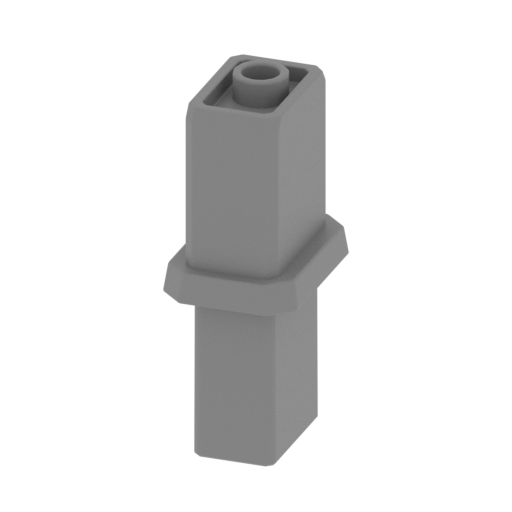 | _25_body_wepon_7_FDM.stl 6.78 x 9.25 x 18.63 mm | 0.27 x 0.36 x 0.73 in | Size: 6.78 x 9.25 x 18.63 mm | 0.27 x 0.36 x 0.73 in | File size: 0.11 mb | Printing Time / Filament: 16 min / <1 m | ||
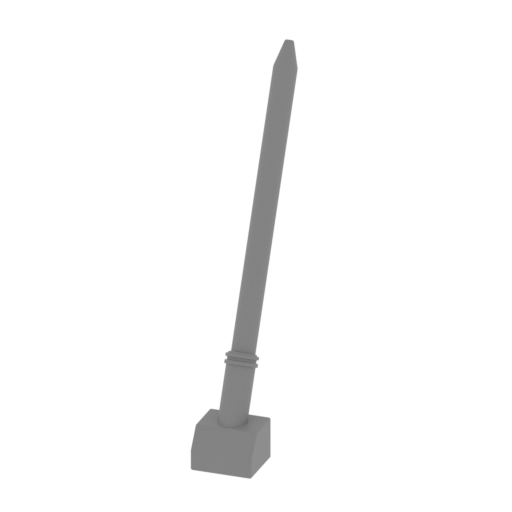 | _26_Antenna_FDM.stl 5.34 x 16.76 x 32.44 mm | 0.21 x 0.66 x 1.28 in | Size: 5.34 x 16.76 x 32.44 mm | 0.21 x 0.66 x 1.28 in | File size: 0.08 mb | Printing Time / Filament: 8 min / <1 m | ||
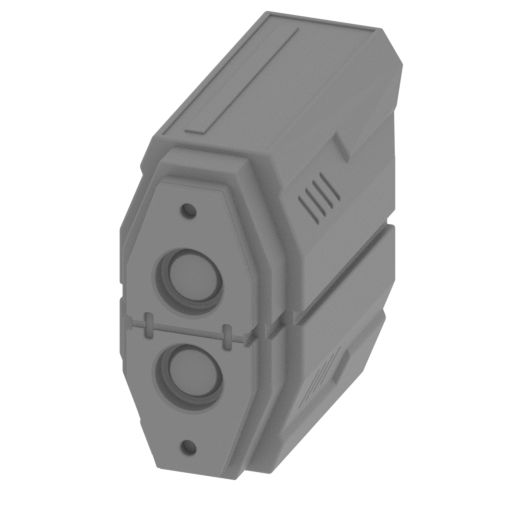 | _27_arm_wepon_R_FDM.stl 19.05 x 38.02 x 33.99 mm | 0.75 x 1.5 x 1.34 in | Size: 19.05 x 38.02 x 33.99 mm | 0.75 x 1.5 x 1.34 in | File size: 0.93 mb | Printing Time / Filament: 1 h 58 min / 1 m | ||
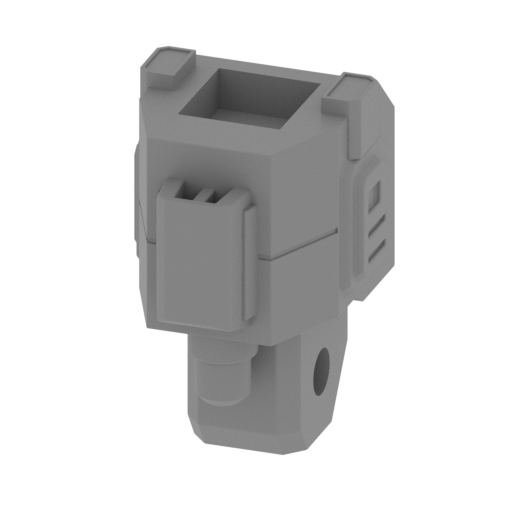 | _28_arm_3_R_FDM.stl 31.21 x 49.63 x 50.11 mm | 1.23 x 1.95 x 1.97 in | Size: 31.21 x 49.63 x 50.11 mm | 1.23 x 1.95 x 1.97 in | File size: 0.60 mb | Printing Time / Filament: 4 h 24 min / 3 m | ||
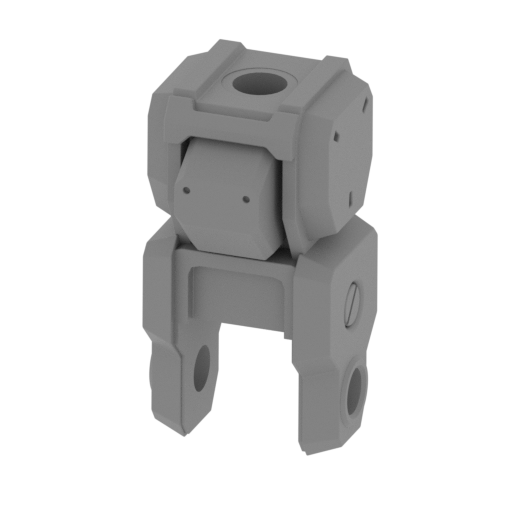 | _29_arm_2_R_FDM.stl 27.4 x 30.73 x 51.64 mm | 1.08 x 1.21 x 2.03 in | Size: 27.4 x 30.73 x 51.64 mm | 1.08 x 1.21 x 2.03 in | File size: 0.96 mb | Printing Time / Filament: 3 h 29 min / 2 m | ||
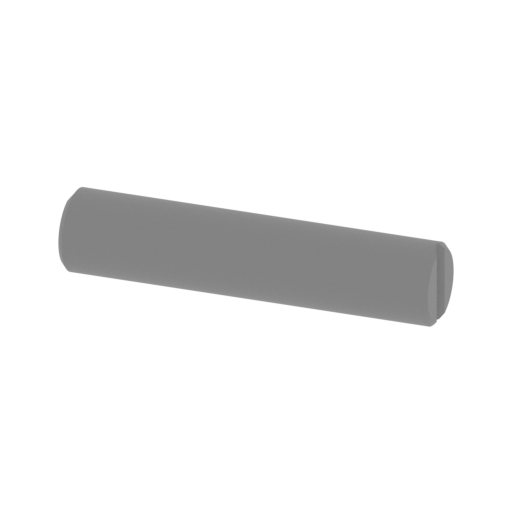 Updated Updated | _30_elbow_pin_x2.stl 27.5 x 6 x 5.87 mm | 1.08 x 0.24 x 0.23 in | Size: 27.5 x 6 x 5.87 mm | 1.08 x 0.24 x 0.23 in | File size: 0.04 mb | Printing Time / Filament: 9 min / <1 m | ||
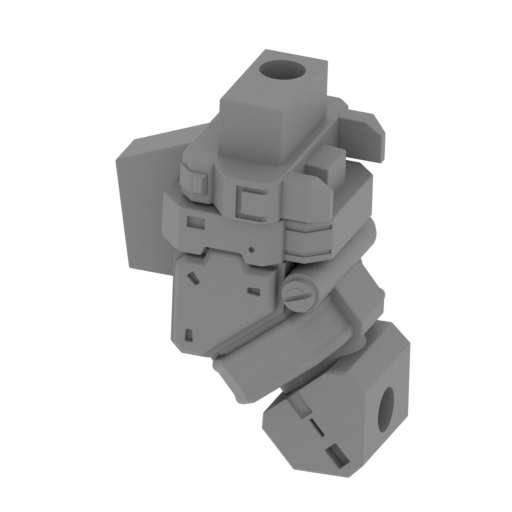 | _31_arm_1_R_FDM.stl 43.7 x 35.22 x 61.16 mm | 1.72 x 1.39 x 2.41 in | Size: 43.7 x 35.22 x 61.16 mm | 1.72 x 1.39 x 2.41 in | File size: 1.60 mb | Printing Time / Filament: 5 h 57 min / 3 m | ||
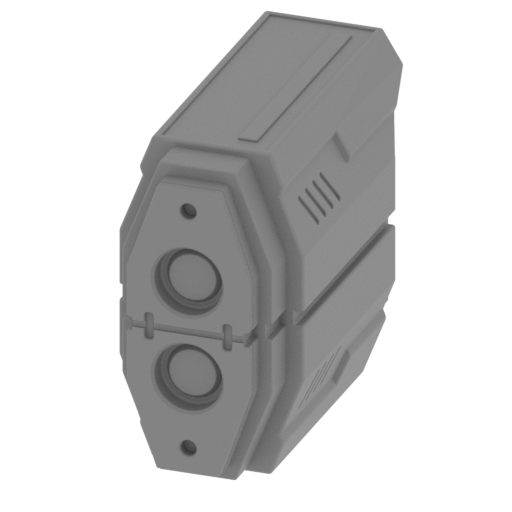 | _32_arm_wepon_L_FDM.stl 19.05 x 38.02 x 33.99 mm | 0.75 x 1.5 x 1.34 in | Size: 19.05 x 38.02 x 33.99 mm | 0.75 x 1.5 x 1.34 in | File size: 0.93 mb | Printing Time / Filament: 1 h 58 min / 1 m | ||
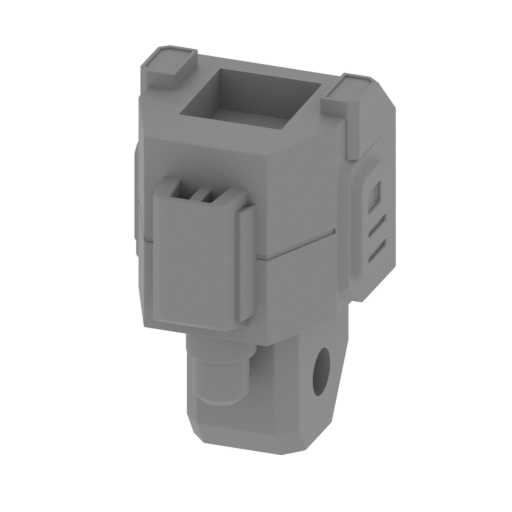 | _33_arm_3_L_FDM.stl 31.21 x 49.63 x 50.11 mm | 1.23 x 1.95 x 1.97 in | Size: 31.21 x 49.63 x 50.11 mm | 1.23 x 1.95 x 1.97 in | File size: 0.60 mb | Printing Time / Filament: 4 h 24 min / 3 m | ||
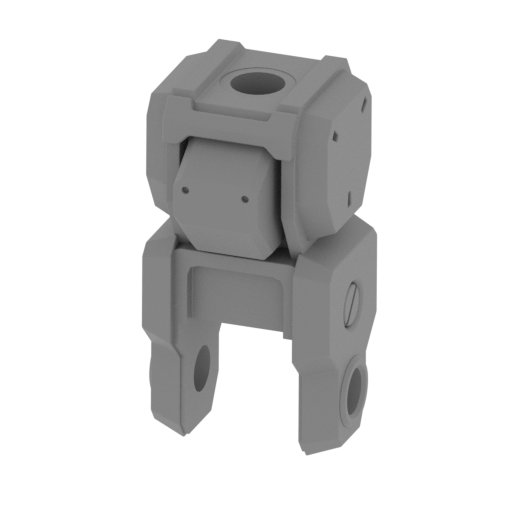 | _34_arm_2_L_FDM.stl 27.4 x 30.73 x 51.64 mm | 1.08 x 1.21 x 2.03 in | Size: 27.4 x 30.73 x 51.64 mm | 1.08 x 1.21 x 2.03 in | File size: 0.96 mb | Printing Time / Filament: 3 h 28 min / 2 m | ||
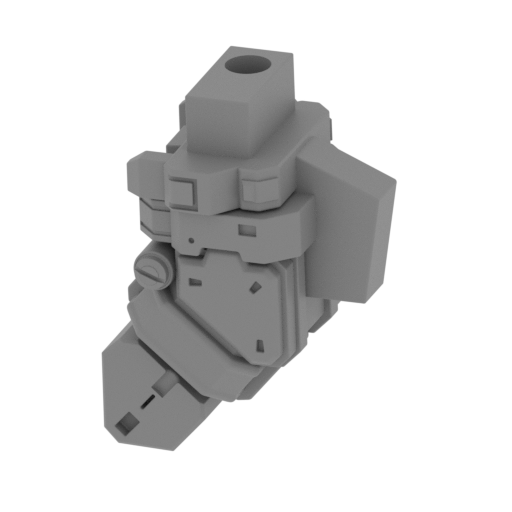 | _35_arm_1_L_FDM.stl 43.7 x 35.22 x 61.16 mm | 1.72 x 1.39 x 2.41 in | Size: 43.7 x 35.22 x 61.16 mm | 1.72 x 1.39 x 2.41 in | File size: 1.60 mb | Printing Time / Filament: 5 h 55 min / 3 m | ||
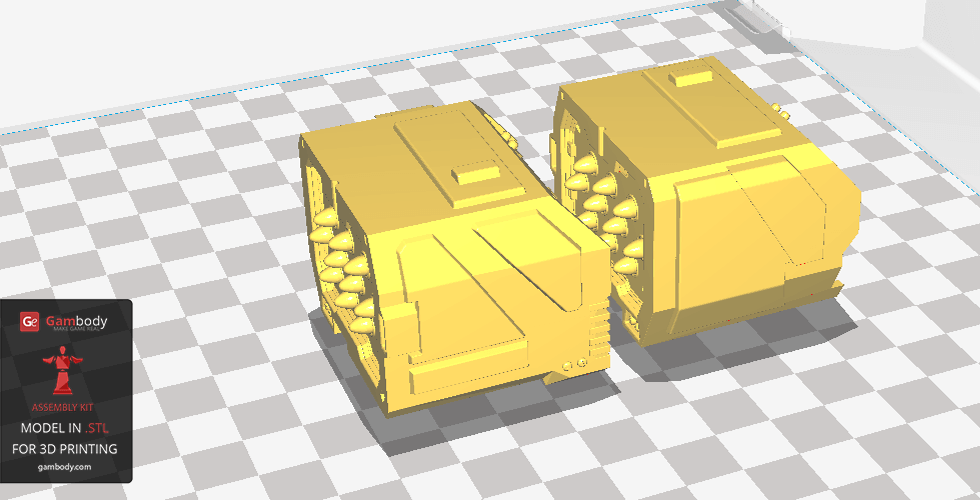
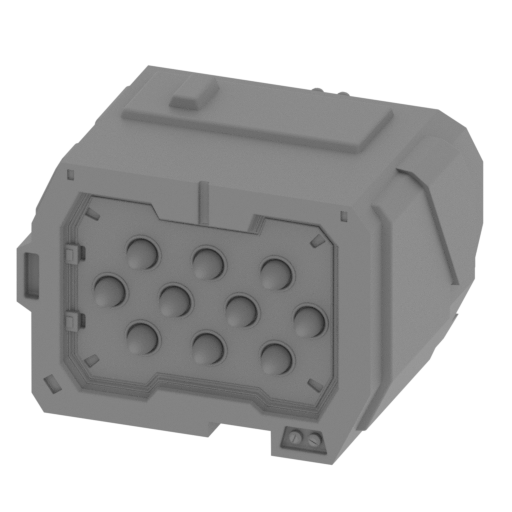 | _36_shoulder_wepon_R_FDM.stl 49.97 x 43.66 x 42.75 mm | 1.97 x 1.72 x 1.68 in | Size: 49.97 x 43.66 x 42.75 mm | 1.97 x 1.72 x 1.68 in | File size: 2.28 mb | Printing Time / Filament: 6 h 39 min / 4 m | ||
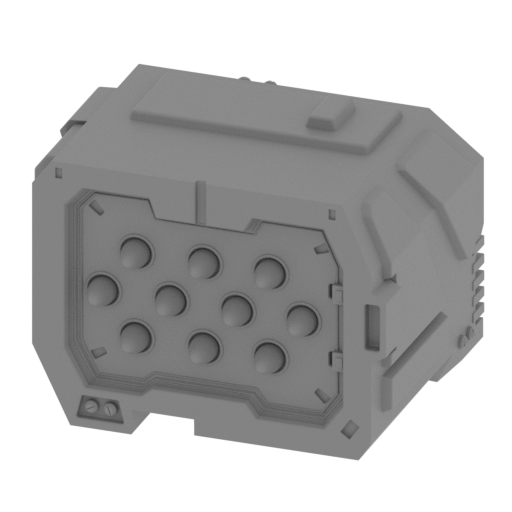 | _37_shoulder_wepon_L_FDM.stl 49.97 x 43.66 x 42.75 mm | 1.97 x 1.72 x 1.68 in | Size: 49.97 x 43.66 x 42.75 mm | 1.97 x 1.72 x 1.68 in | File size: 2.28 mb | Printing Time / Filament: 6 h 40 min / 4 m | ||
 | _38_body_glass_1.stl 15.73 x 1.73 x 10.89 mm | 0.62 x 0.07 x 0.43 in | Size: 15.73 x 1.73 x 10.89 mm | 0.62 x 0.07 x 0.43 in | File size: 0.04 mb | Printing Time / Filament: 8 min / <1 m | ||
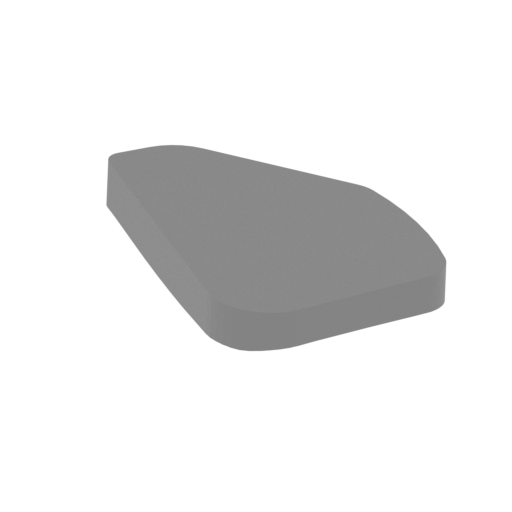 | _39_body_glass_8.stl 8.58 x 7 x 1.52 mm | 0.34 x 0.28 x 0.06 in | Size: 8.58 x 7 x 1.52 mm | 0.34 x 0.28 x 0.06 in | File size: 0.03 mb | Printing Time / Filament: 2 min / <1 m | ||
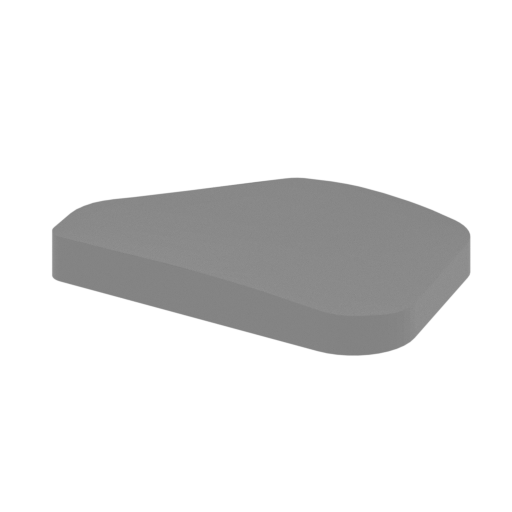 | _40_body_glass_5.stl 8.3 x 5.91 x 1.15 mm | 0.33 x 0.23 x 0.05 in | Size: 8.3 x 5.91 x 1.15 mm | 0.33 x 0.23 x 0.05 in | File size: 0.03 mb | Printing Time / Filament: 1 min / <1 m | ||
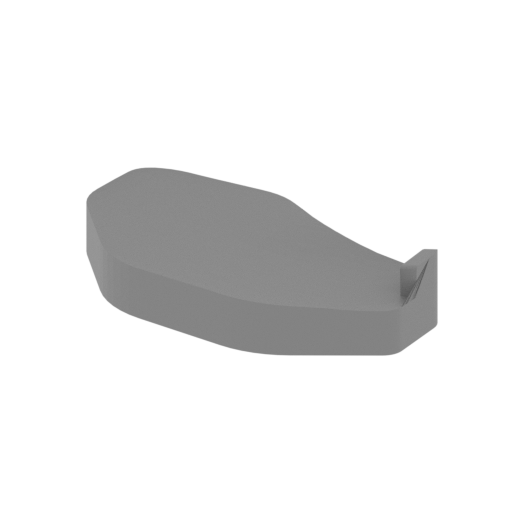 | _41_body_glass_4.stl 10.02 x 6.98 x 2.06 mm | 0.39 x 0.27 x 0.08 in | Size: 10.02 x 6.98 x 2.06 mm | 0.39 x 0.27 x 0.08 in | File size: 0.05 mb | Printing Time / Filament: 2 min / <1 m | ||
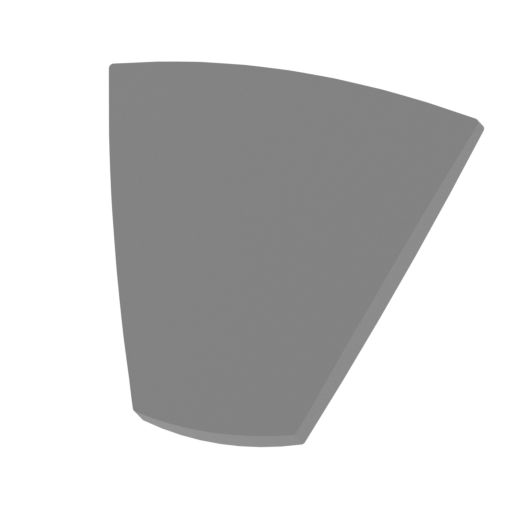 | _42_body_glass_2.stl 10.48 x 7.24 x 8.63 mm | 0.41 x 0.29 x 0.34 in | Size: 10.48 x 7.24 x 8.63 mm | 0.41 x 0.29 x 0.34 in | File size: 0.05 mb | Printing Time / Filament: 3 min / <1 m | ||
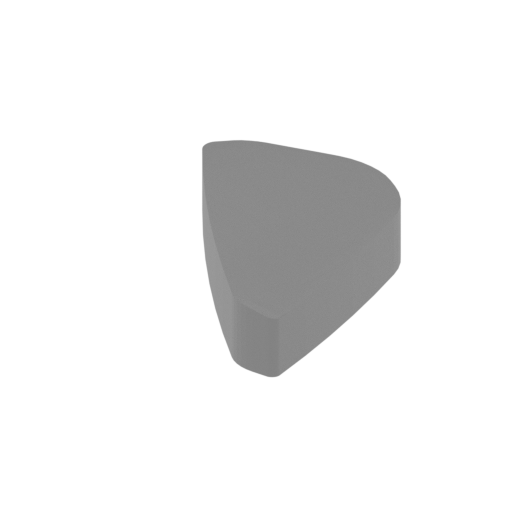 | _43_body_glass_3.stl 4.6 x 7.7 x 1.4 mm | 0.18 x 0.3 x 0.06 in | Size: 4.6 x 7.7 x 1.4 mm | 0.18 x 0.3 x 0.06 in | File size: 0.03 mb | Printing Time / Filament: 1 min / <1 m | ||
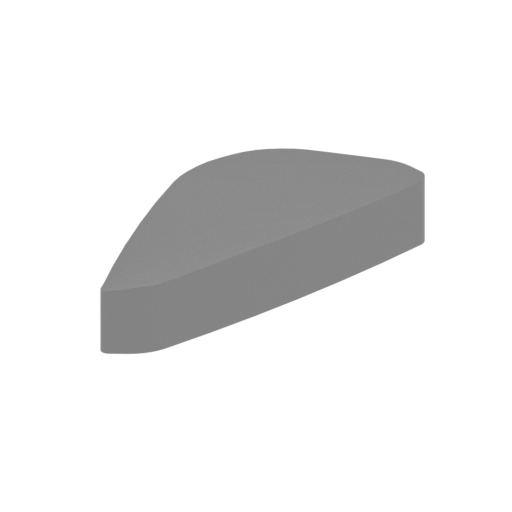 | _44_body_glass_6.stl 4.6 x 7.7 x 1.45 mm | 0.18 x 0.3 x 0.06 in | Size: 4.6 x 7.7 x 1.45 mm | 0.18 x 0.3 x 0.06 in | File size: 0.03 mb | Printing Time / Filament: 1 min / <1 m | ||
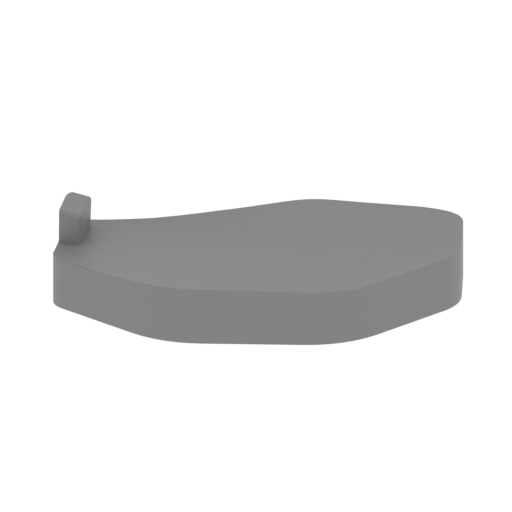 | _45_body_glass_7.stl 10.02 x 6.98 x 2.14 mm | 0.39 x 0.27 x 0.08 in | Size: 10.02 x 6.98 x 2.14 mm | 0.39 x 0.27 x 0.08 in | File size: 0.05 mb | Printing Time / Filament: 2 min / <1 m | ||
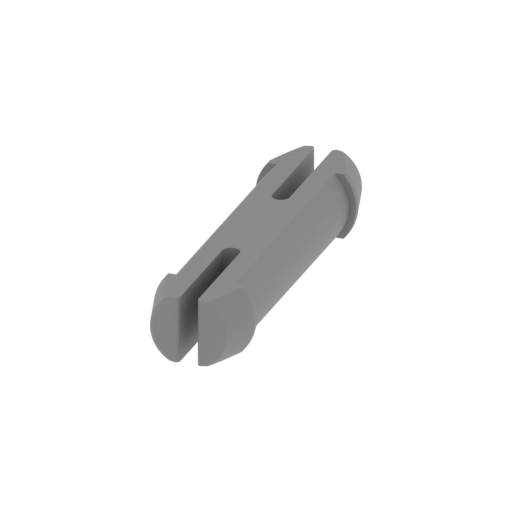 | _46_Pin_FDM_x7.stl 7.99 x 29.3 x 5.26 mm | 0.31 x 1.15 x 0.21 in | Size: 7.99 x 29.3 x 5.26 mm | 0.31 x 1.15 x 0.21 in | File size: 0.14 mb | Printing Time / Filament: 10 min / <1 m | ||
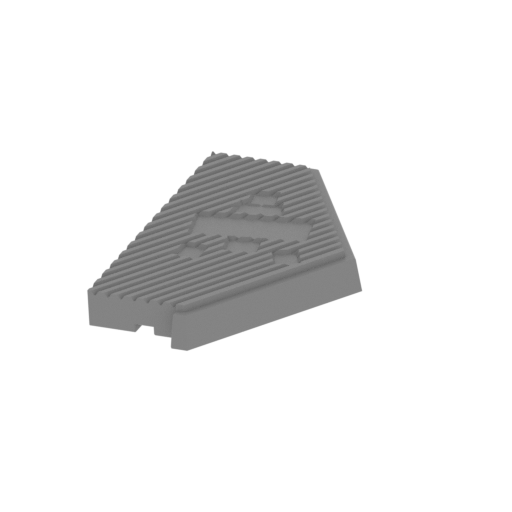 | _47_stand_1_FDM.stl 98.36 x 171.12 x 18 mm | 3.87 x 6.74 x 0.71 in | Size: 98.36 x 171.12 x 18 mm | 3.87 x 6.74 x 0.71 in | File size: 0.08 mb | Printing Time / Filament: 16 h 29 min / 10 m | ||
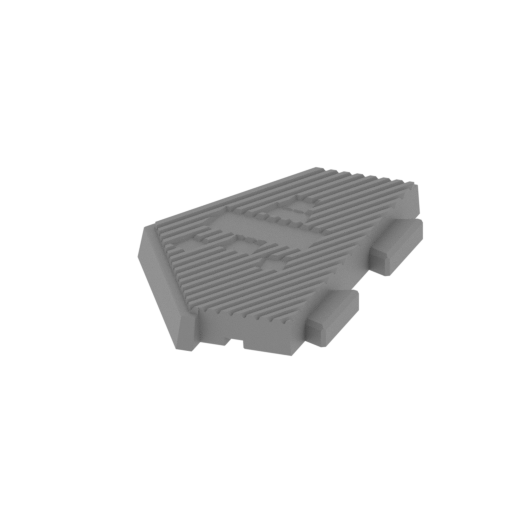 | _48_stand_2_FDM.stl 109.71 x 171.12 x 18 mm | 4.32 x 6.74 x 0.71 in | Size: 109.71 x 171.12 x 18 mm | 4.32 x 6.74 x 0.71 in | File size: 0.09 mb | Printing Time / Filament: 17 h 3 min / 10 m | ||
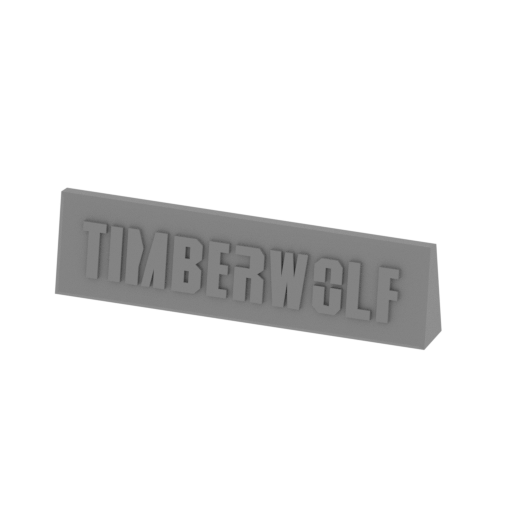 | _49_stand_3_FDM.stl 83.03 x 22.07 x 22.02 mm | 3.27 x 0.87 x 0.87 in | Size: 83.03 x 22.07 x 22.02 mm | 3.27 x 0.87 x 0.87 in | File size: 0.03 mb | Printing Time / Filament: 1 h 51 min / 1 m | ||
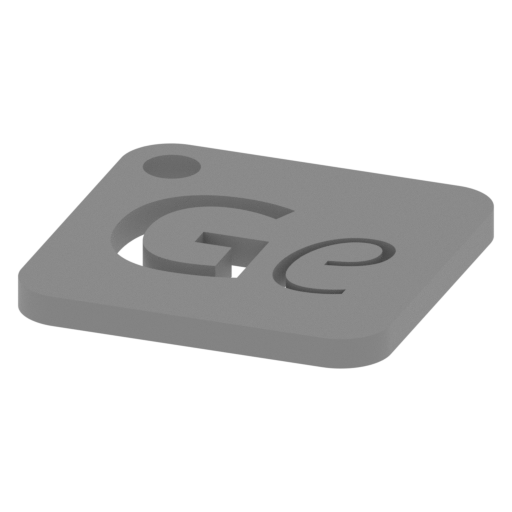 | Keychain (repaired).stl 29.68 x 29.69 x 2.42 mm | 1.17 x 1.17 x 0.1 in | Size: 29.68 x 29.69 x 2.42 mm | 1.17 x 1.17 x 0.1 in | File size: 0.37 mb | Printing Time / Filament: 23 min / <1 m | ||
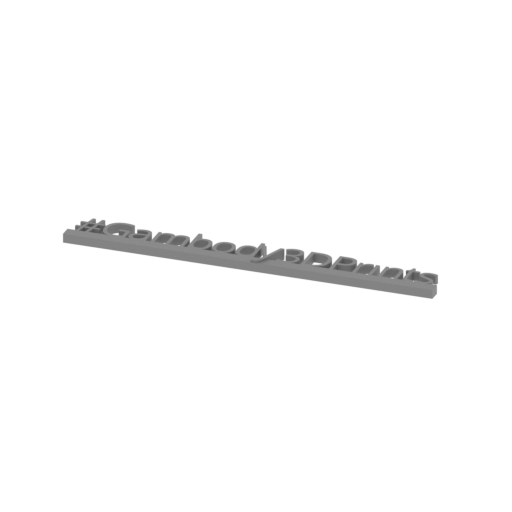 | Tag (repaired).stl 150.15 x 18.16 x 4.59 mm | 5.91 x 0.71 x 0.18 in | Size: 150.15 x 18.16 x 4.59 mm | 5.91 x 0.71 x 0.18 in | File size: 1.78 mb | Printing Time / Filament: 1 h 18 min / 1 m | ||
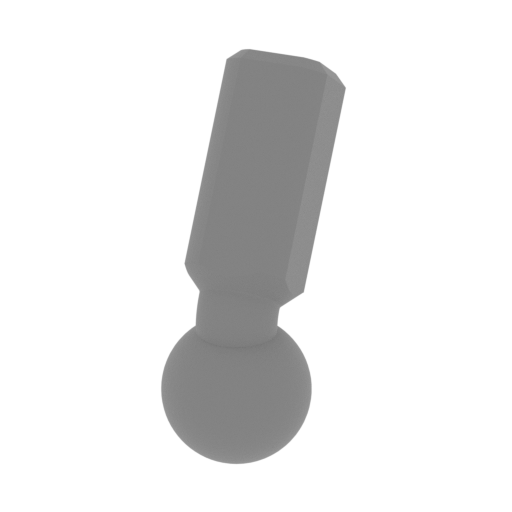 | _06_Foot_join_3_x2_FDM.stl 12.58 x 22.04 x 32.97 mm | 0.5 x 0.87 x 1.3 in | Size: 12.58 x 22.04 x 32.97 mm | 0.5 x 0.87 x 1.3 in | File size: 0.33 mb | Printing Time / Filament: 31 min / <1 m | ||
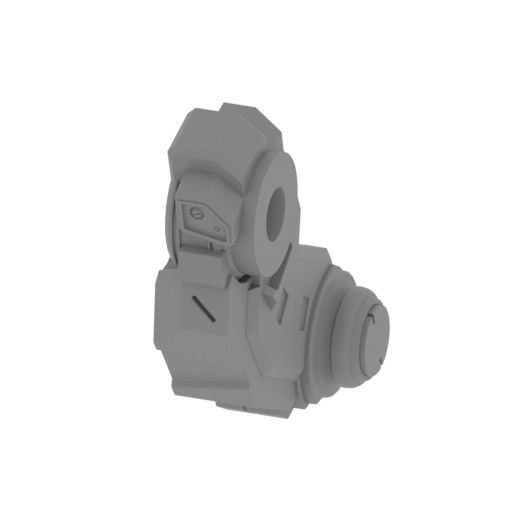 Updated Updated | _07_Leg_1_R_FDM (repaired).stl 33.39 x 69.24 x 74.79 mm | 1.31 x 2.73 x 2.94 in | Size: 33.39 x 69.24 x 74.79 mm | 1.31 x 2.73 x 2.94 in | File size: 7.85 mb | Printing Time / Filament: 6 h 39 min / 4 m | ||
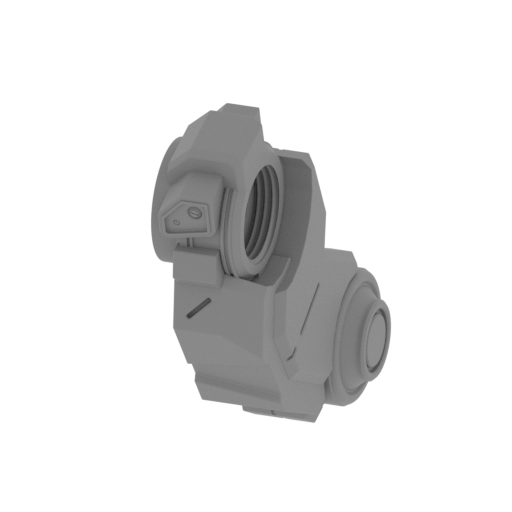 Updated Updated | _08_Leg_1_L_FDM (repaired).stl 33.39 x 69.24 x 74.79 mm | 1.31 x 2.73 x 2.94 in | Size: 33.39 x 69.24 x 74.79 mm | 1.31 x 2.73 x 2.94 in | File size: 8.02 mb | Printing Time / Filament: 6 h 40 min / 4 m | ||
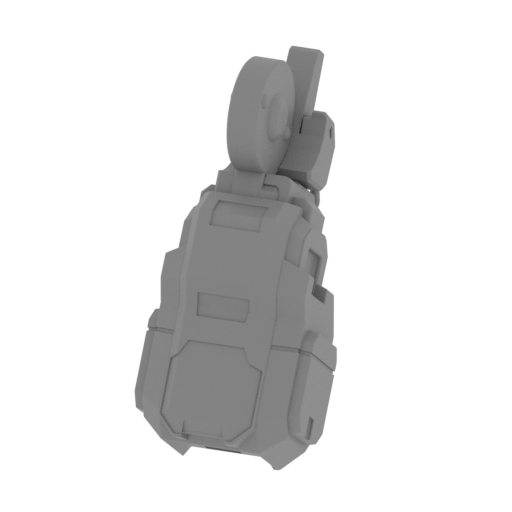 Updated Updated | _02_Leg_2_R_FDM (repaired).stl 42.98 x 76.38 x 95.76 mm | 1.69 x 3.01 x 3.77 in | Size: 42.98 x 76.38 x 95.76 mm | 1.69 x 3.01 x 3.77 in | File size: 1.49 mb | Printing Time / Filament: 9 h 11 min / 5 m | ||
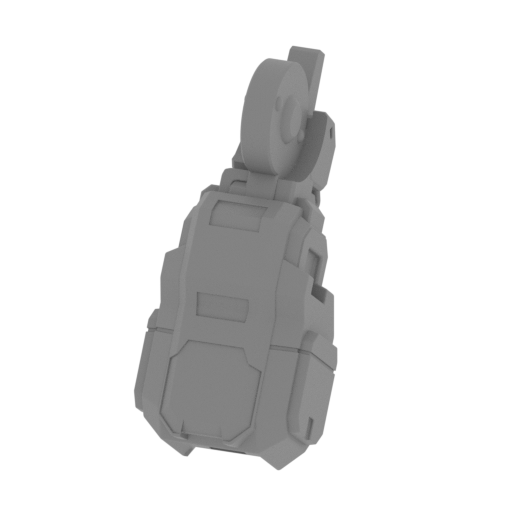 Updated Updated | _03_Leg_2_L_FDM (repaired).stl 42.98 x 76.38 x 95.76 mm | 1.69 x 3.01 x 3.77 in | Size: 42.98 x 76.38 x 95.76 mm | 1.69 x 3.01 x 3.77 in | File size: 1.46 mb | Printing Time / Filament: 9 h 12 min / 5 m | ||
ABOUT THIS 3D MODEL
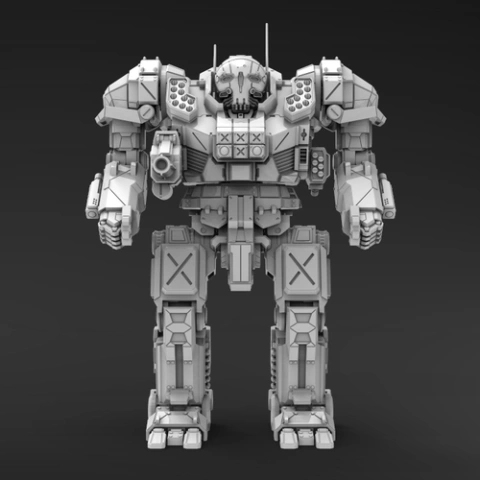
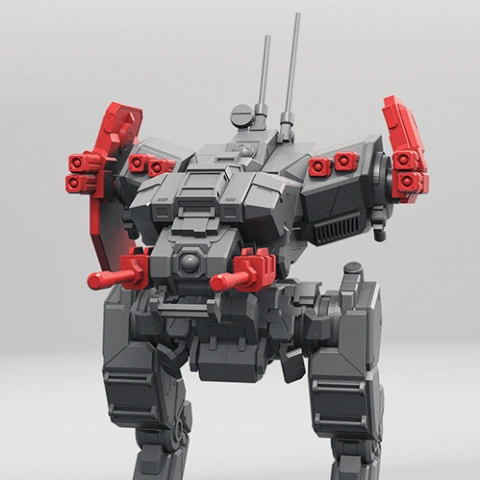
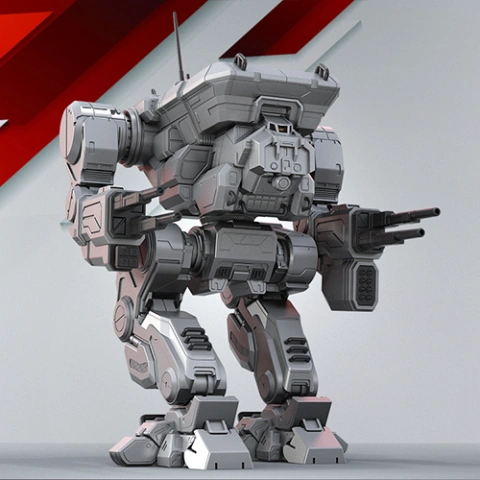
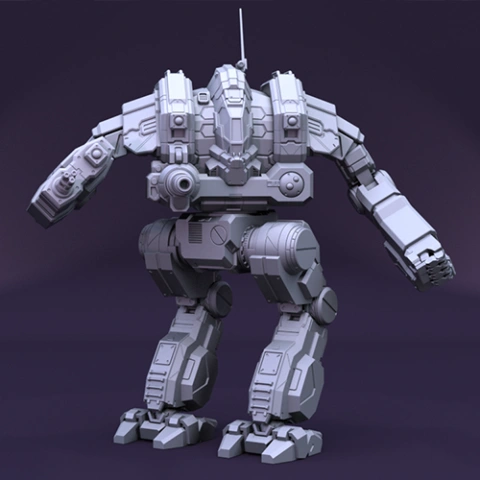
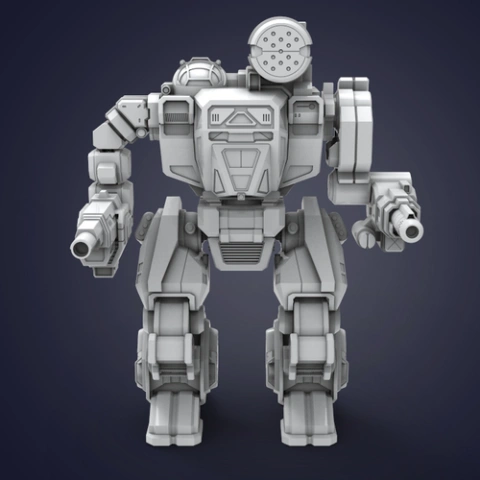
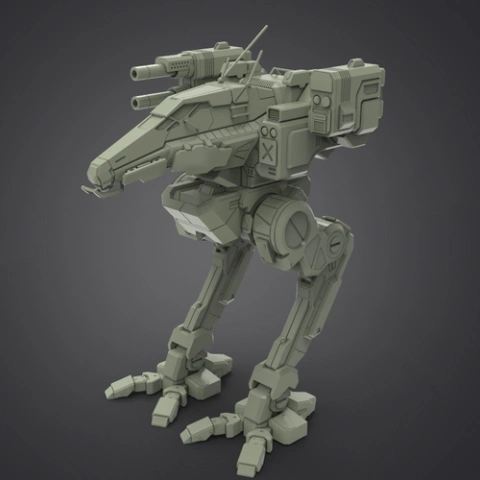
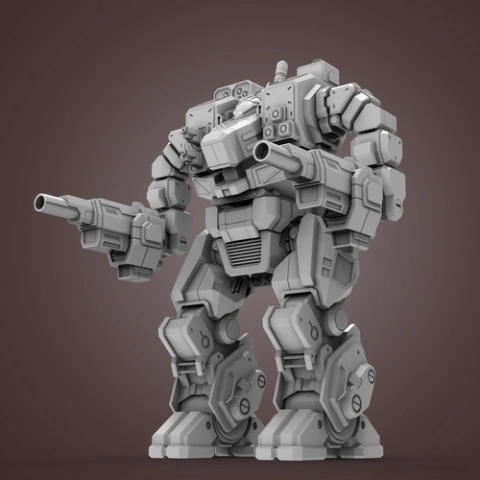
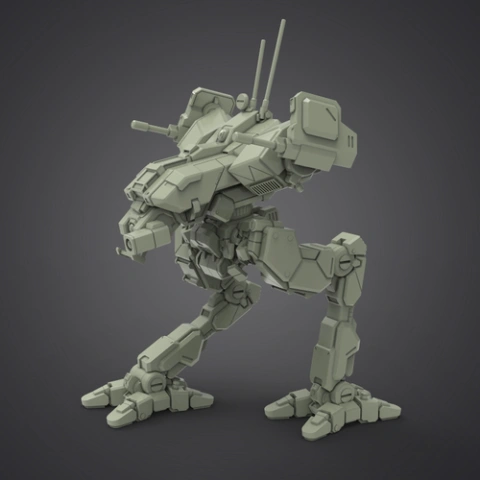
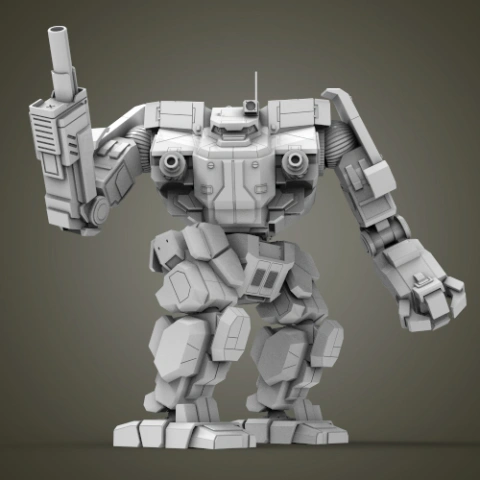
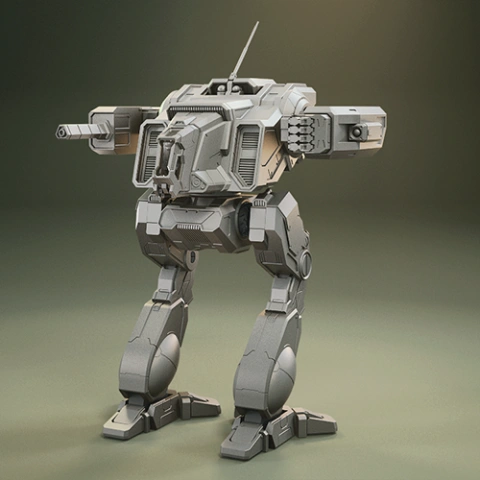
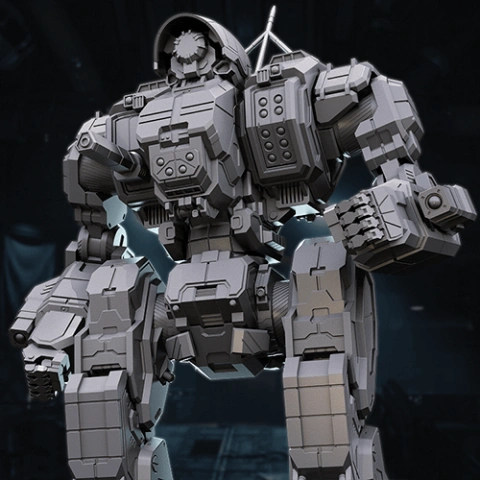
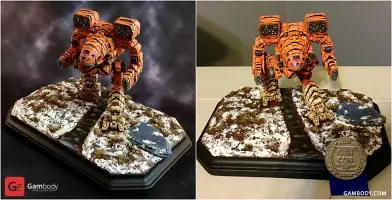
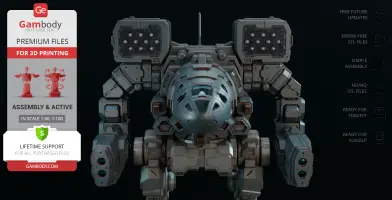
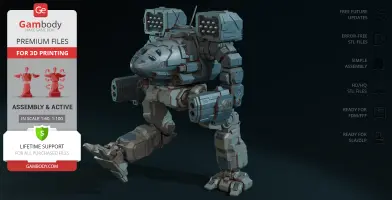
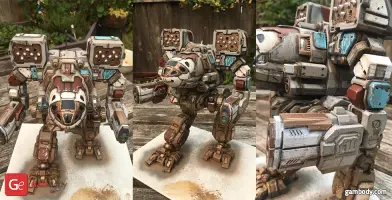
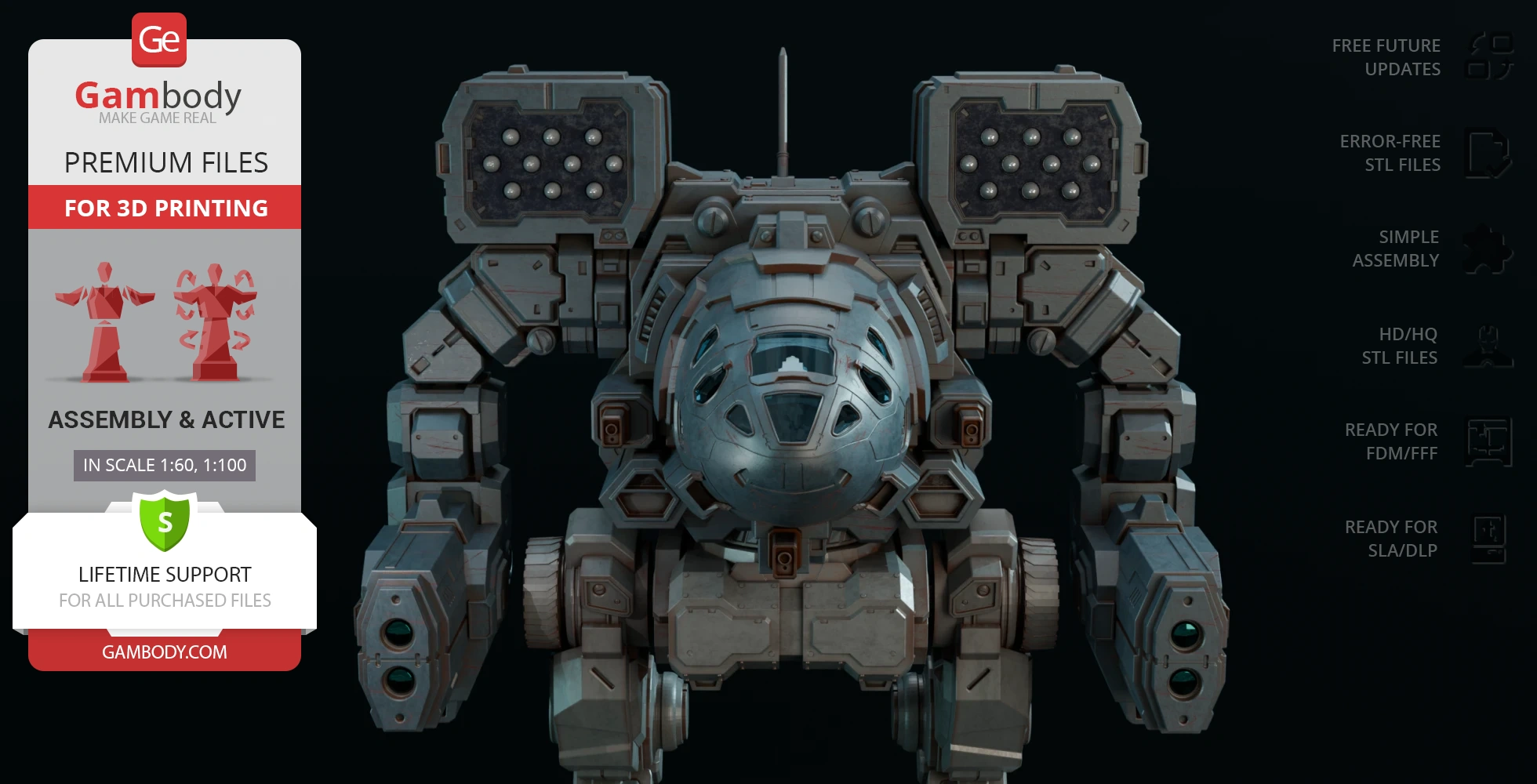
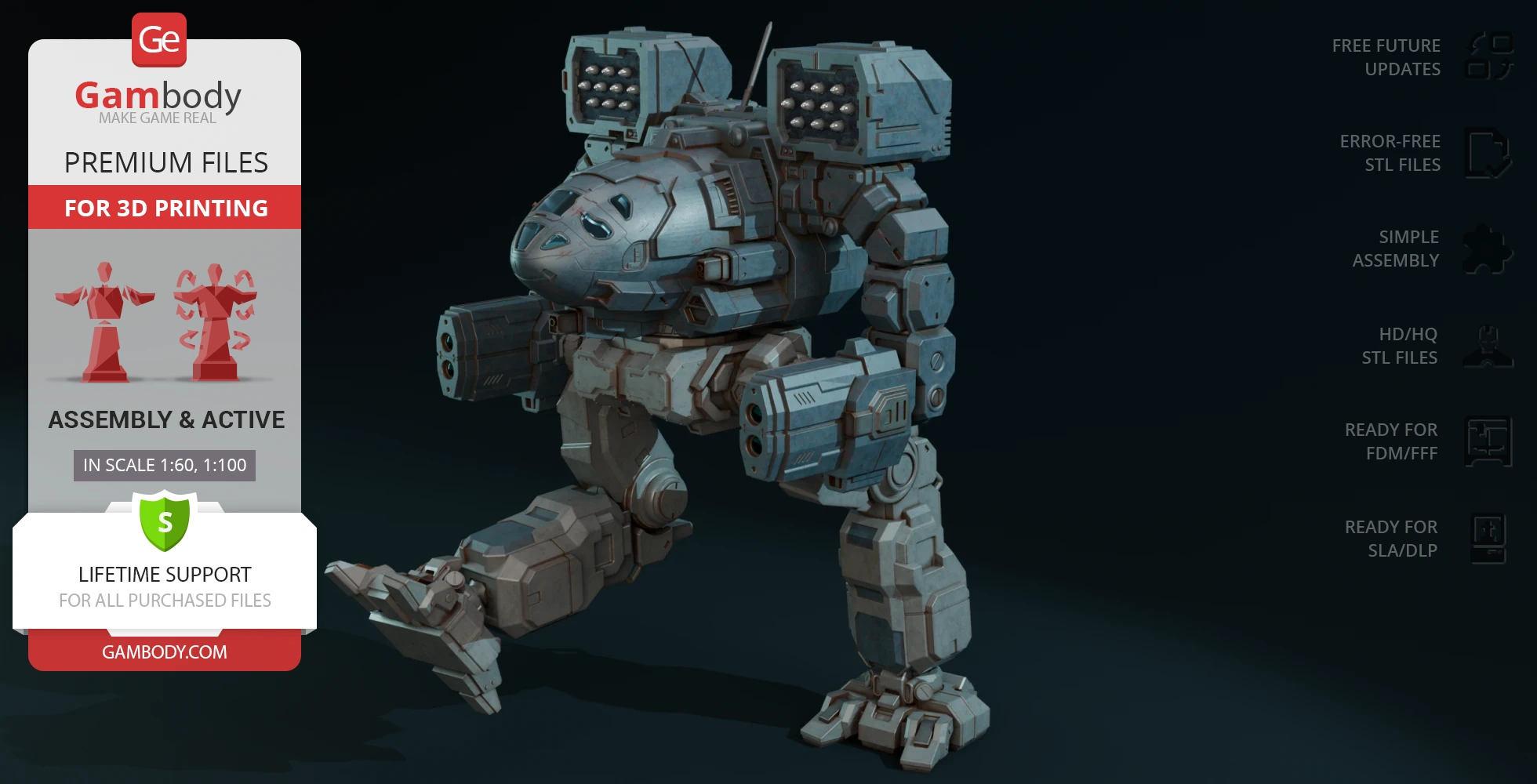
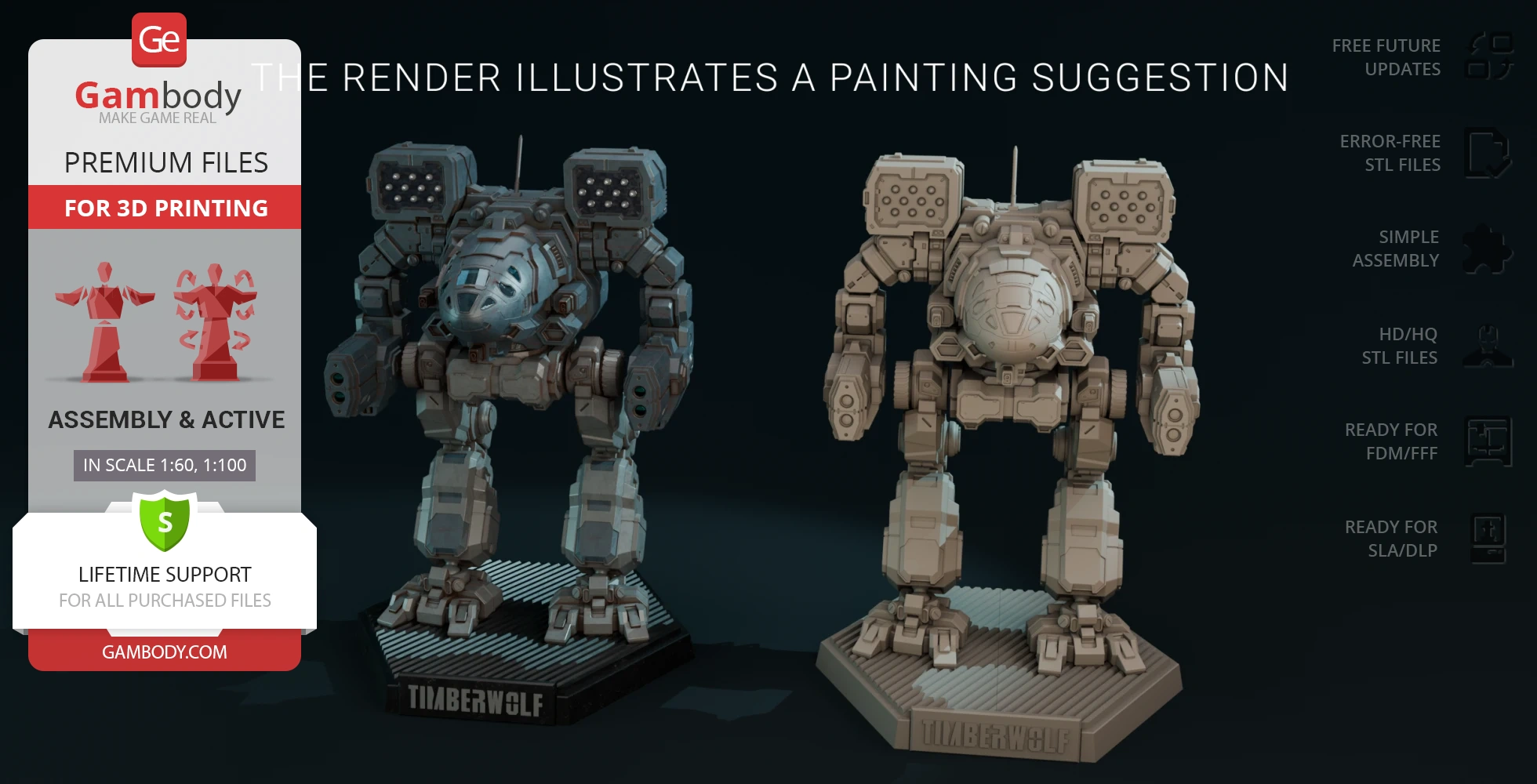
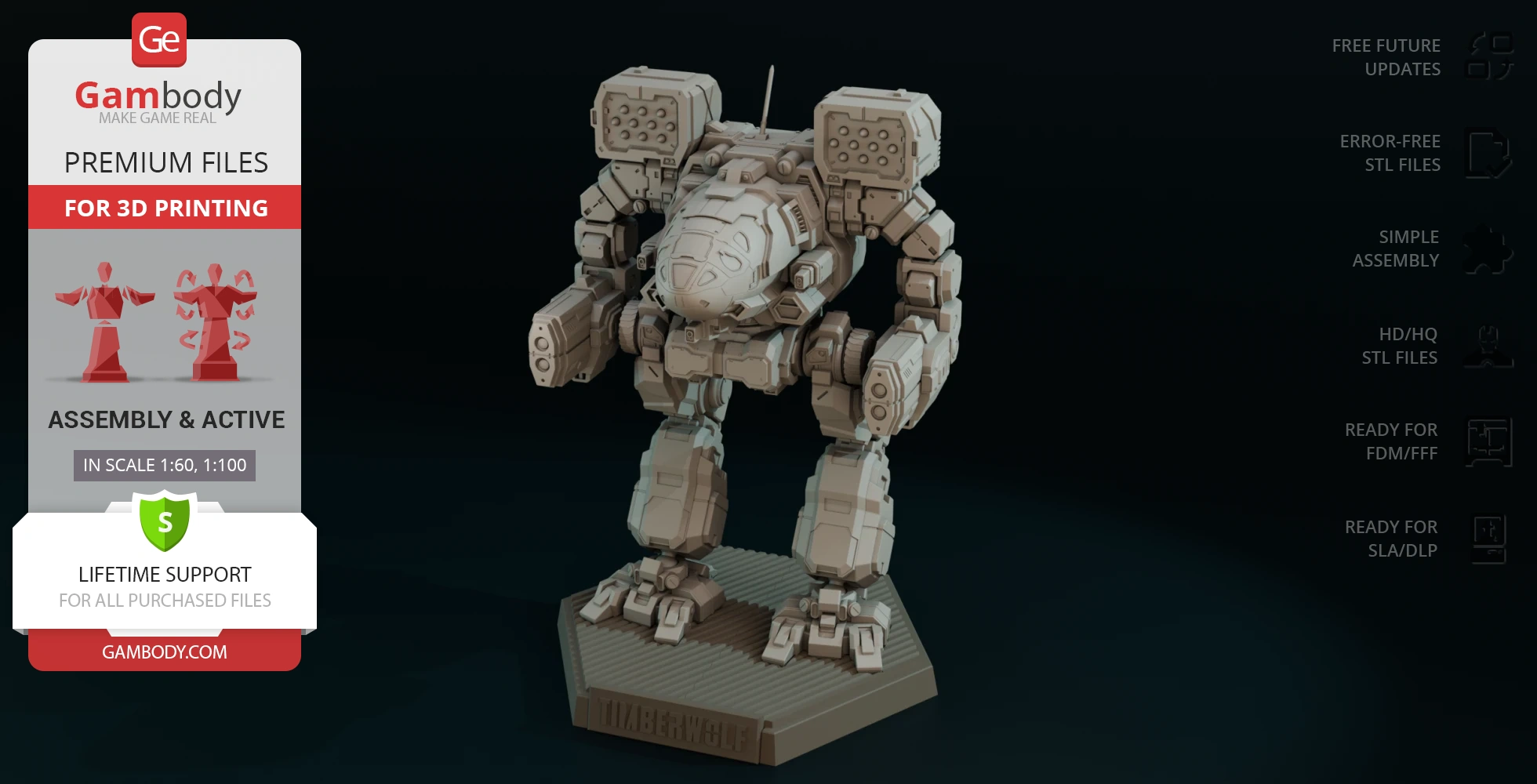
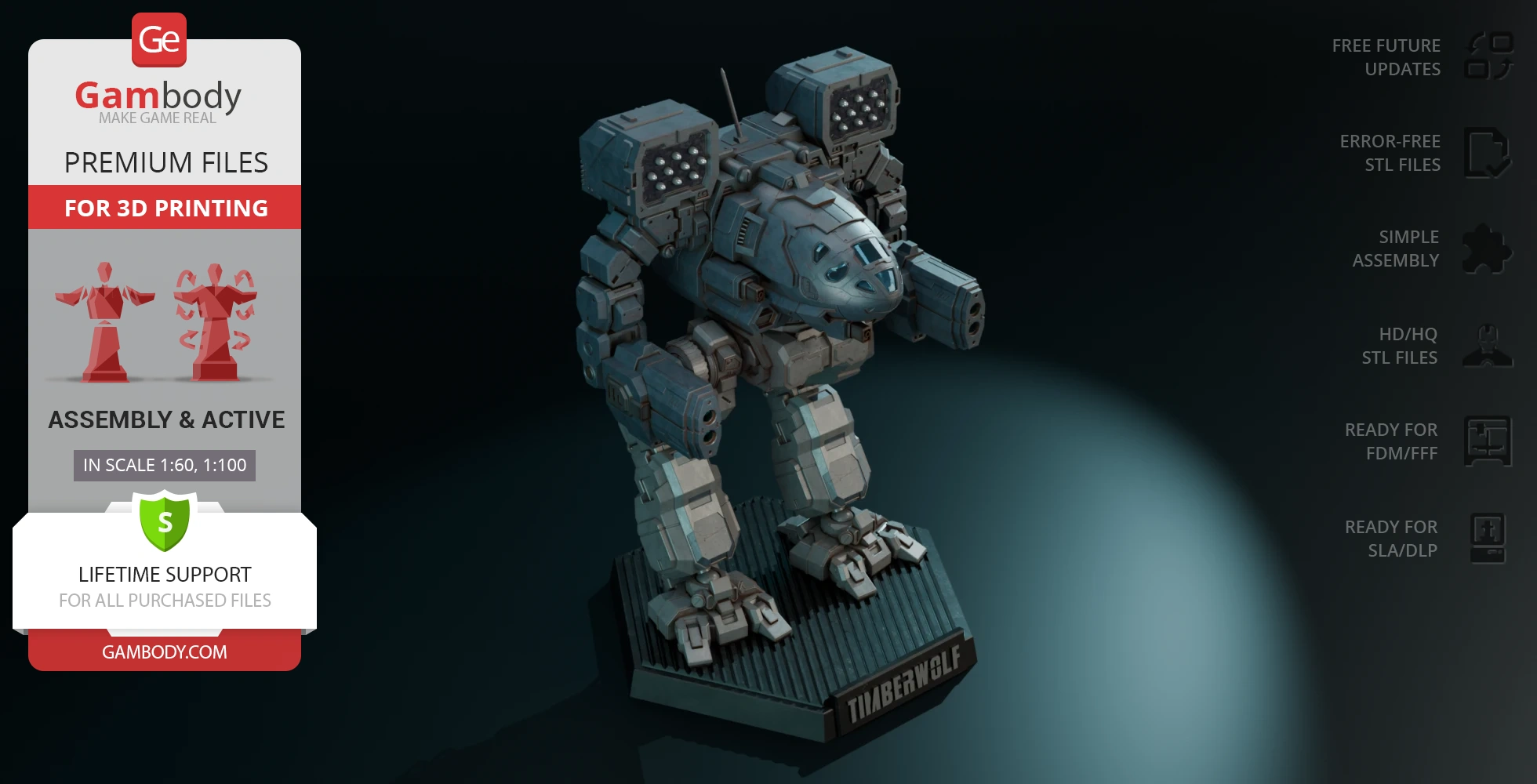
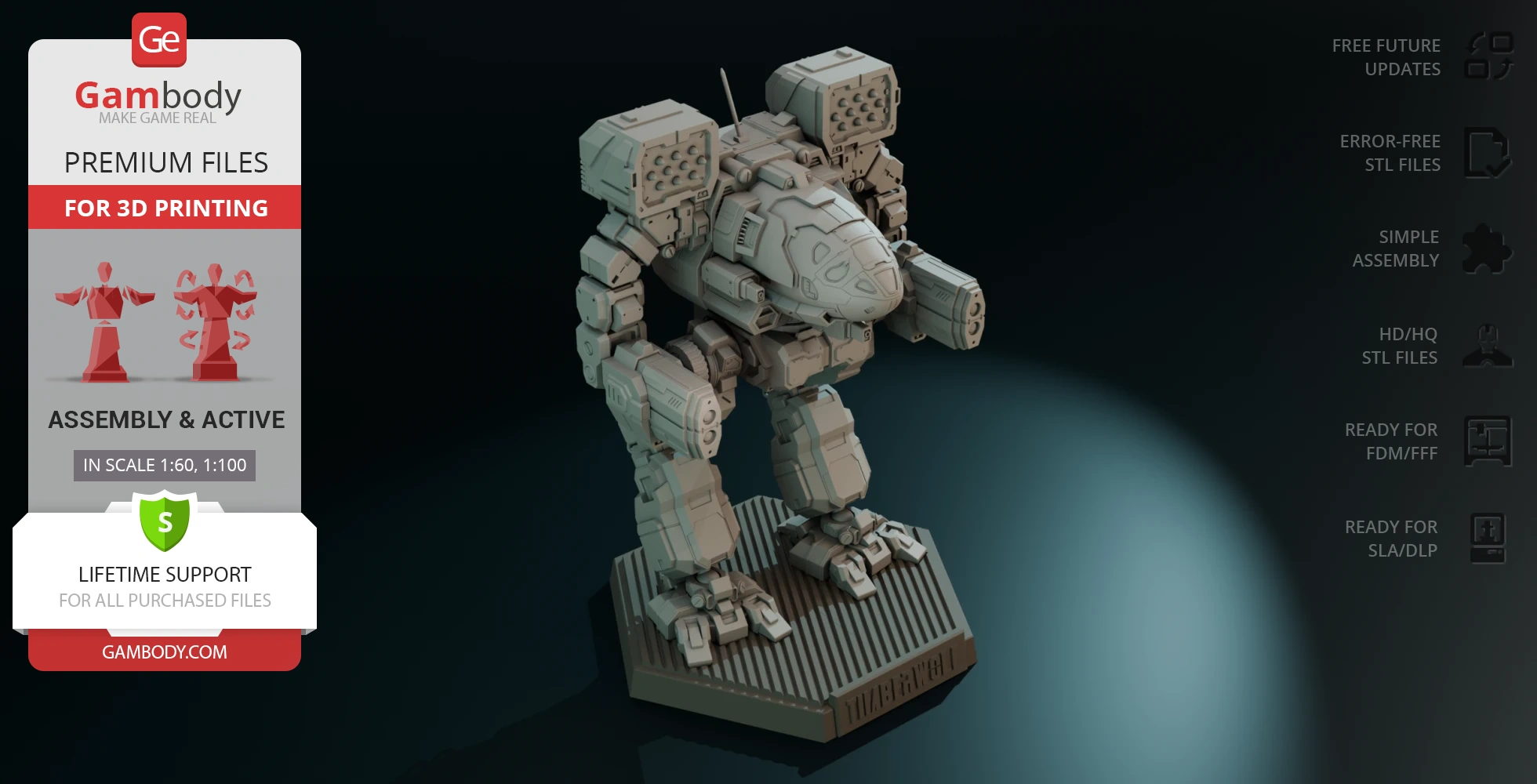
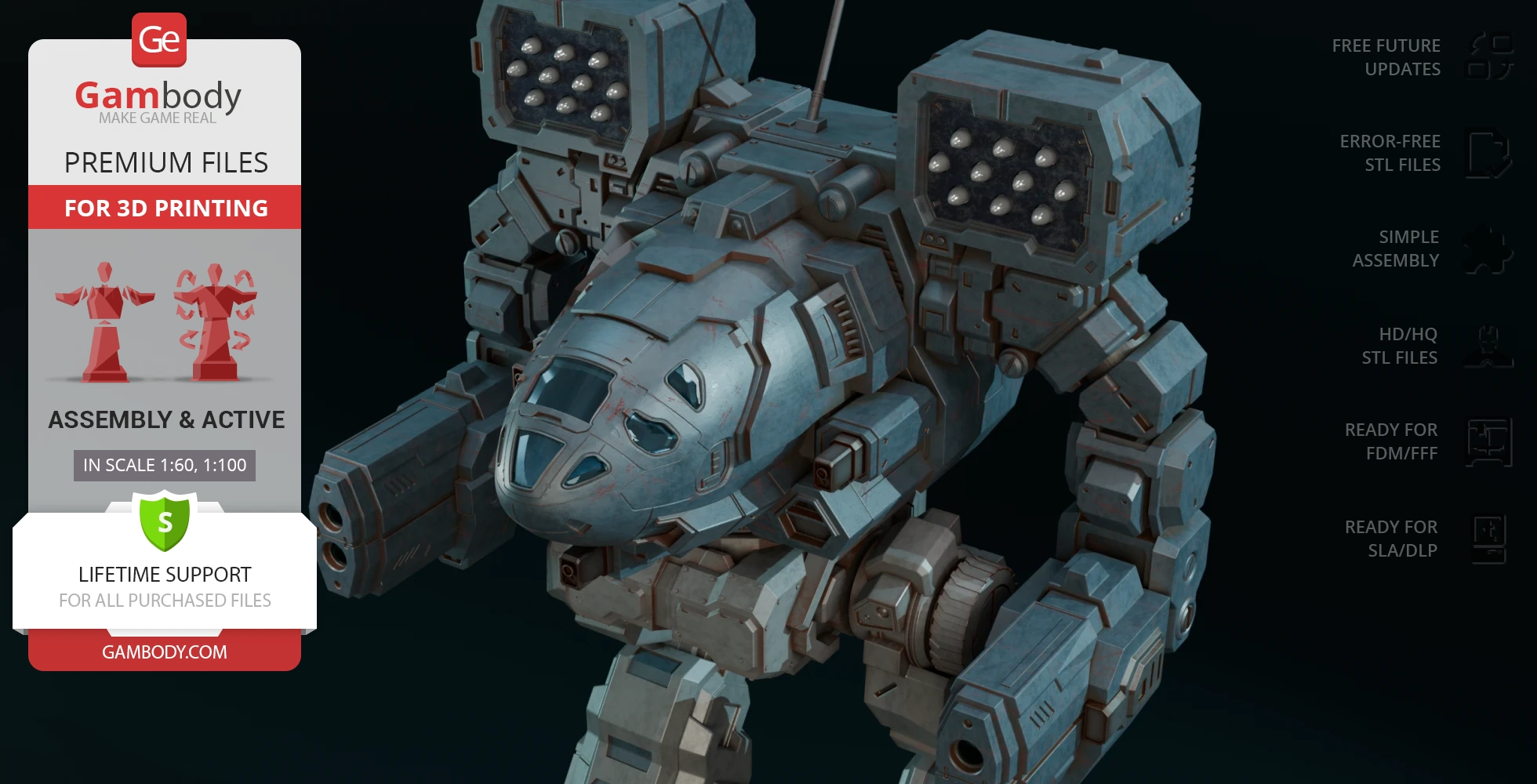
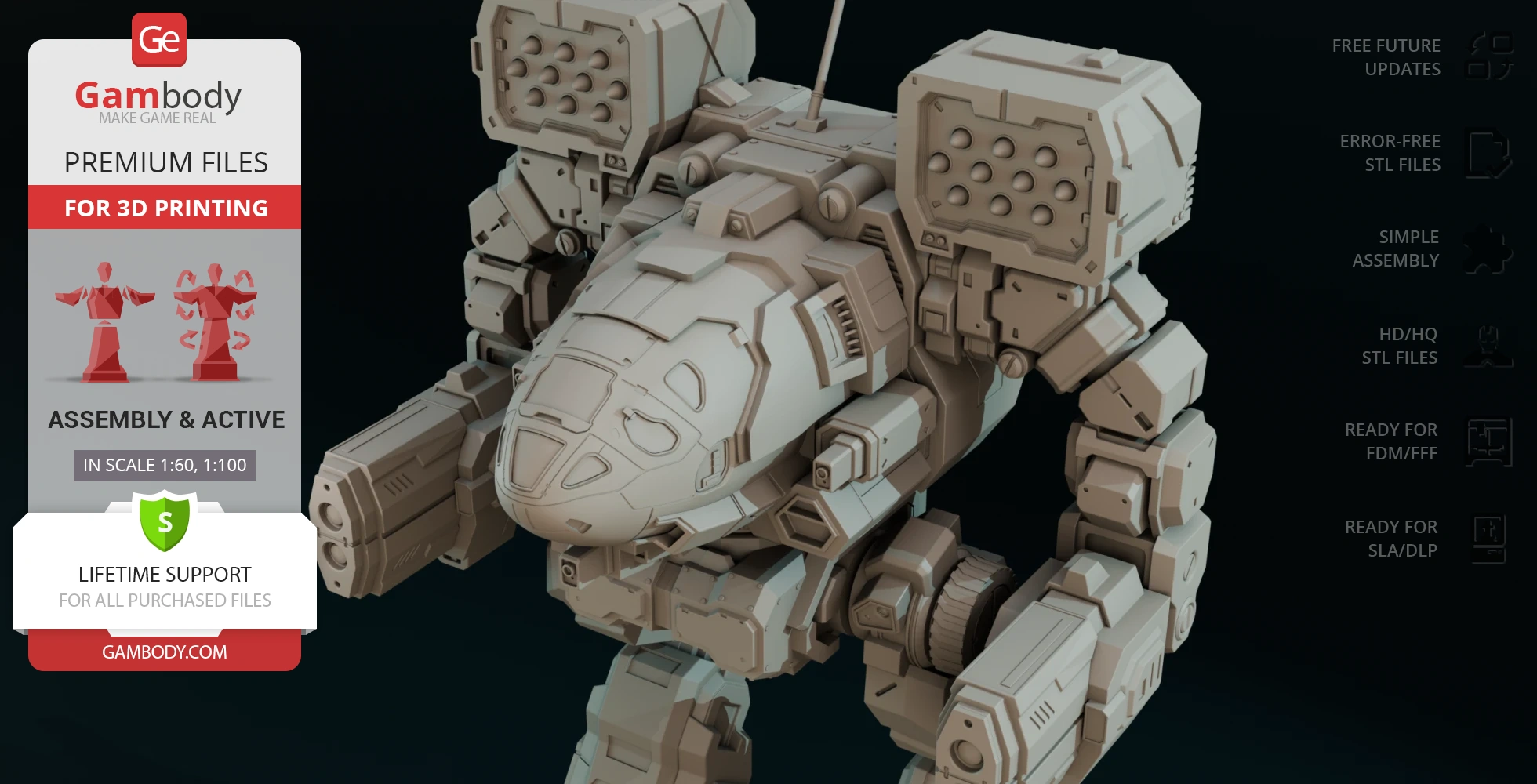
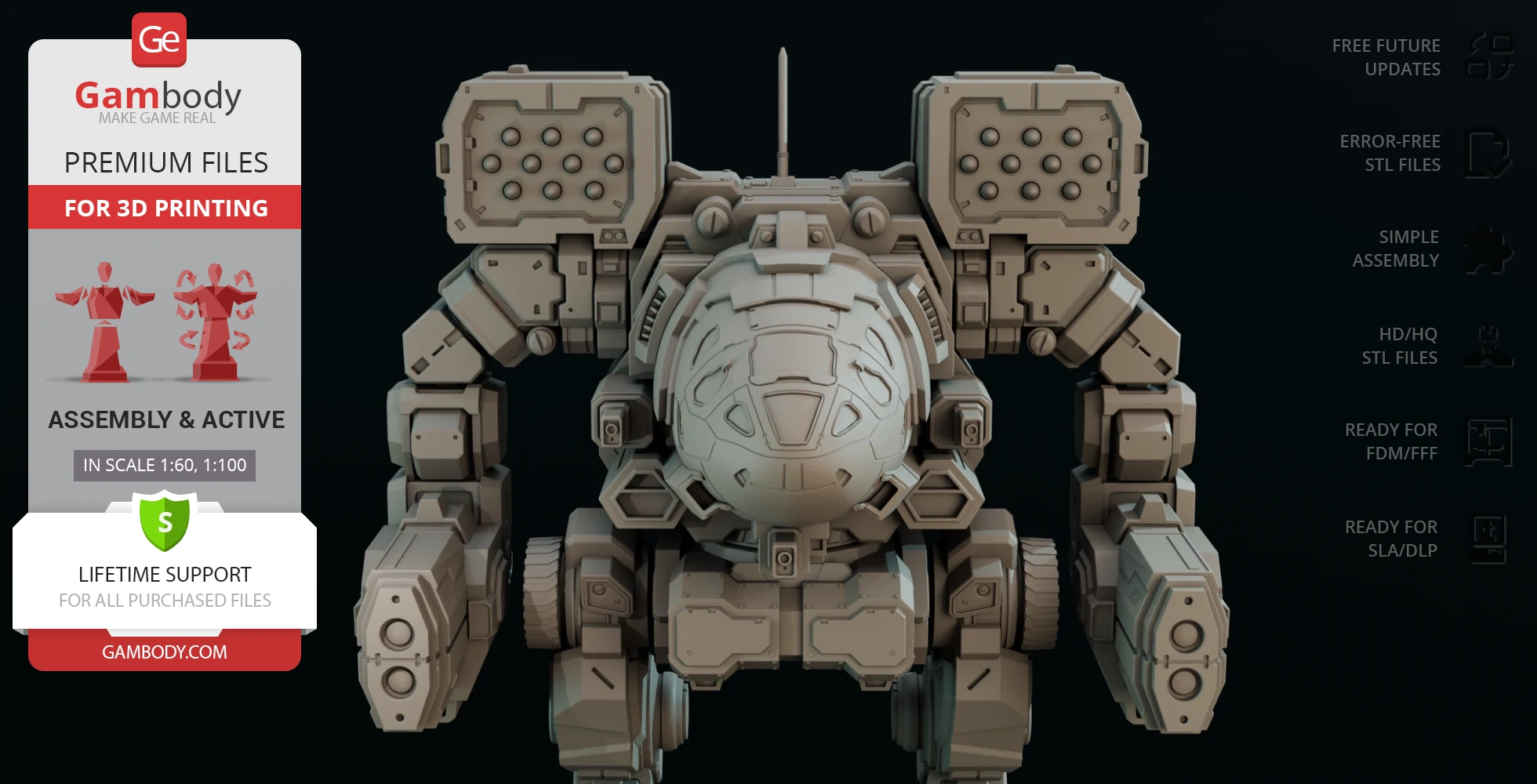
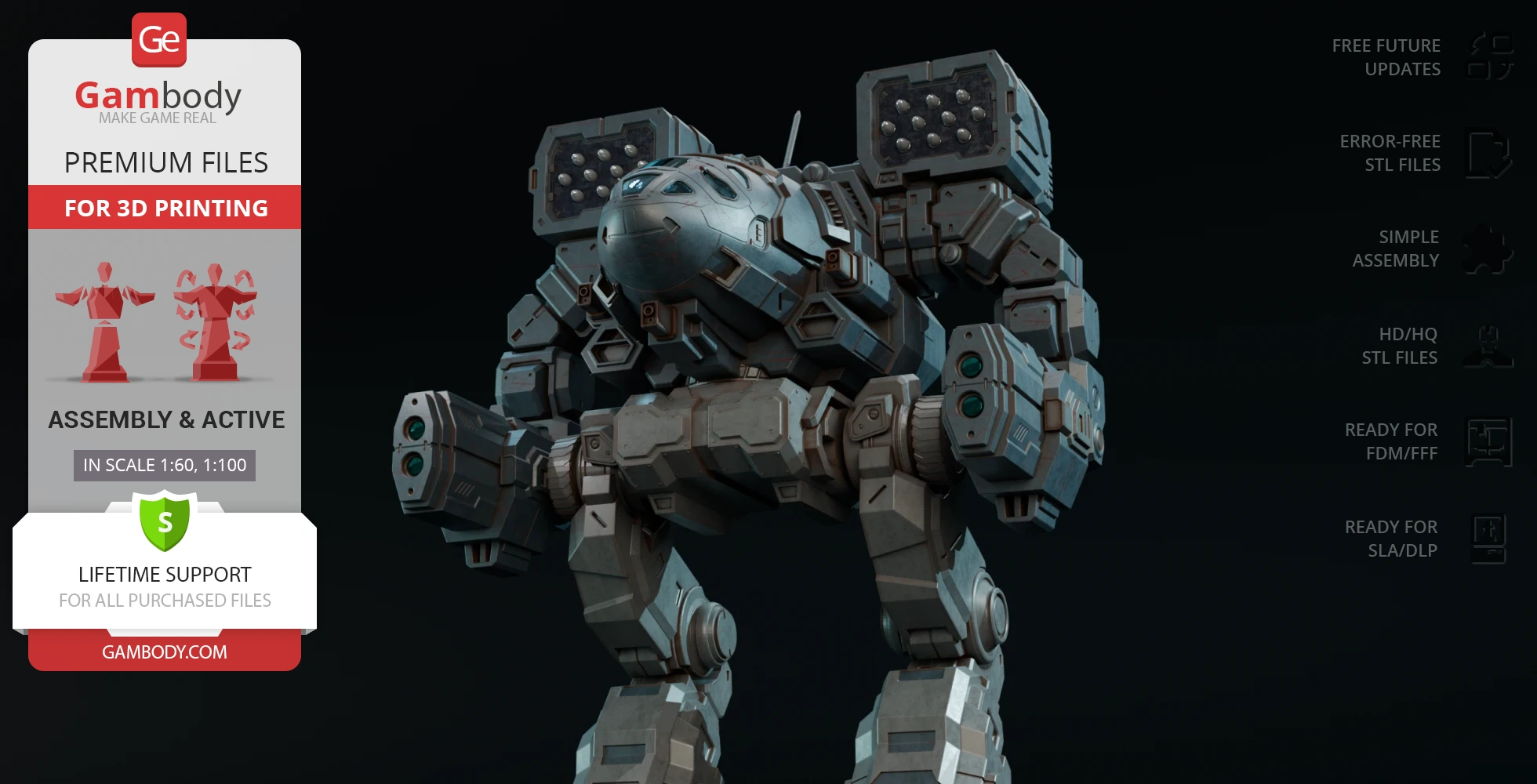
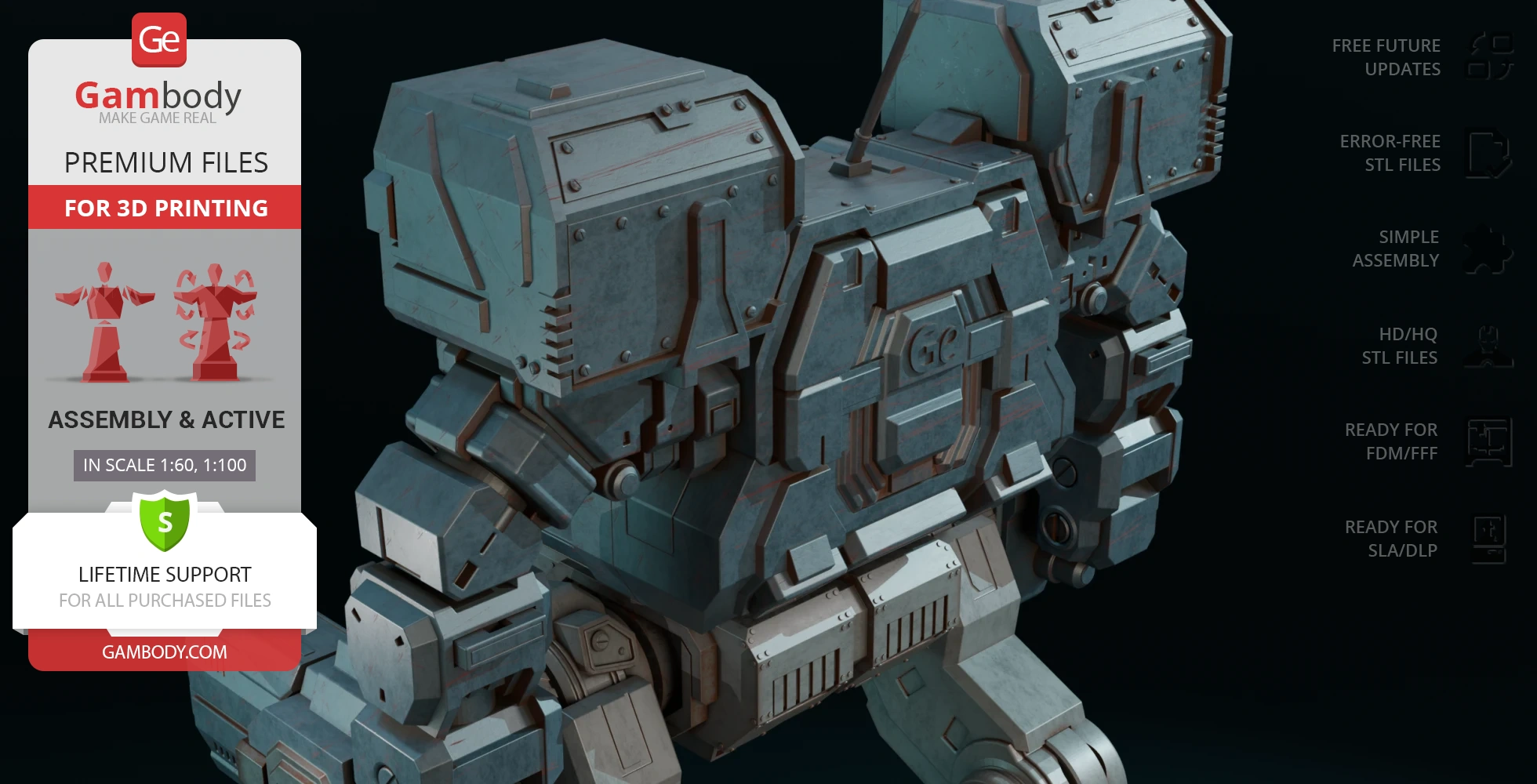
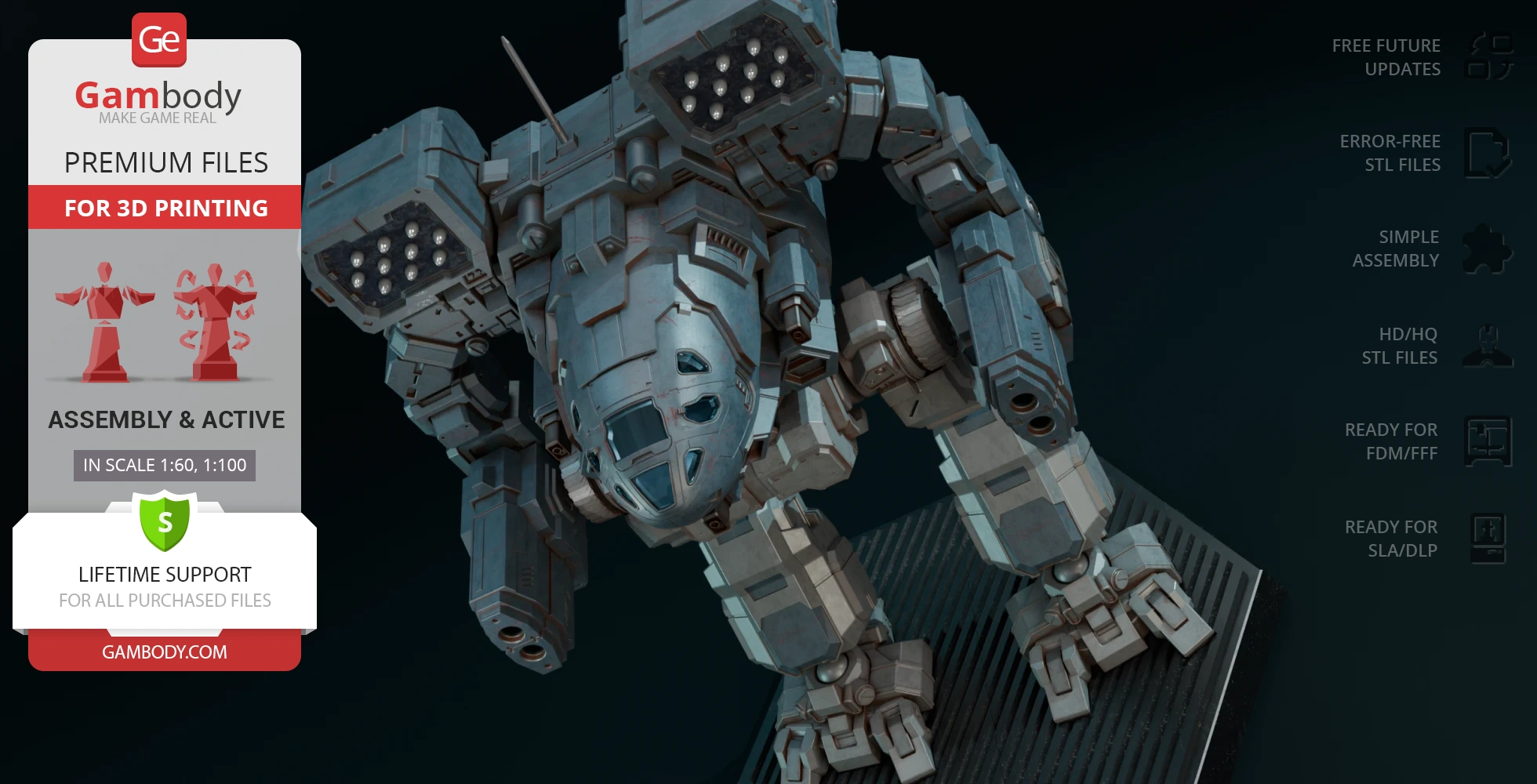
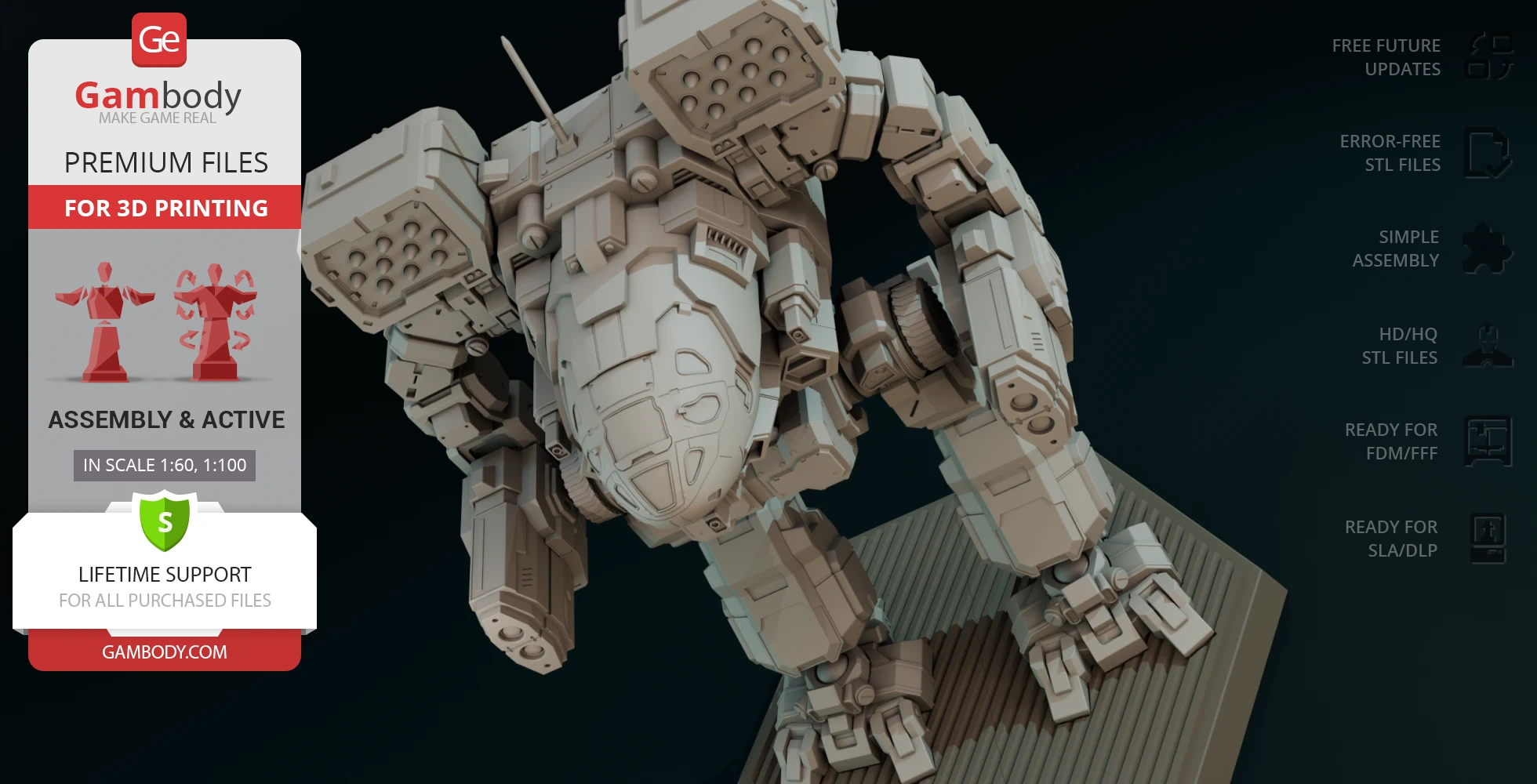
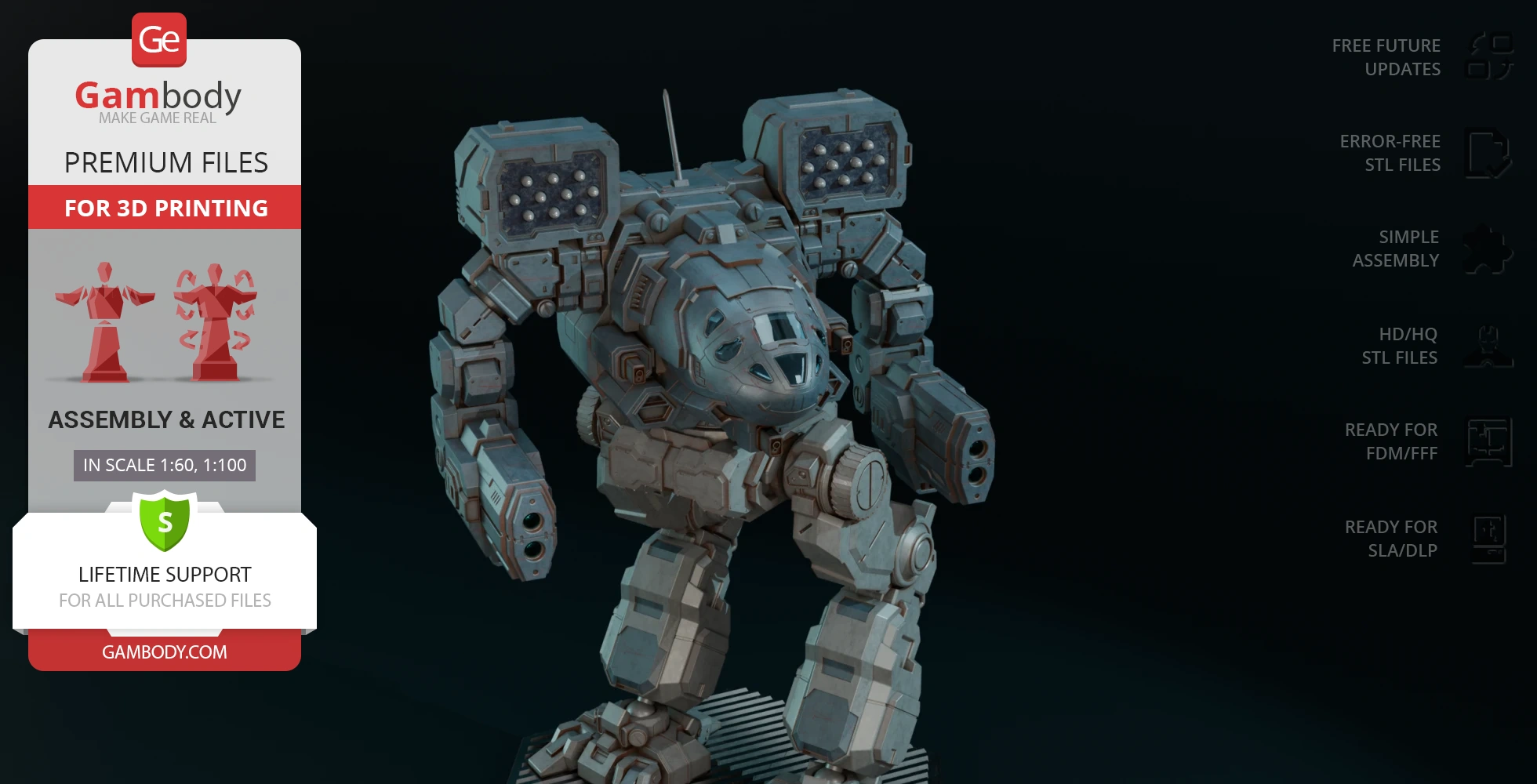
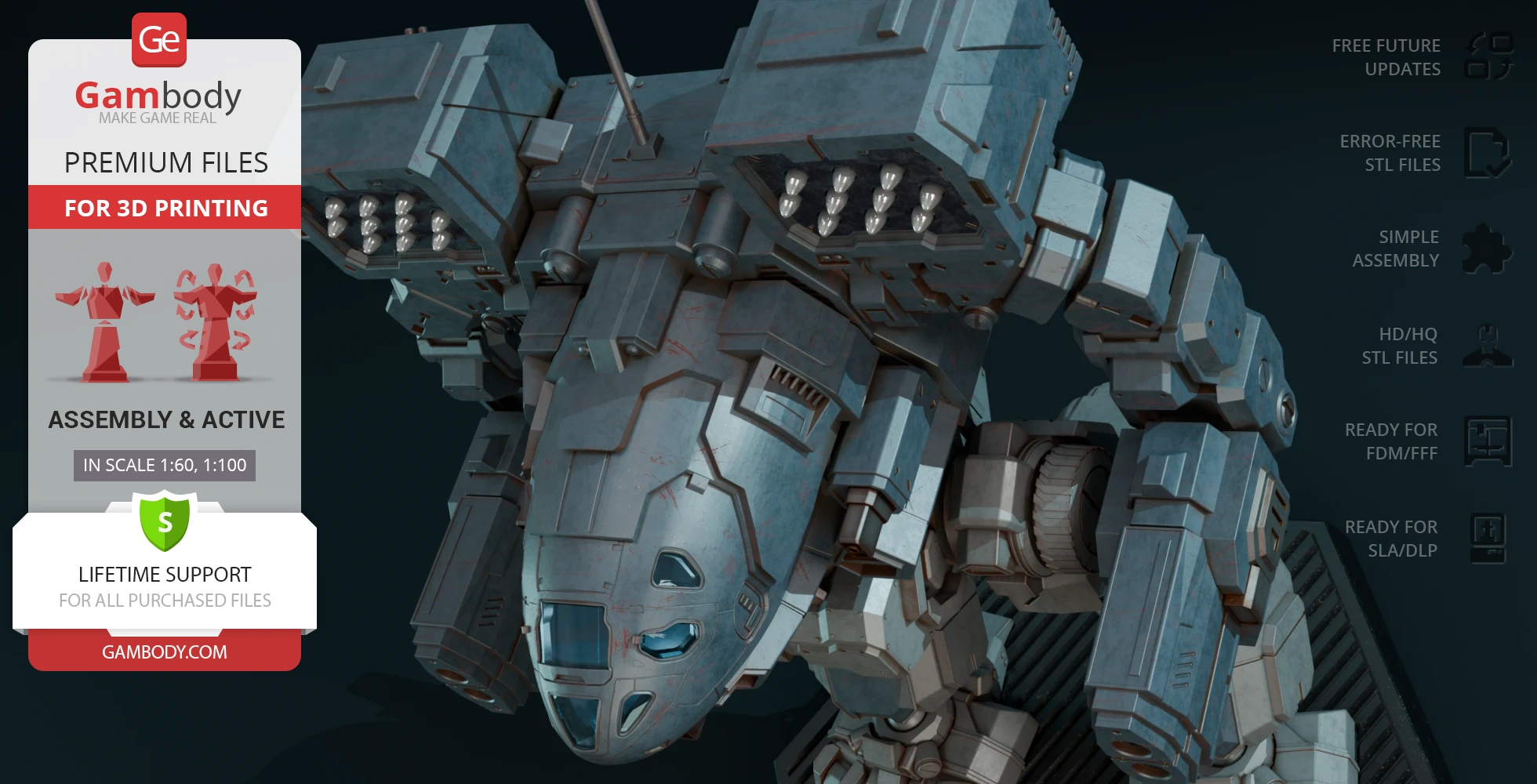
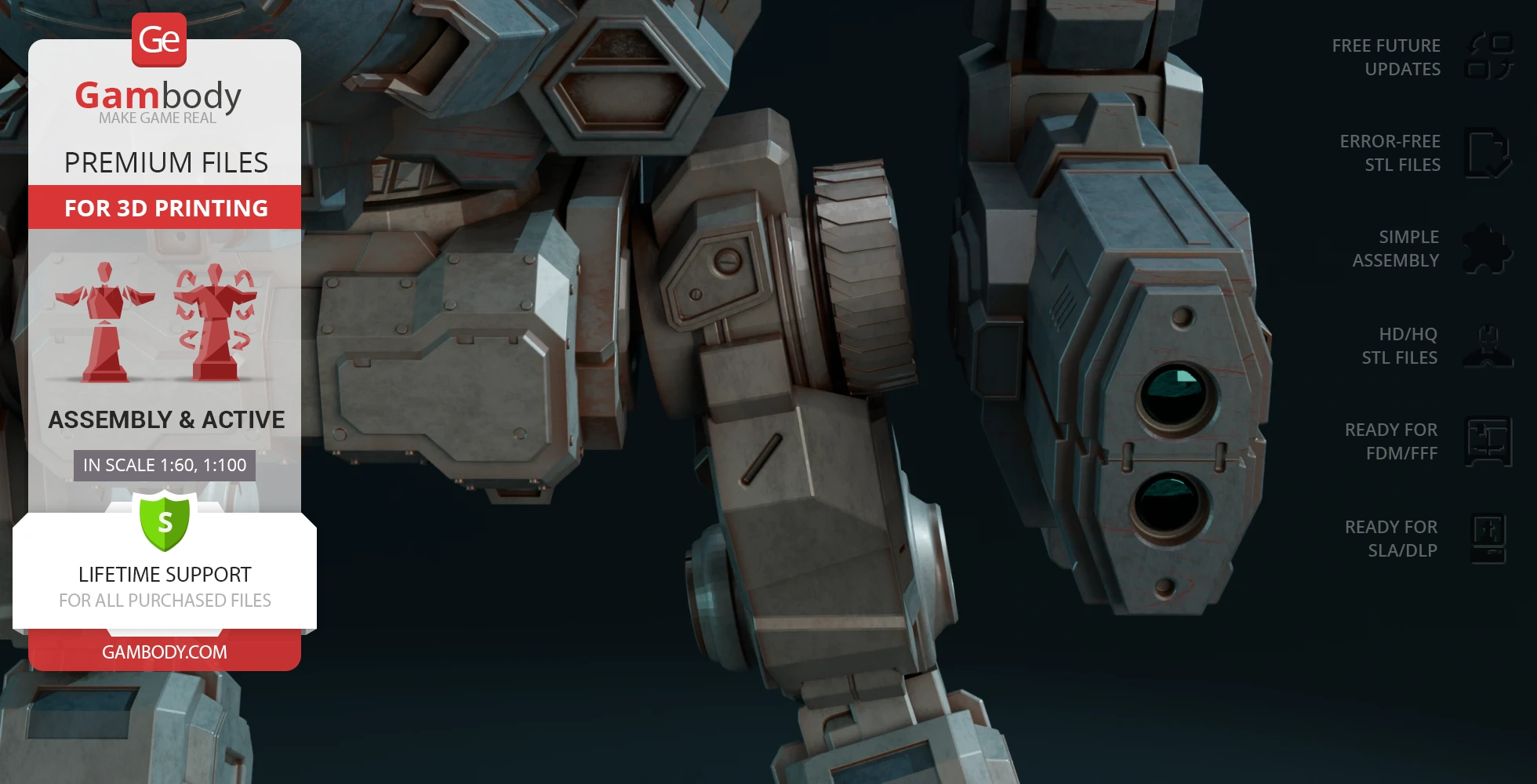
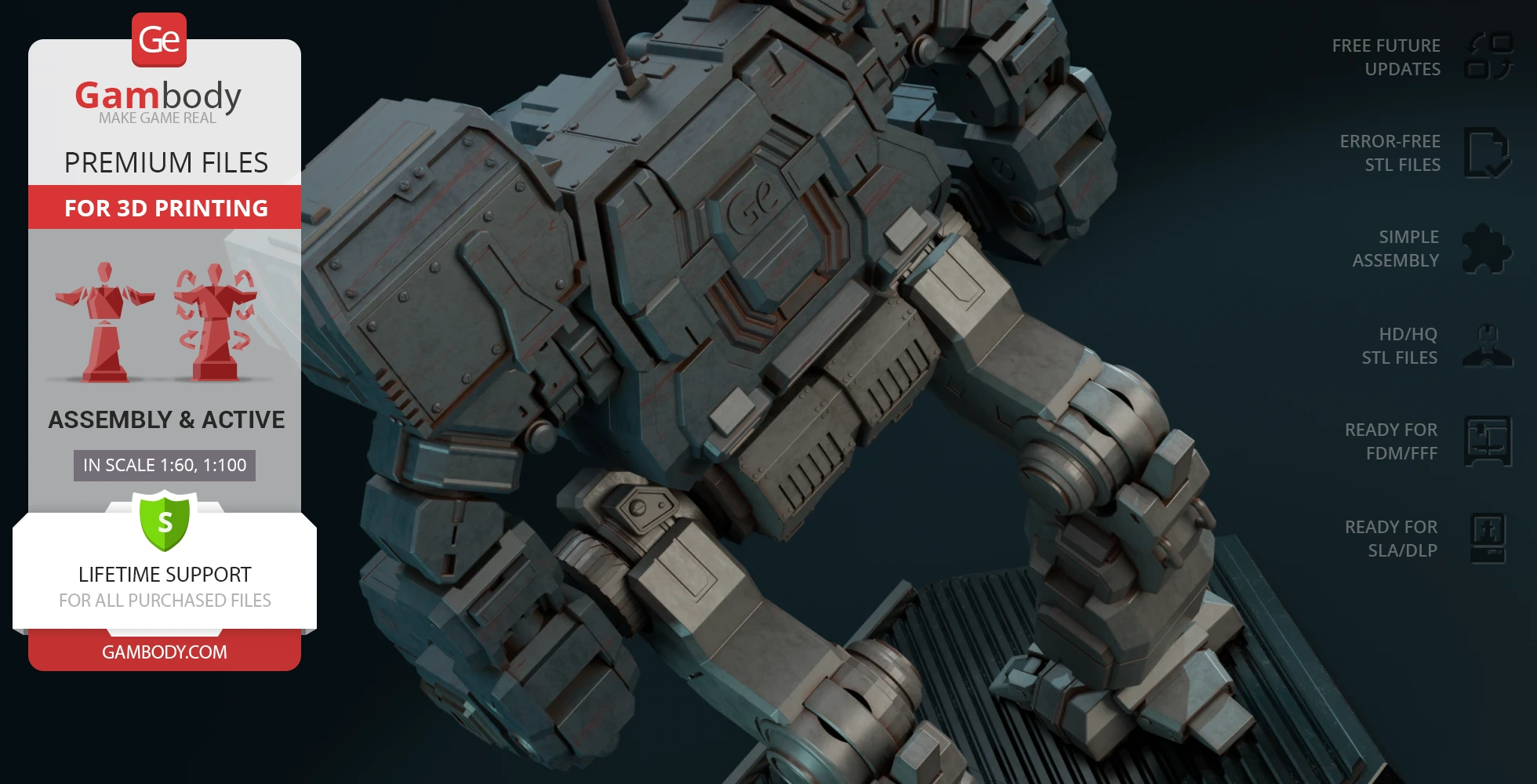
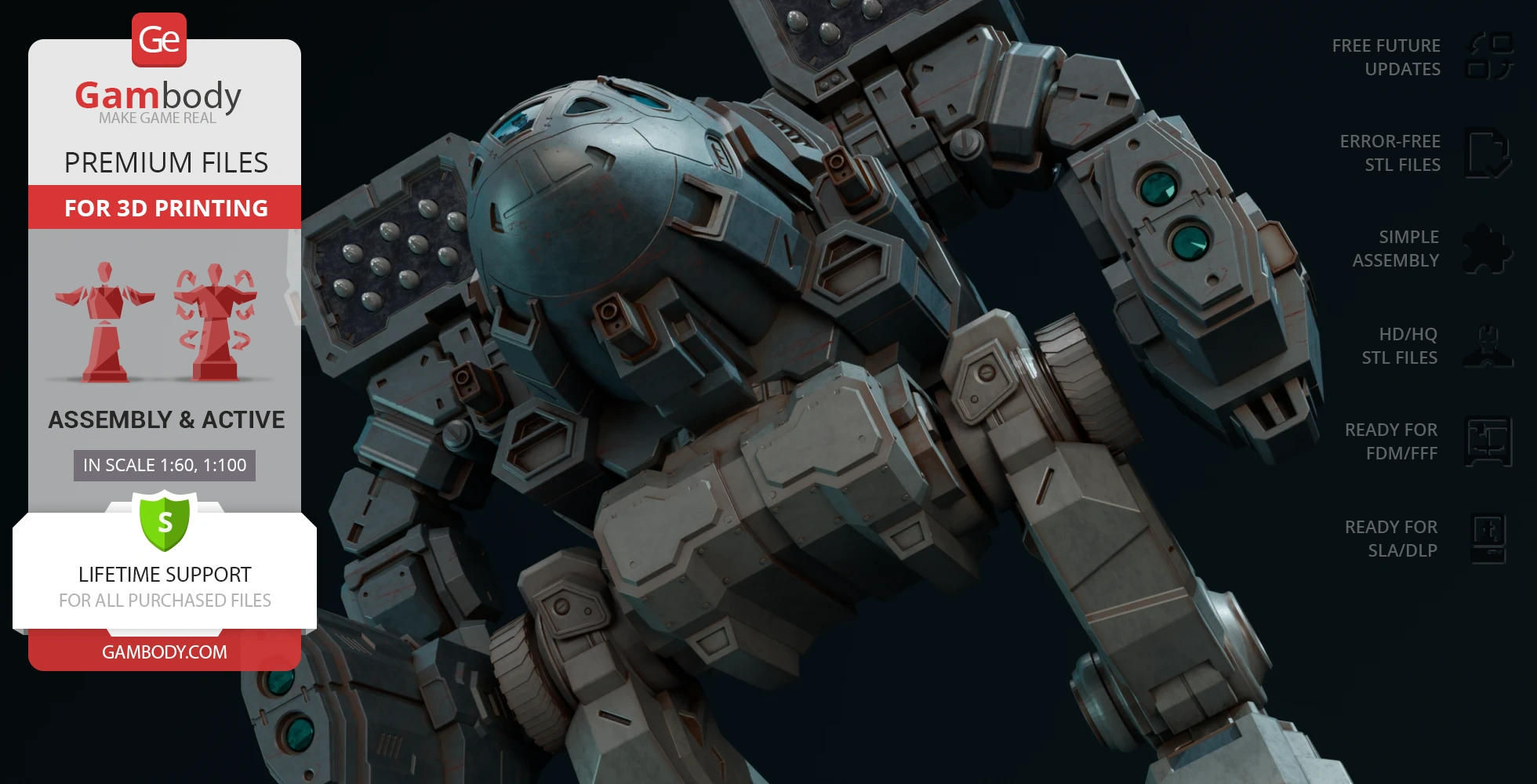
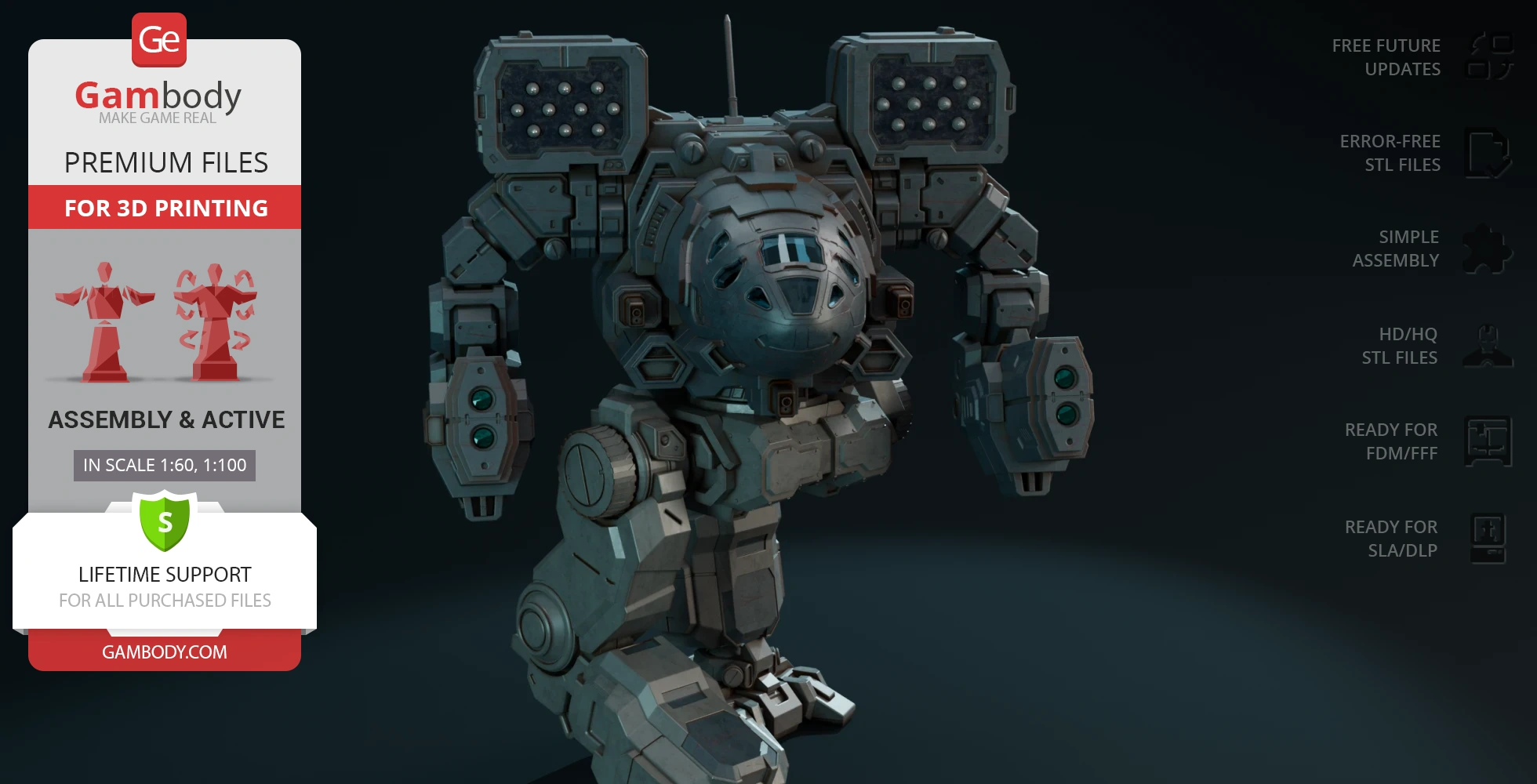
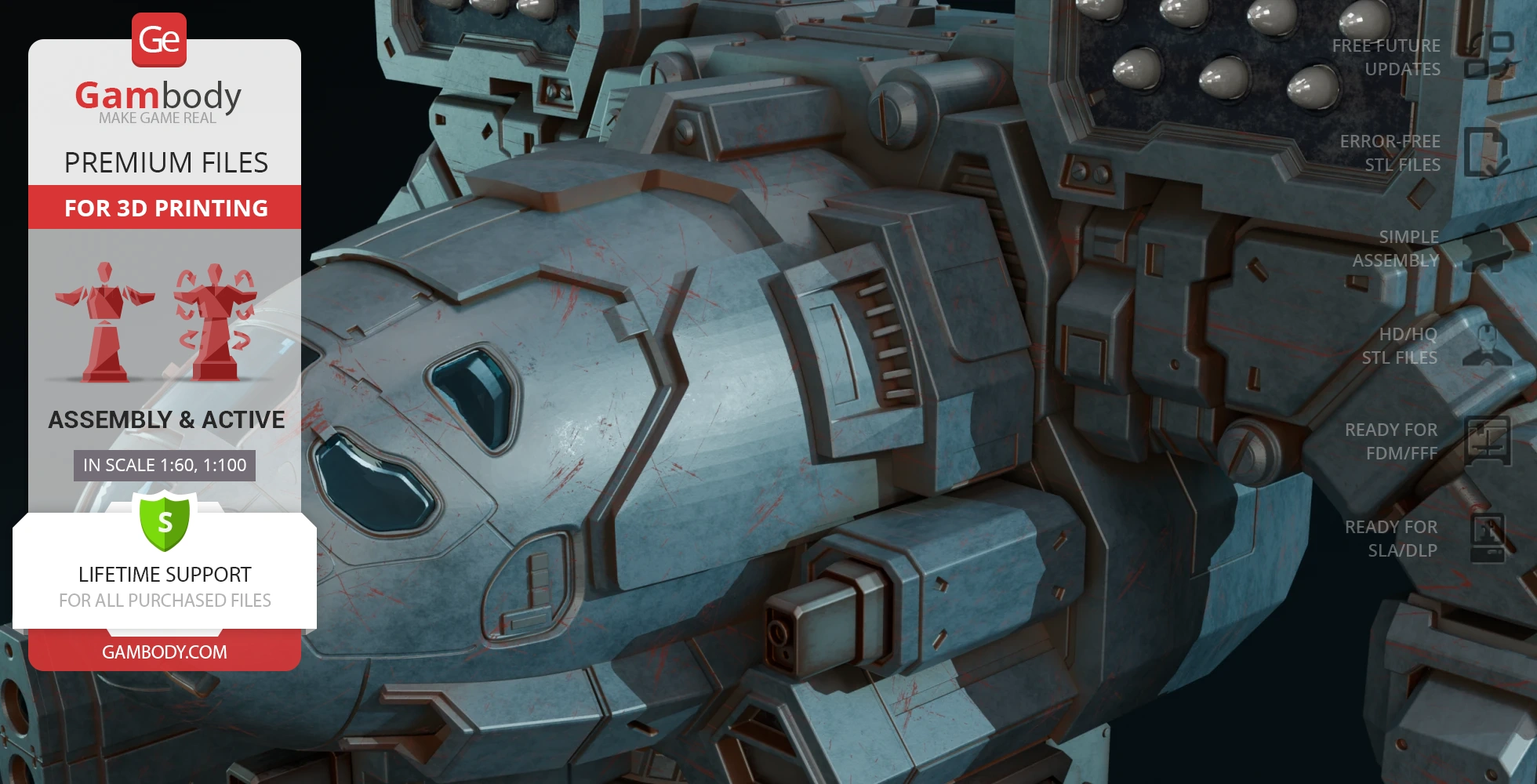
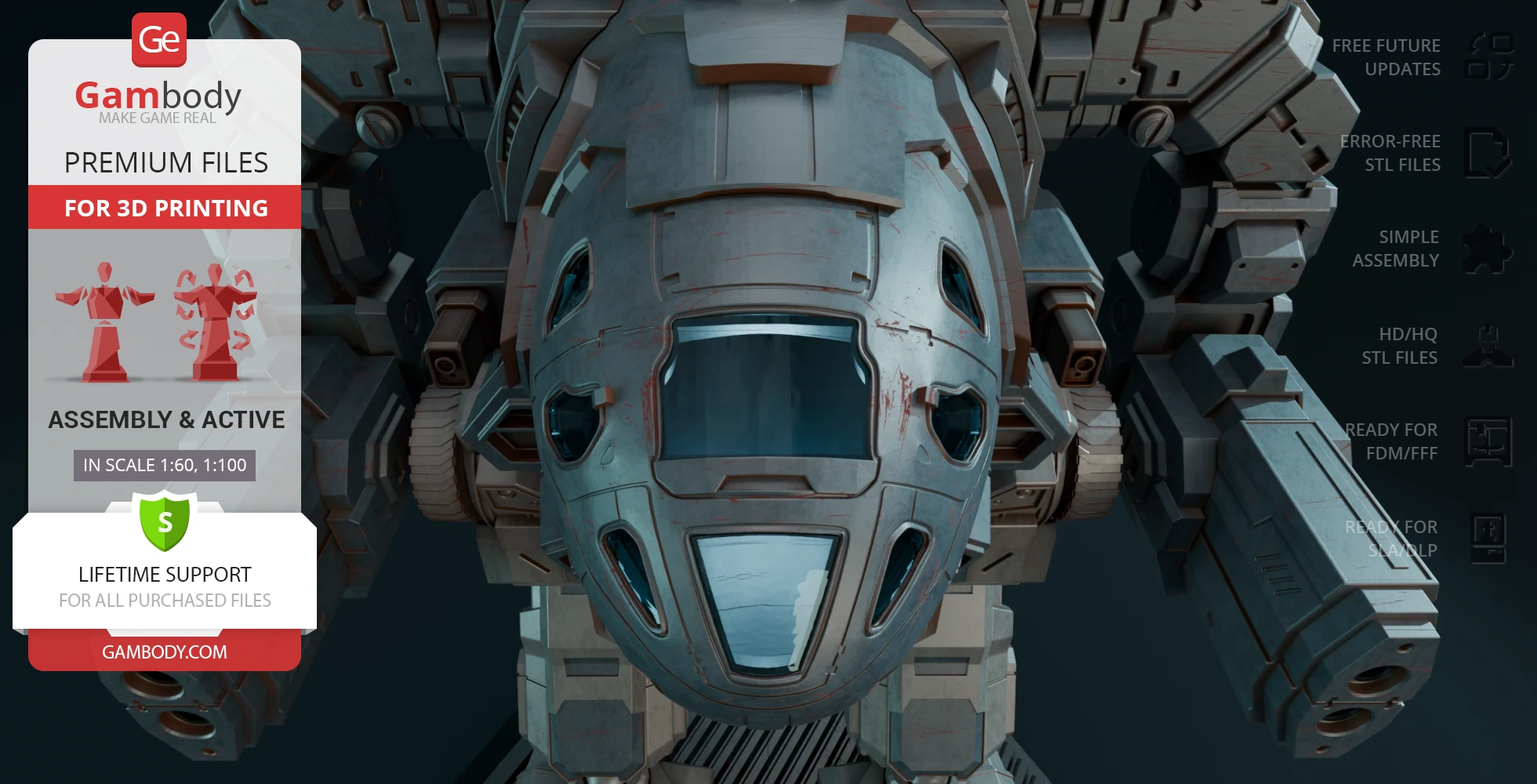
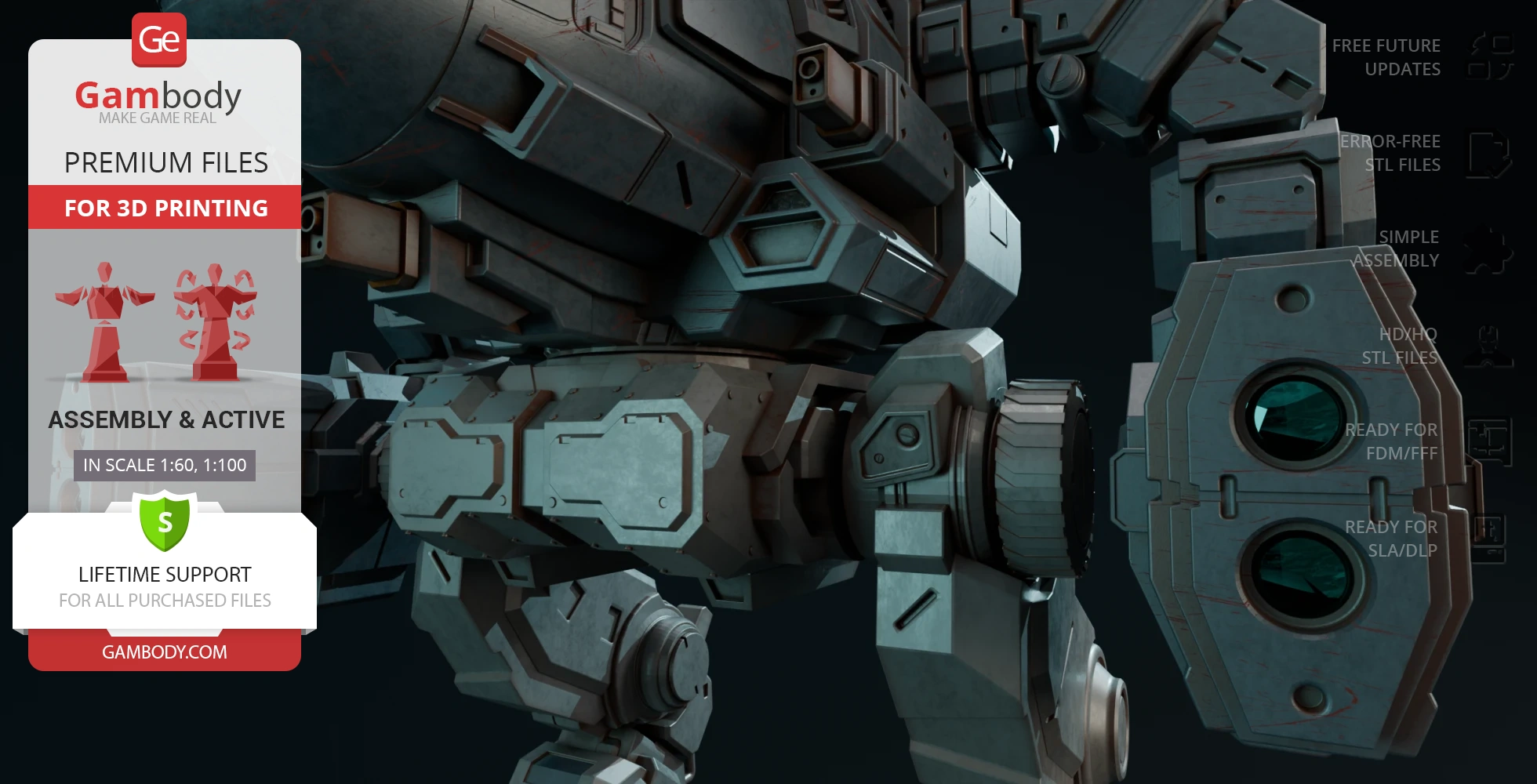
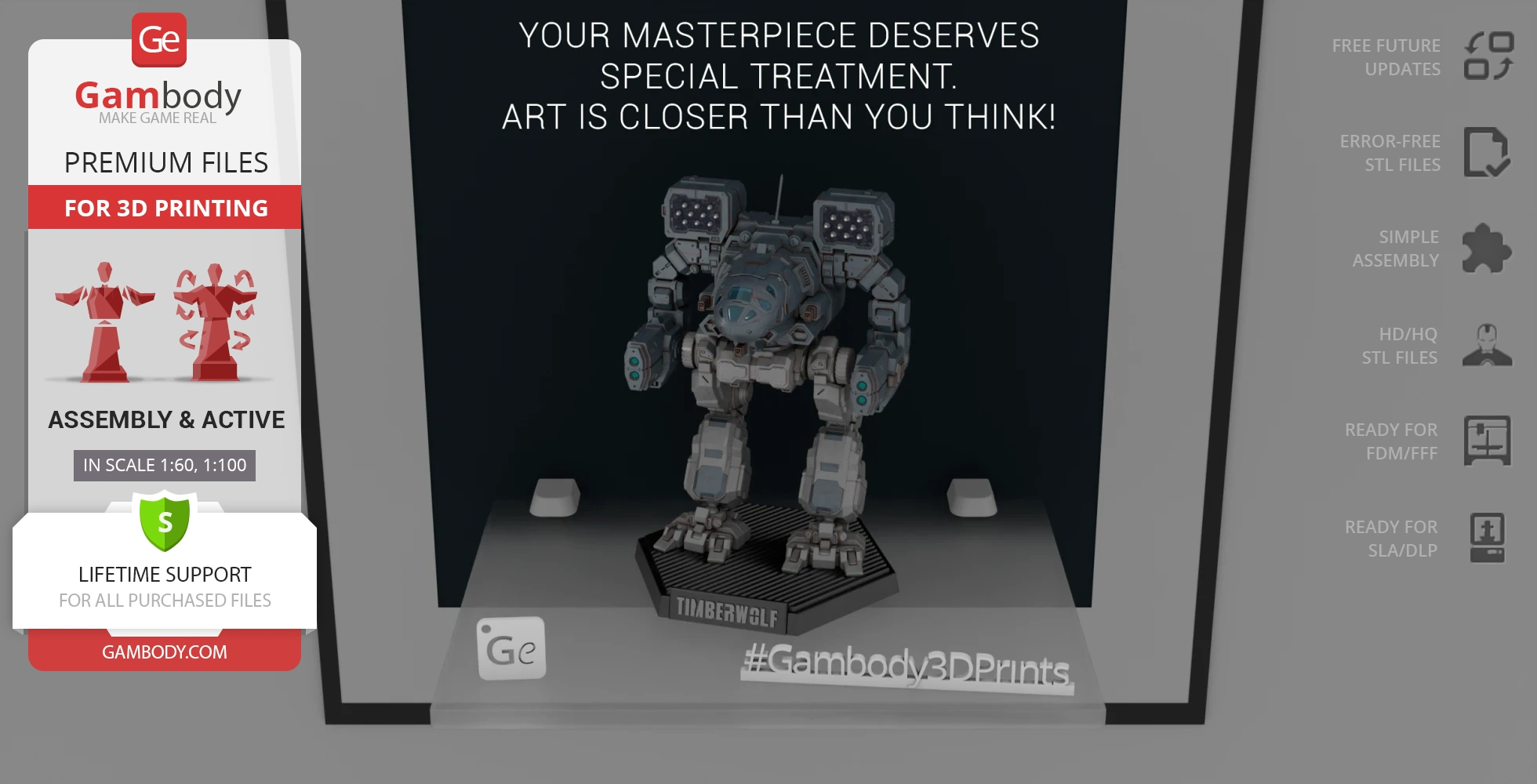
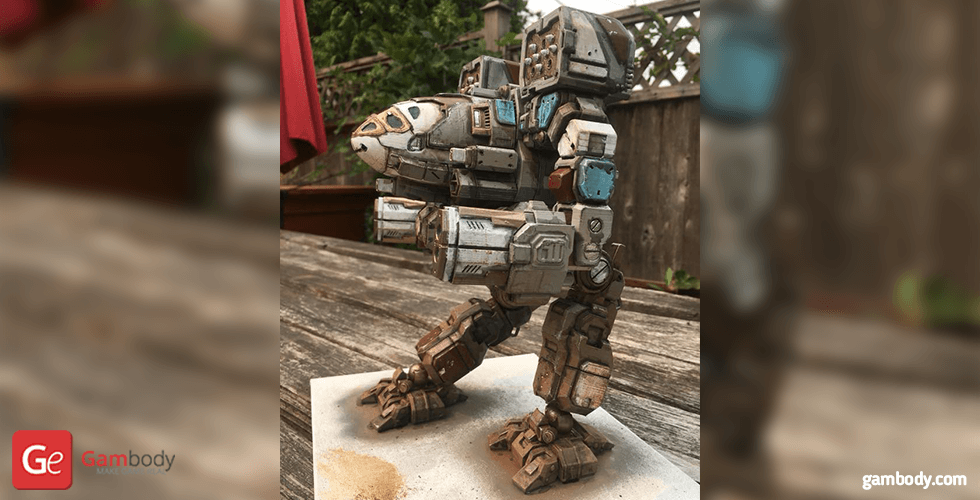
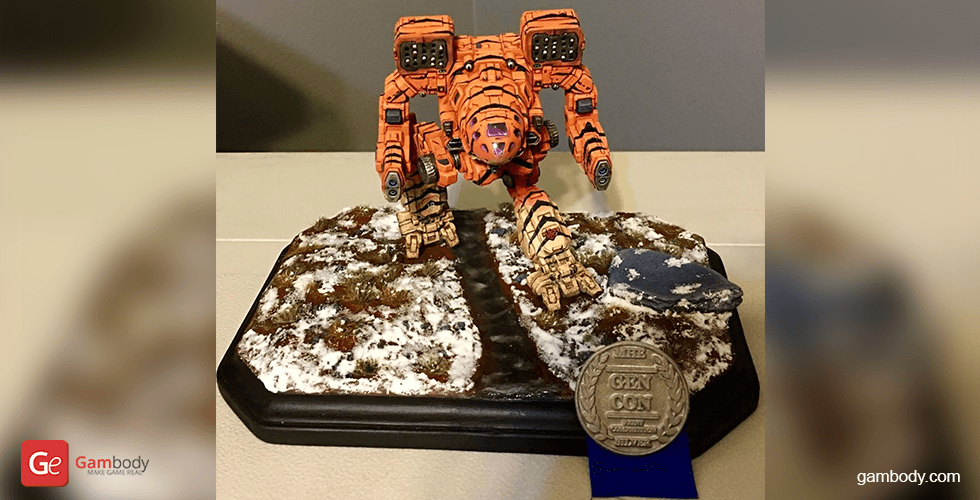
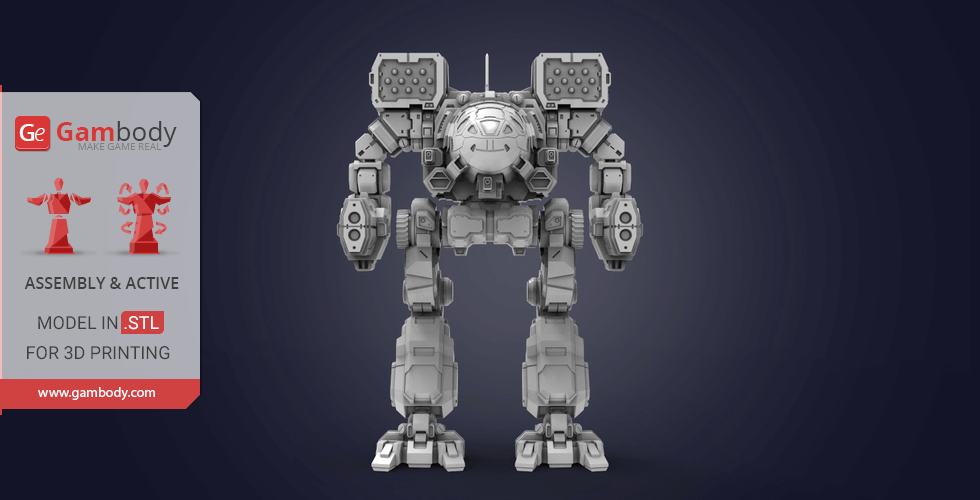
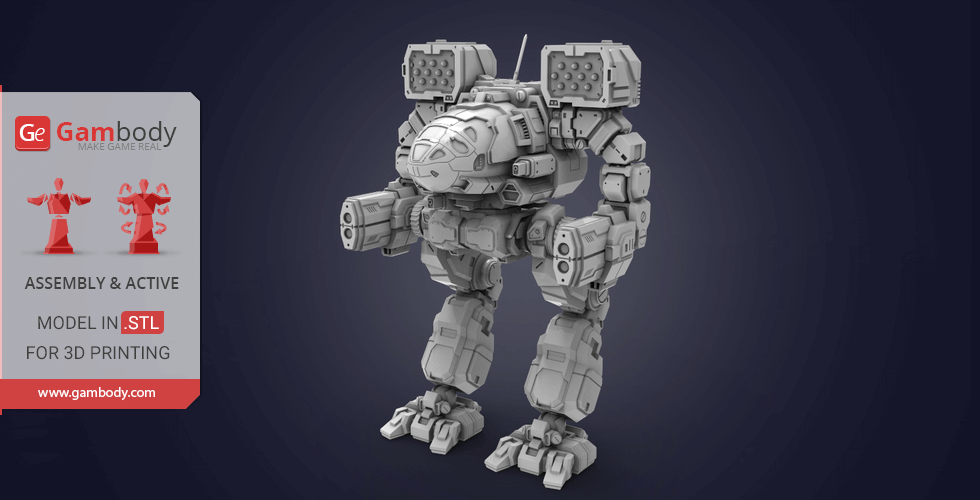
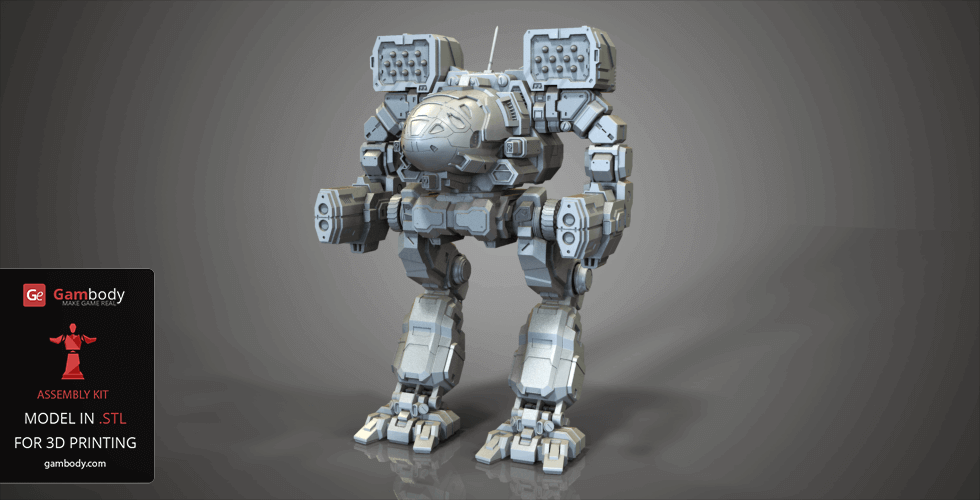
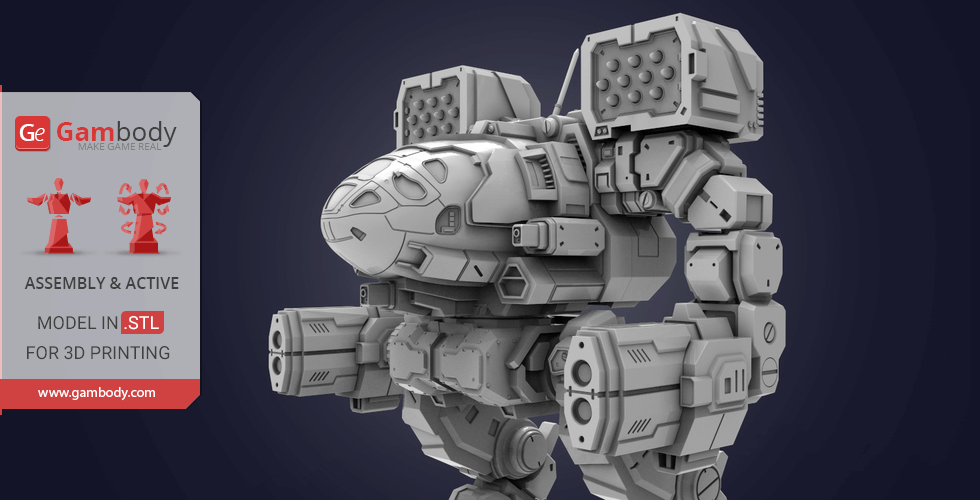
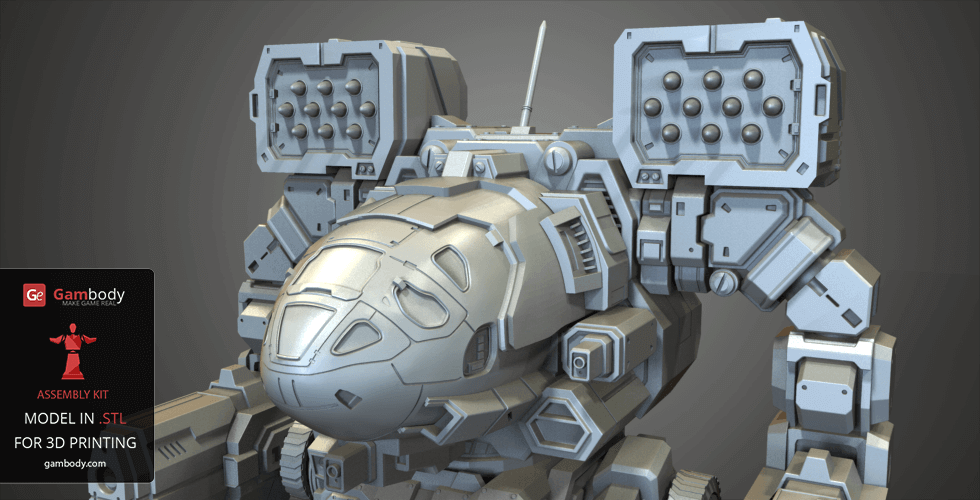
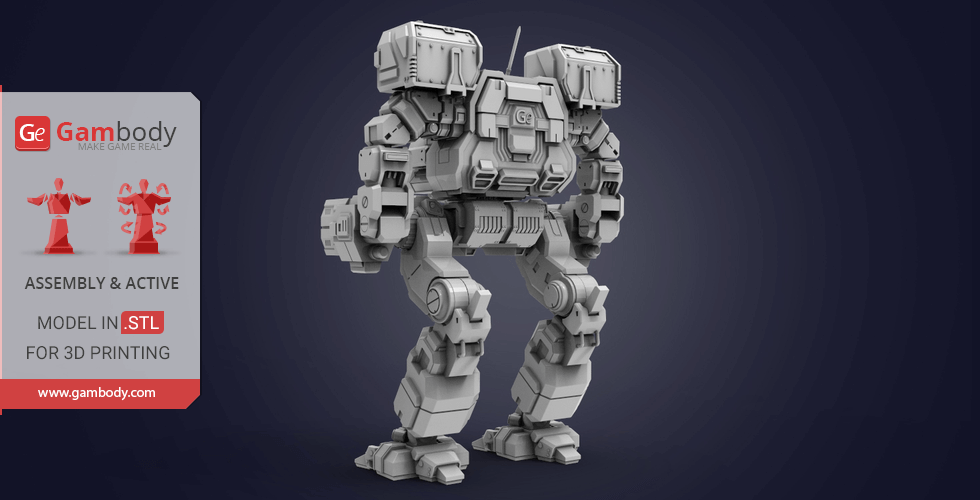
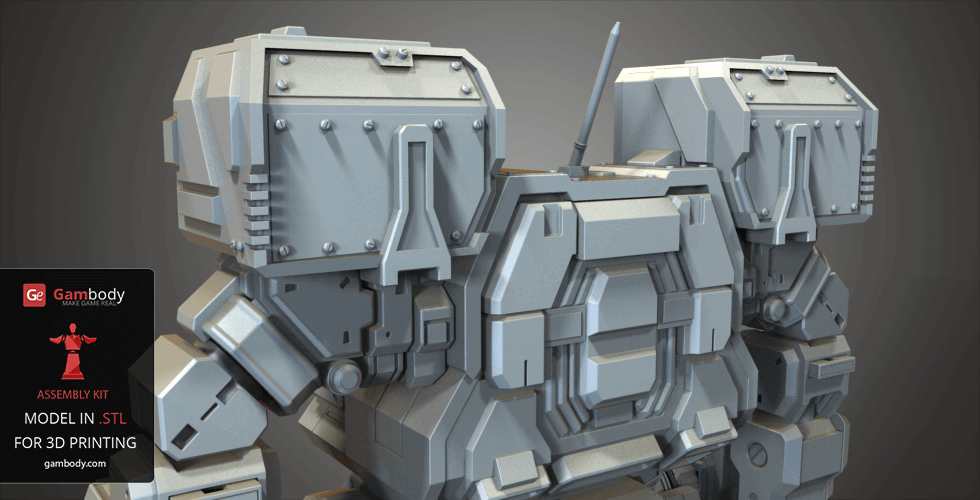
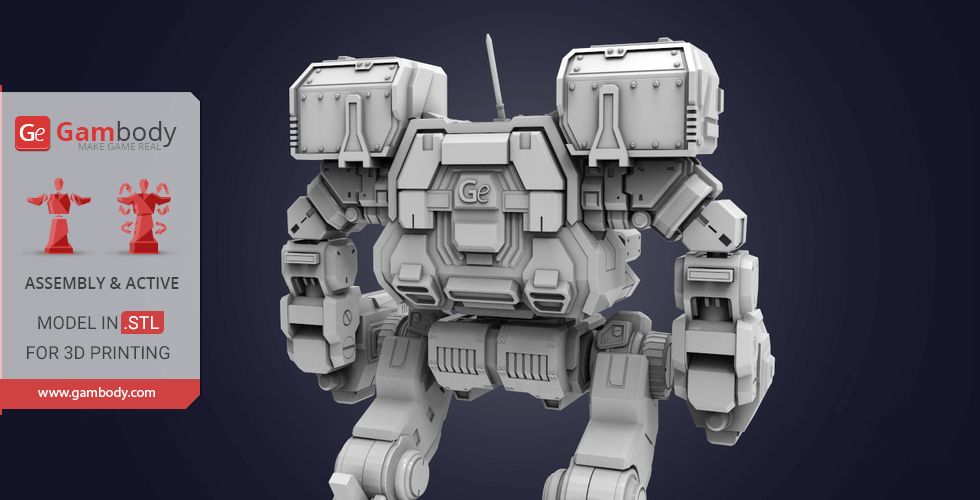
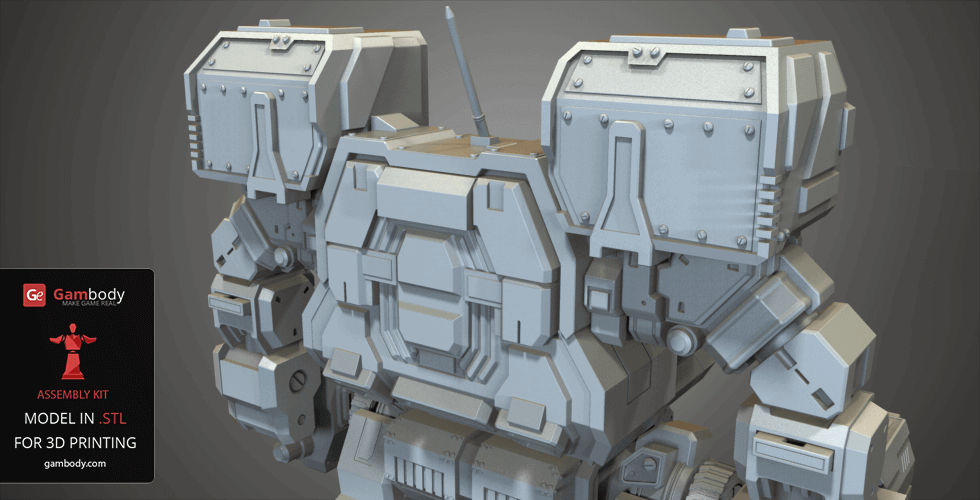
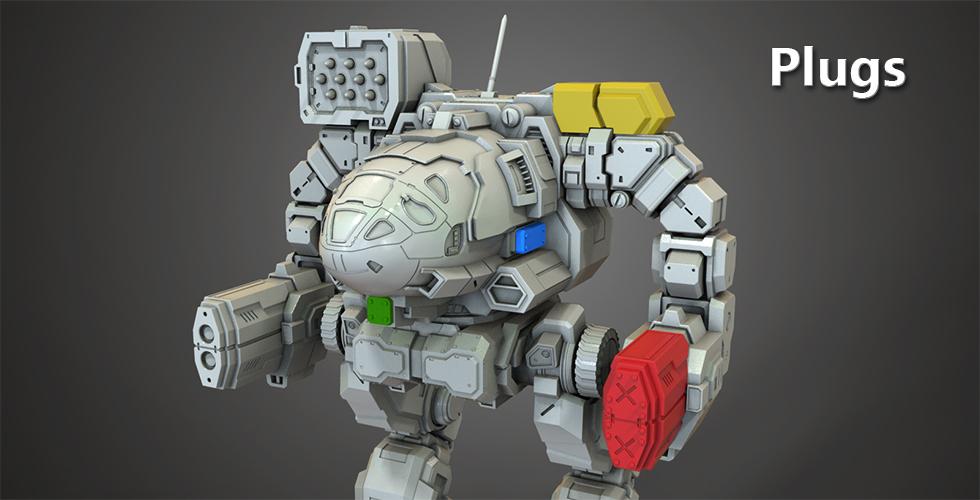
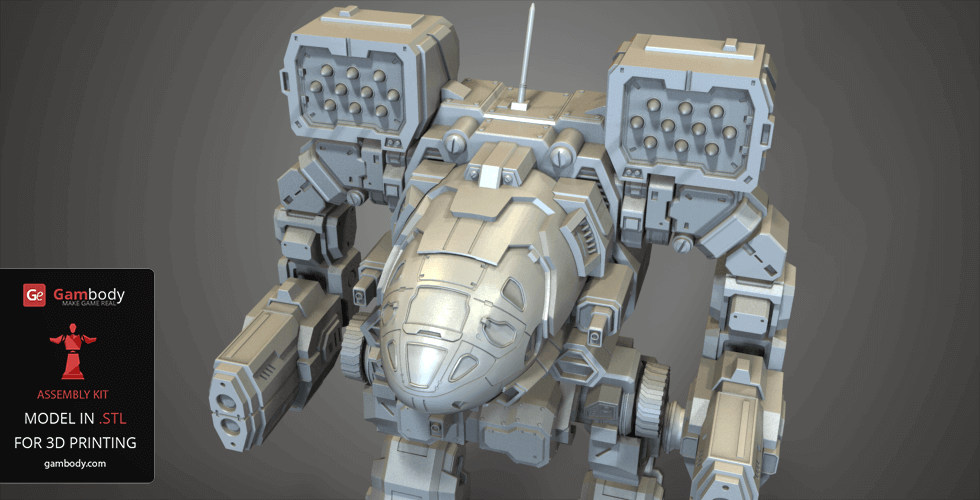
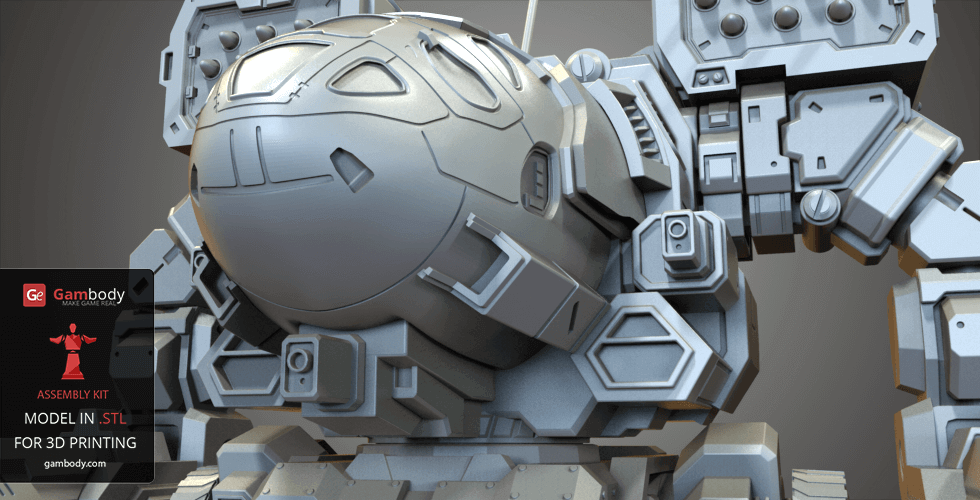
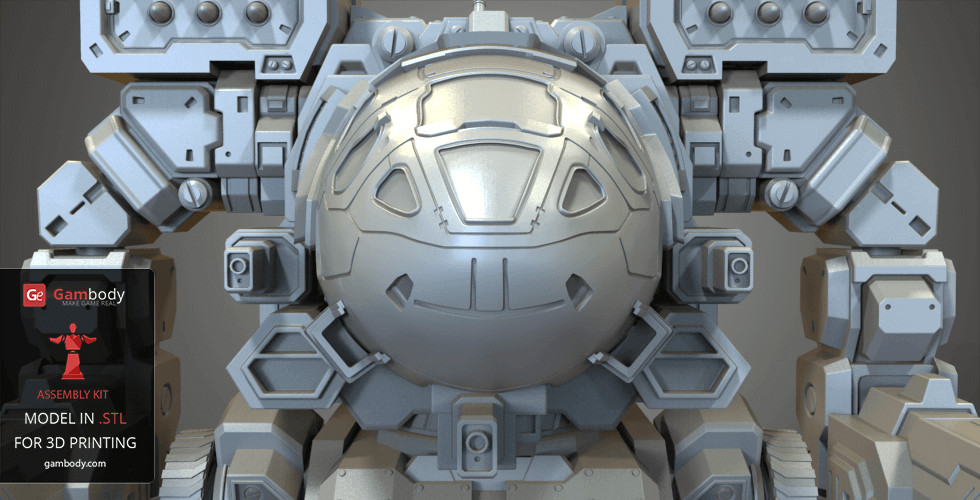
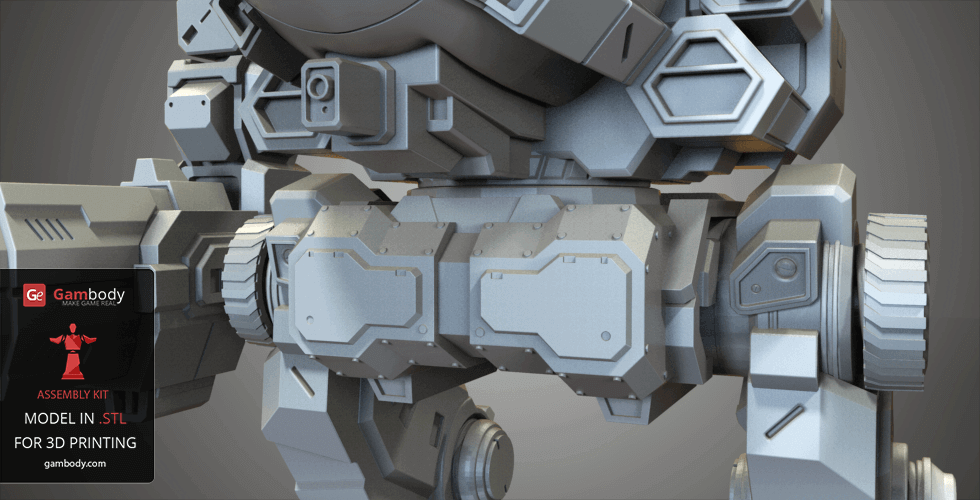
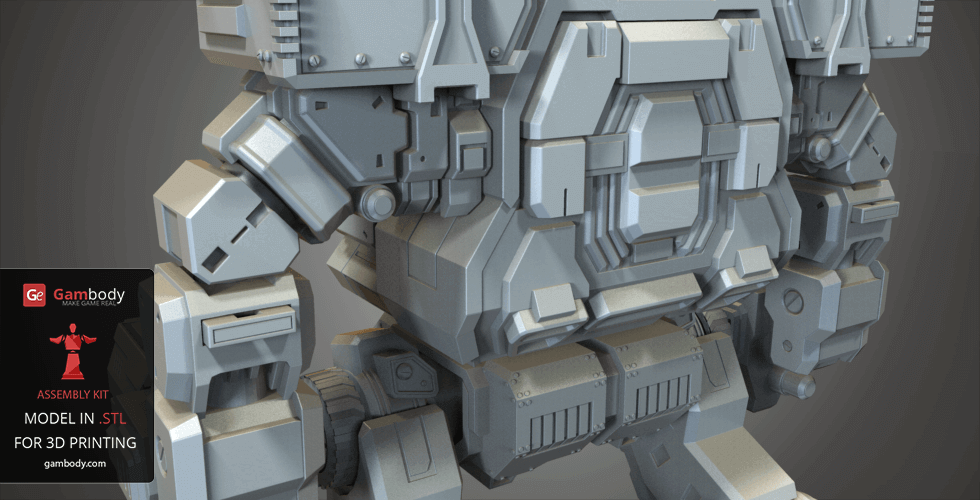
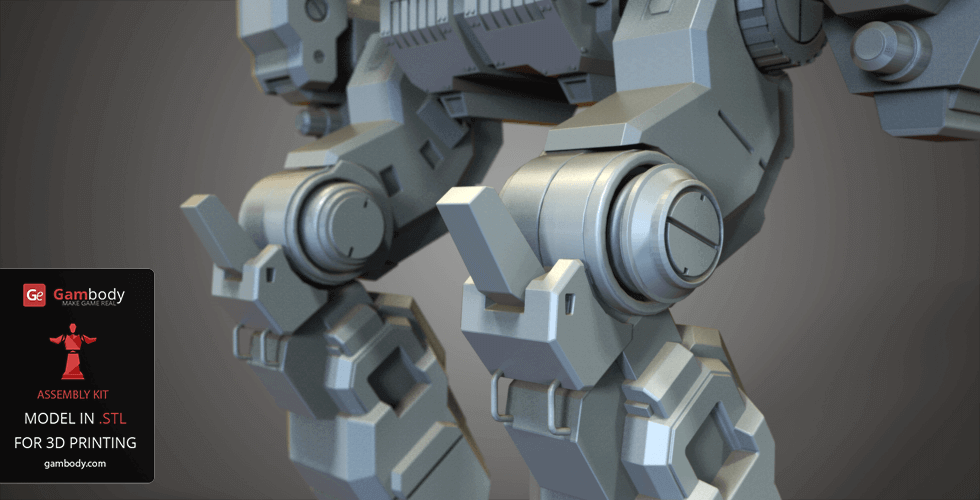
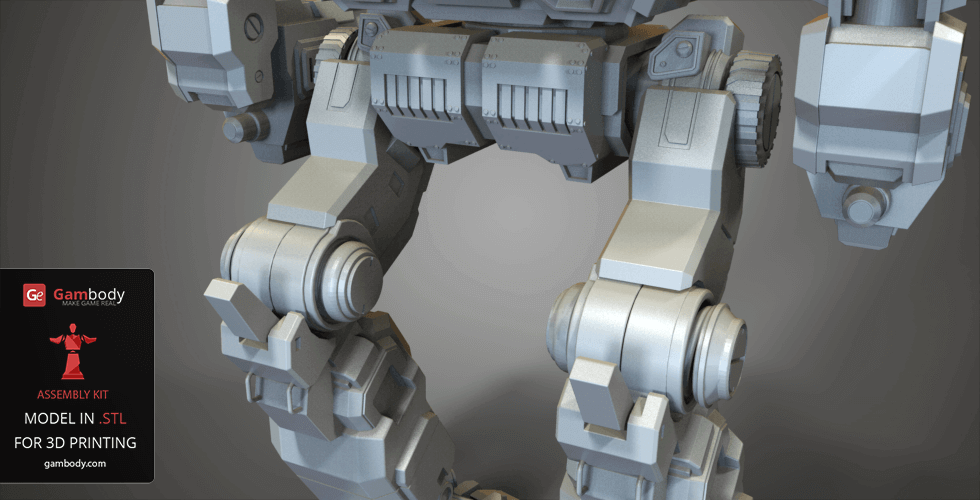
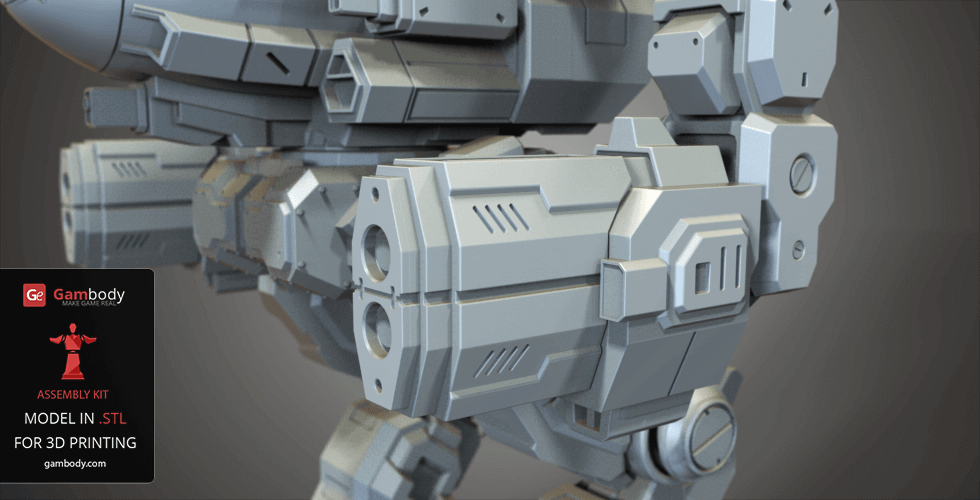
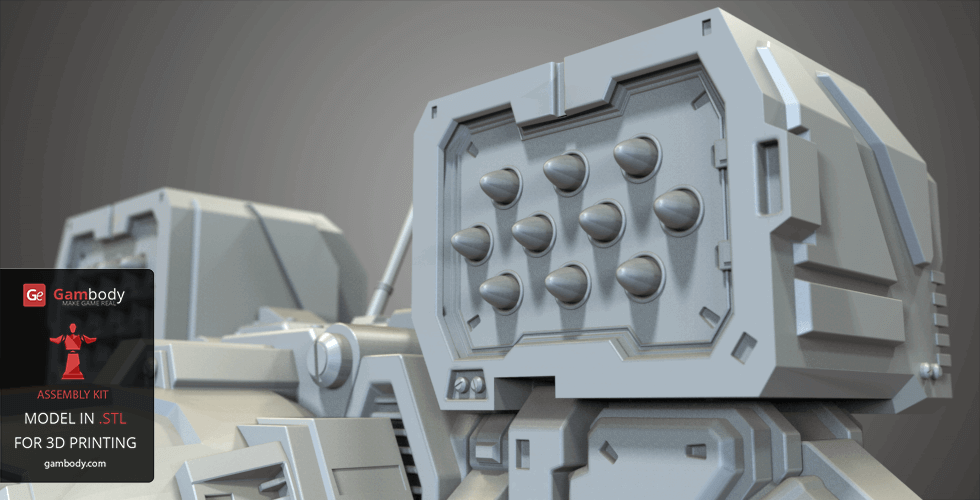
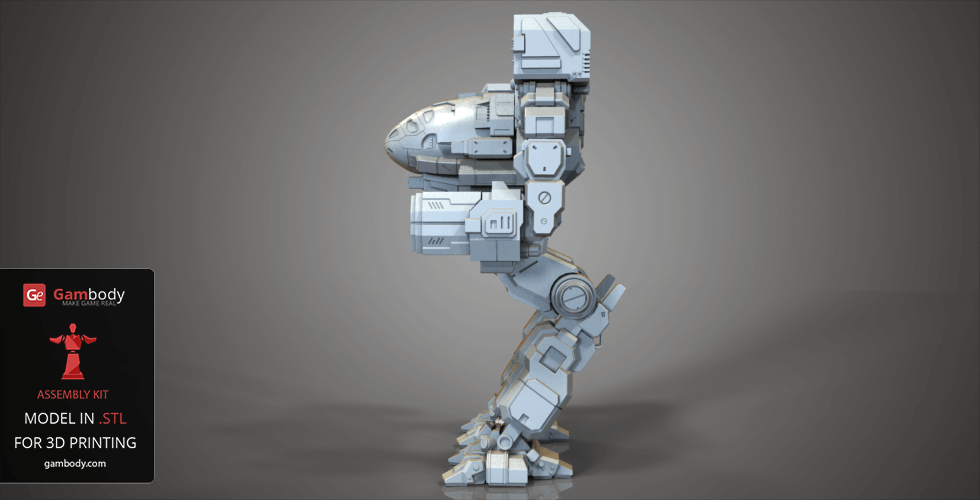
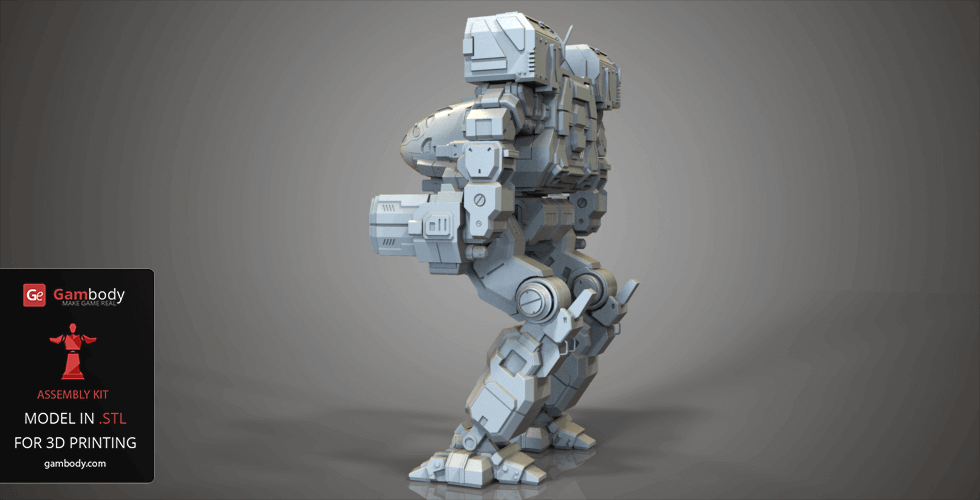
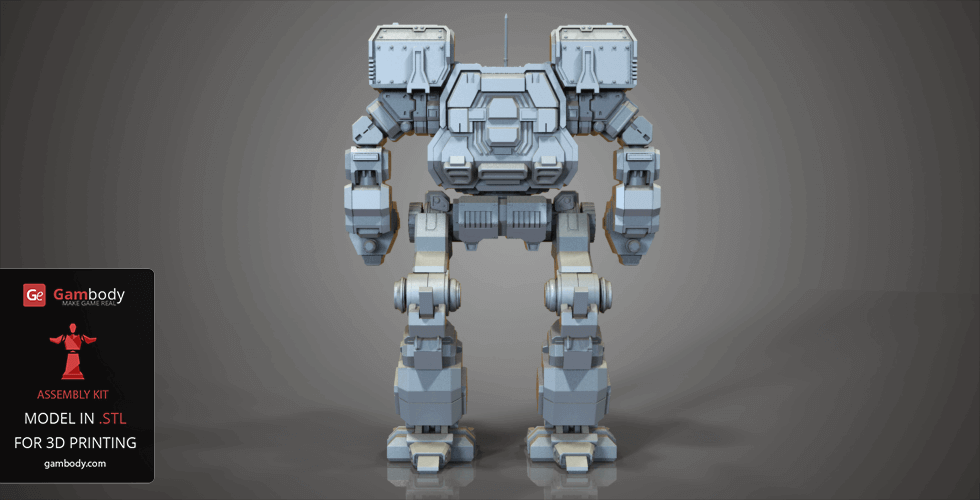
Timber Wolf 3D model, or MadCat 3D model as it is known by gamers, is a fast and heavy bipedal vehicle engaged in the battles that take place in the BattleTech Universe of the popular video game. This machine has more aggressive looks than the Catapult 3D model. Its design is a cross-over between the Marauder and the Catapult model designs, thus its name MadCat.
The in-game model is a powerful weapon in combats: it can shoot close and far-range fire; equipped with powerful weaponry and heavy armor, it is inconceivable how this seventy five tons mech could move swiftly on the battlefield and take part in most assaults. Just as with Catapult 3D printing gaming figurine, in-game MadCat can be customized with additional weaponry, as soon as the players level up.
ADAPTATION FOR 3D PRINTING
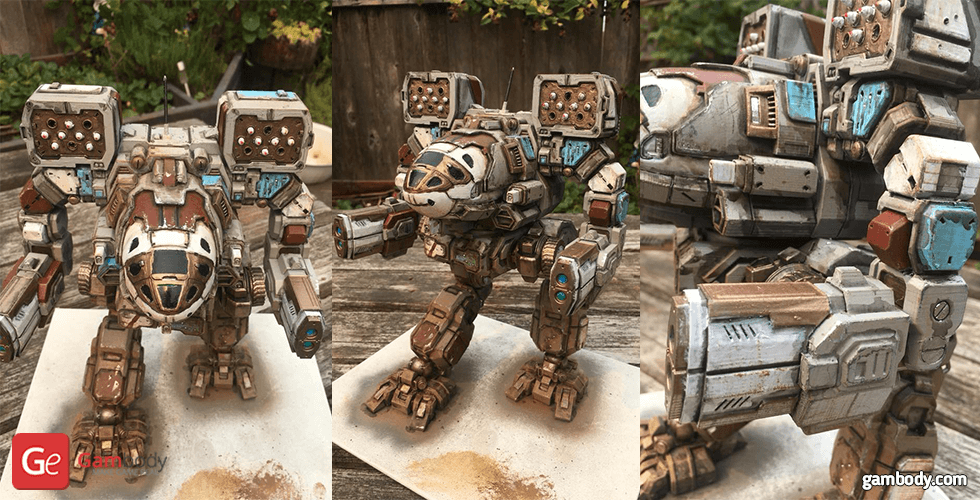
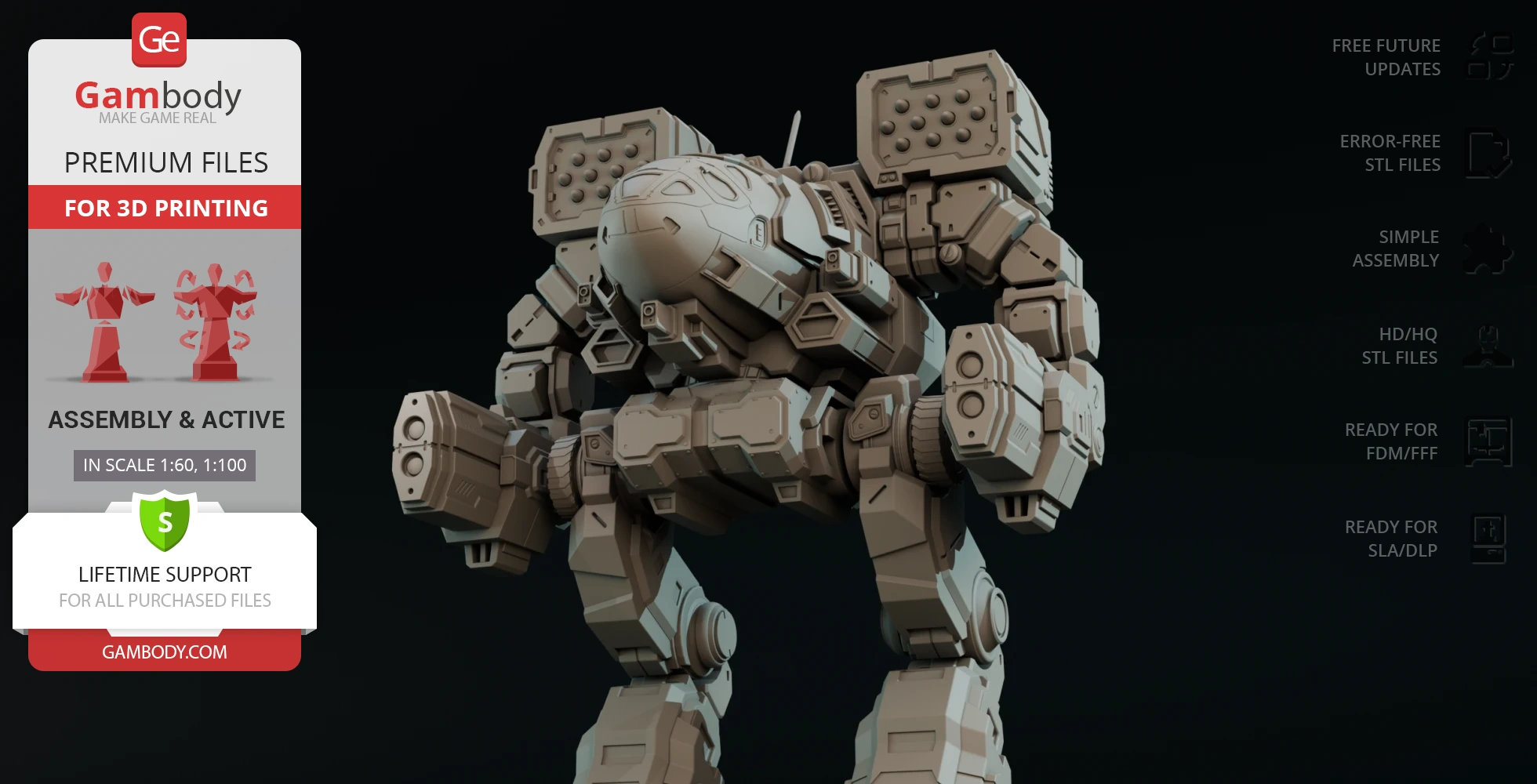
The Timber Wolf model for 3D printing is an active assembly model and its moderation and adaptation for different types of 3D printers took the Gambody team 97 hours in total.
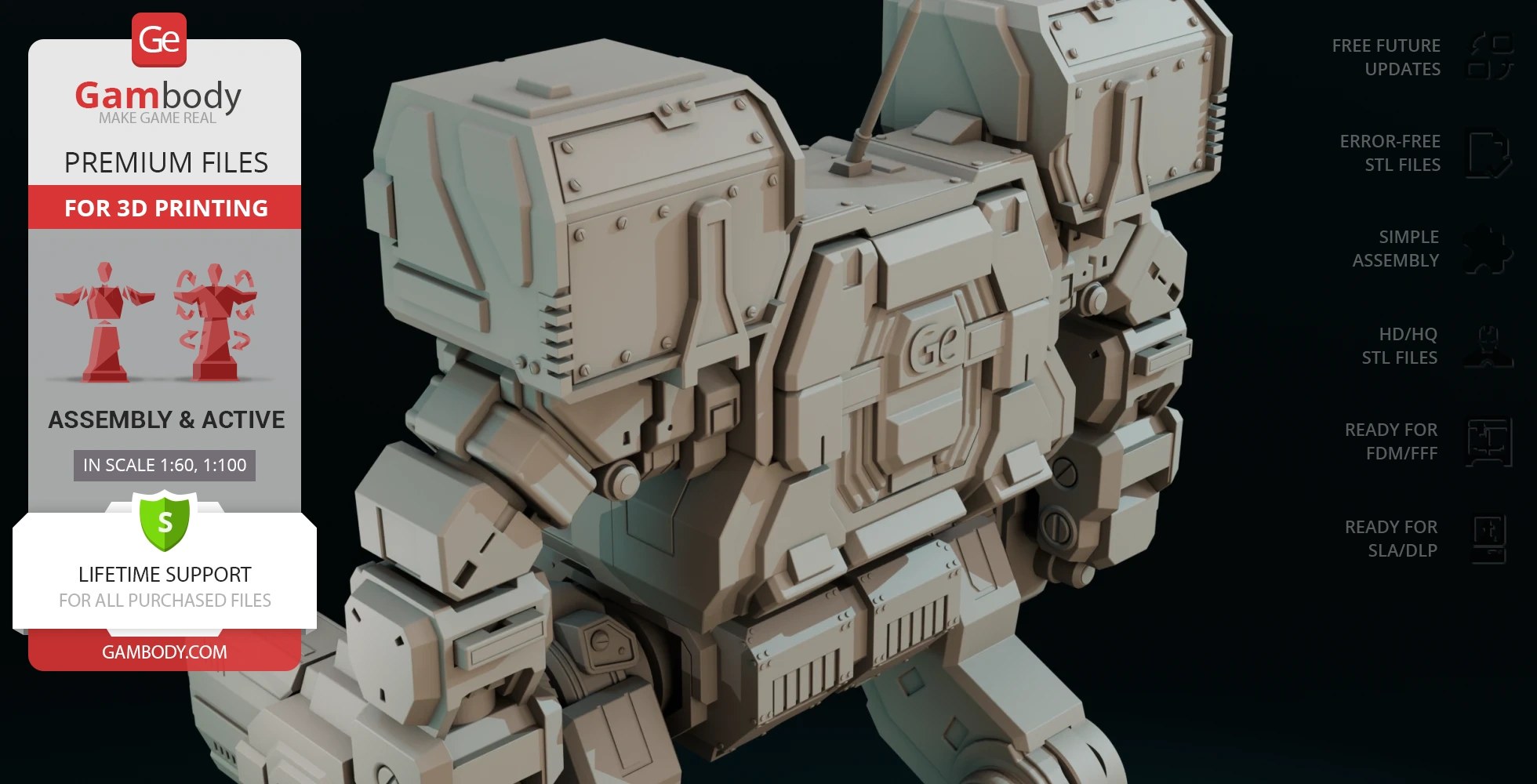
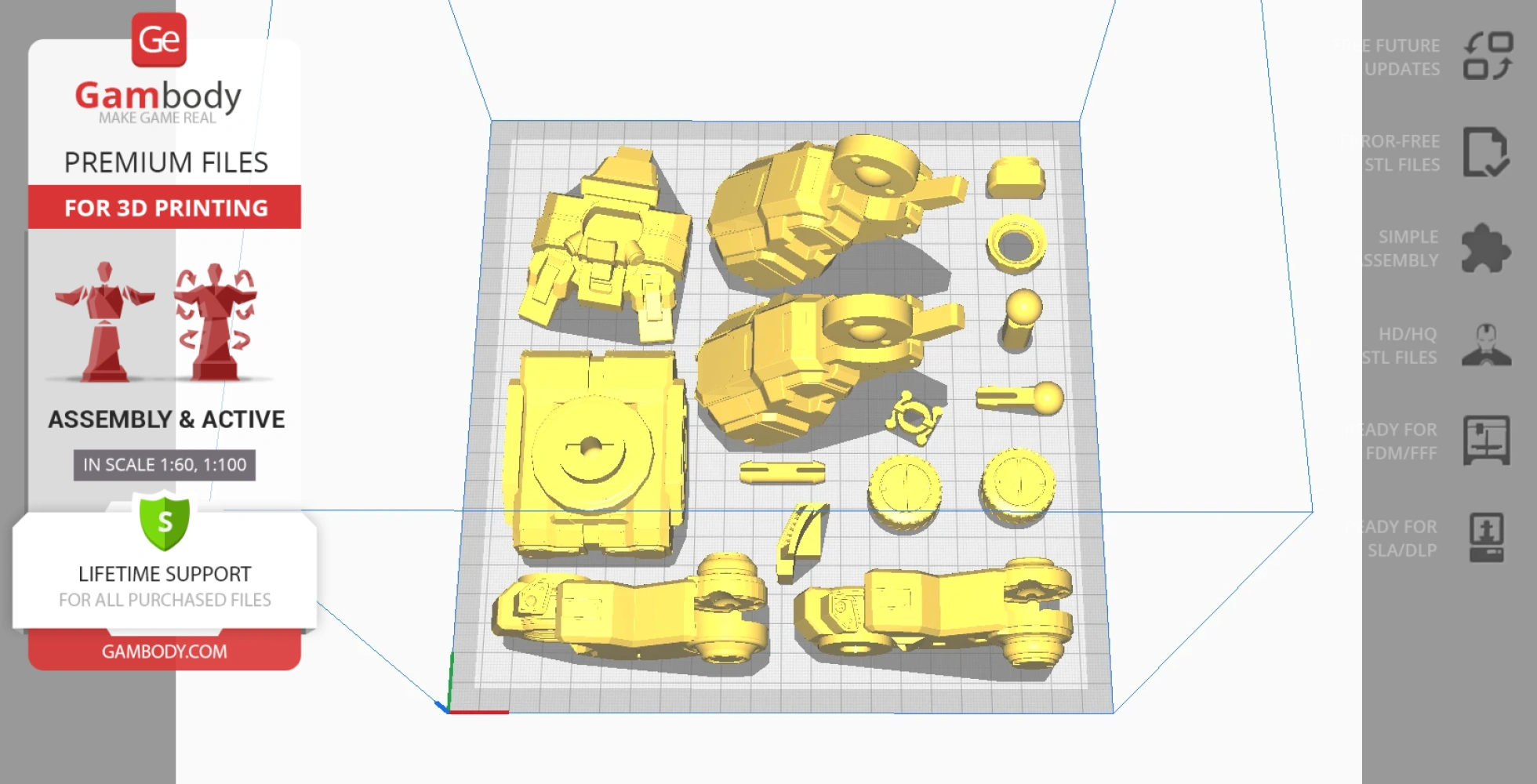
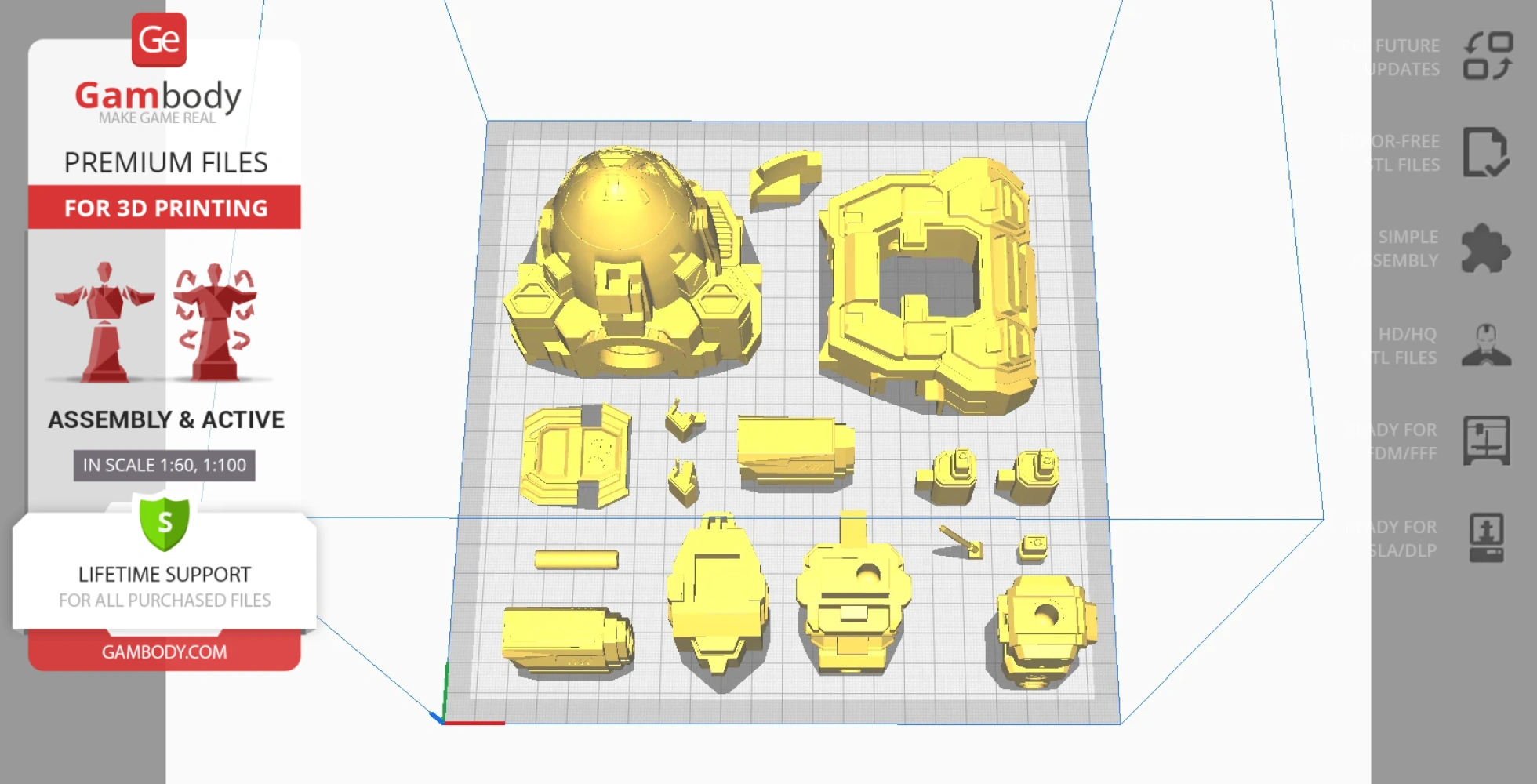
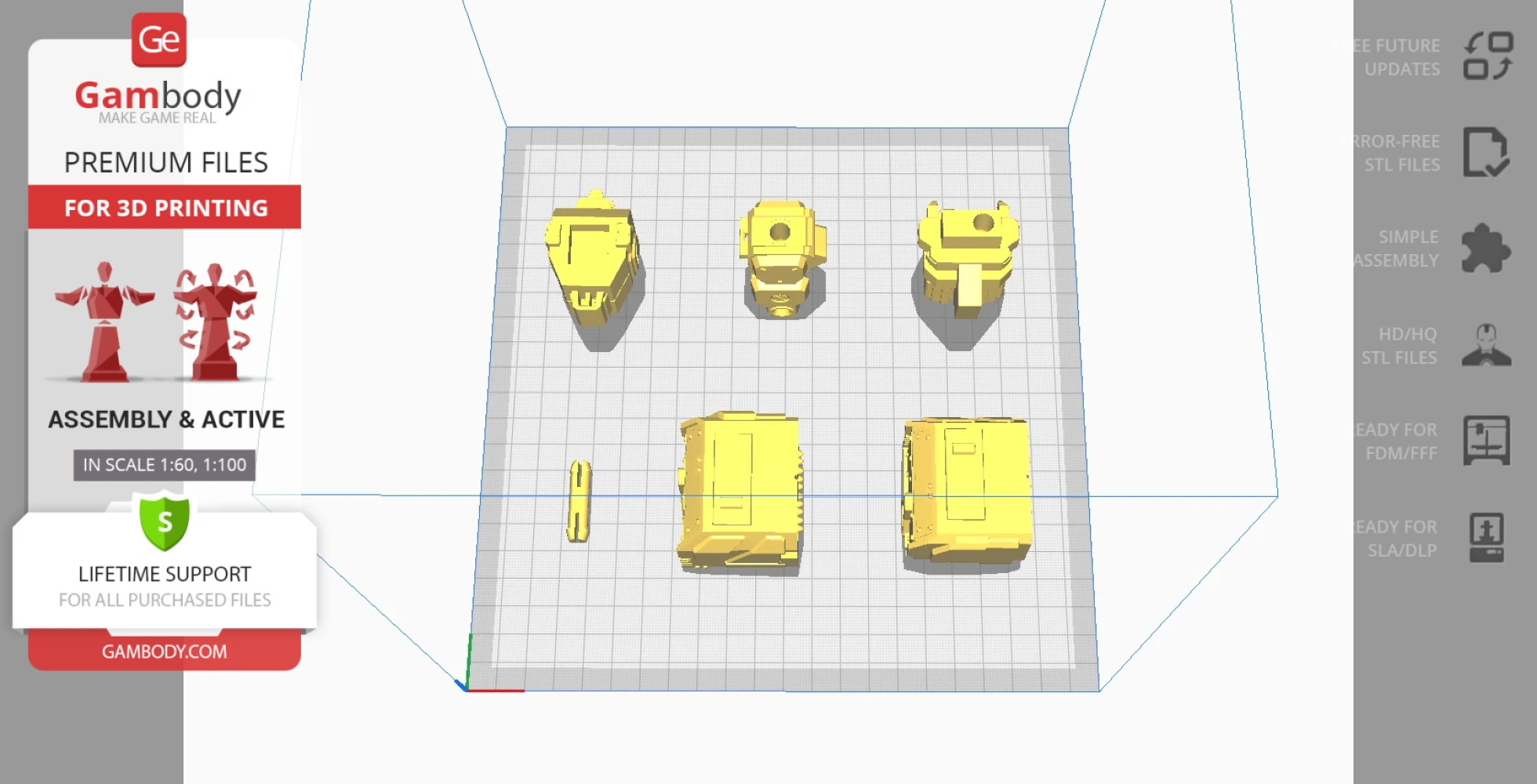
For you to receive the cleanest 3D printing result possible, minimize the amount of filament needed for generated support, and make use of the active elements designed by Gambody Engineers, the mech was divided into convenient assembly parts.
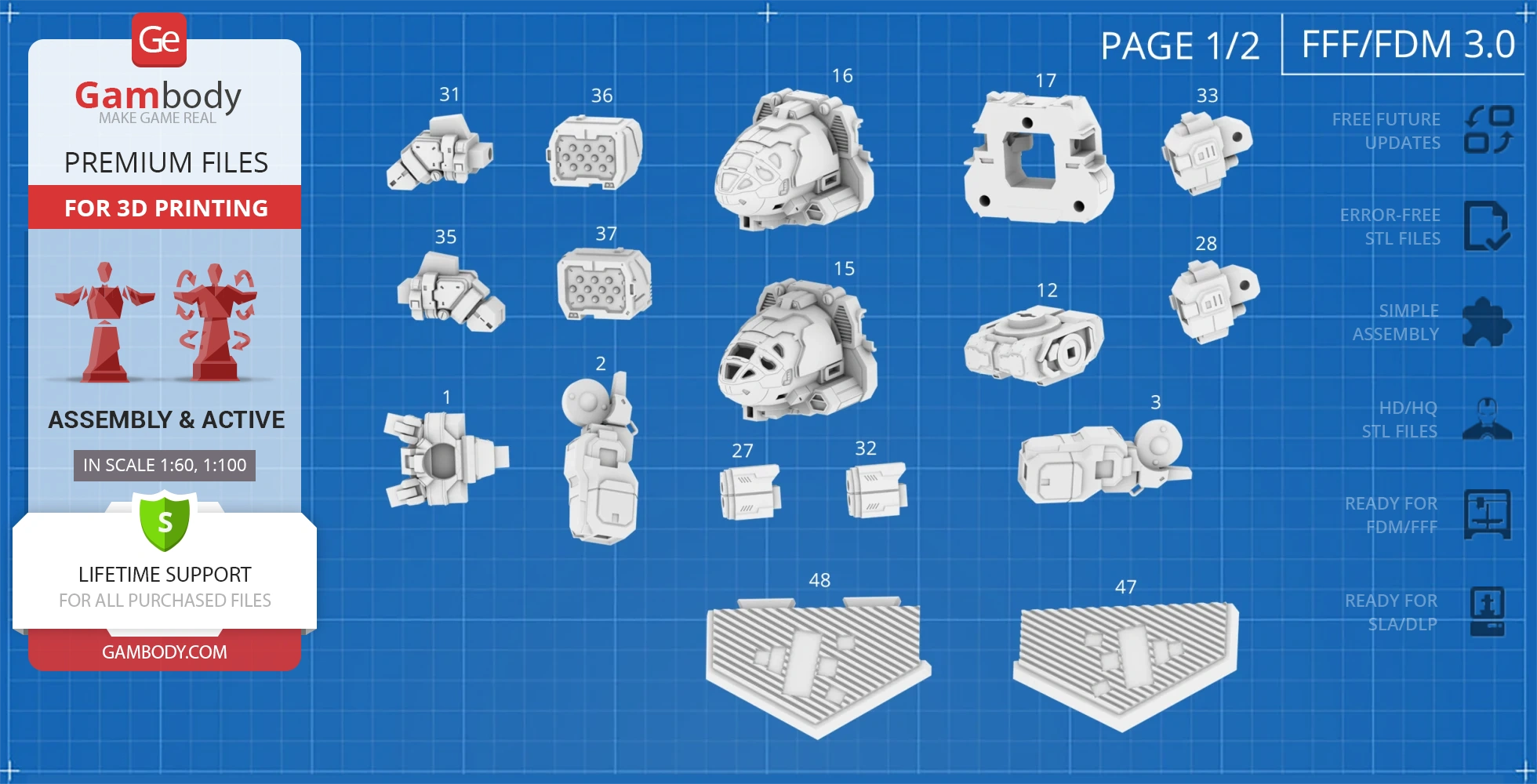
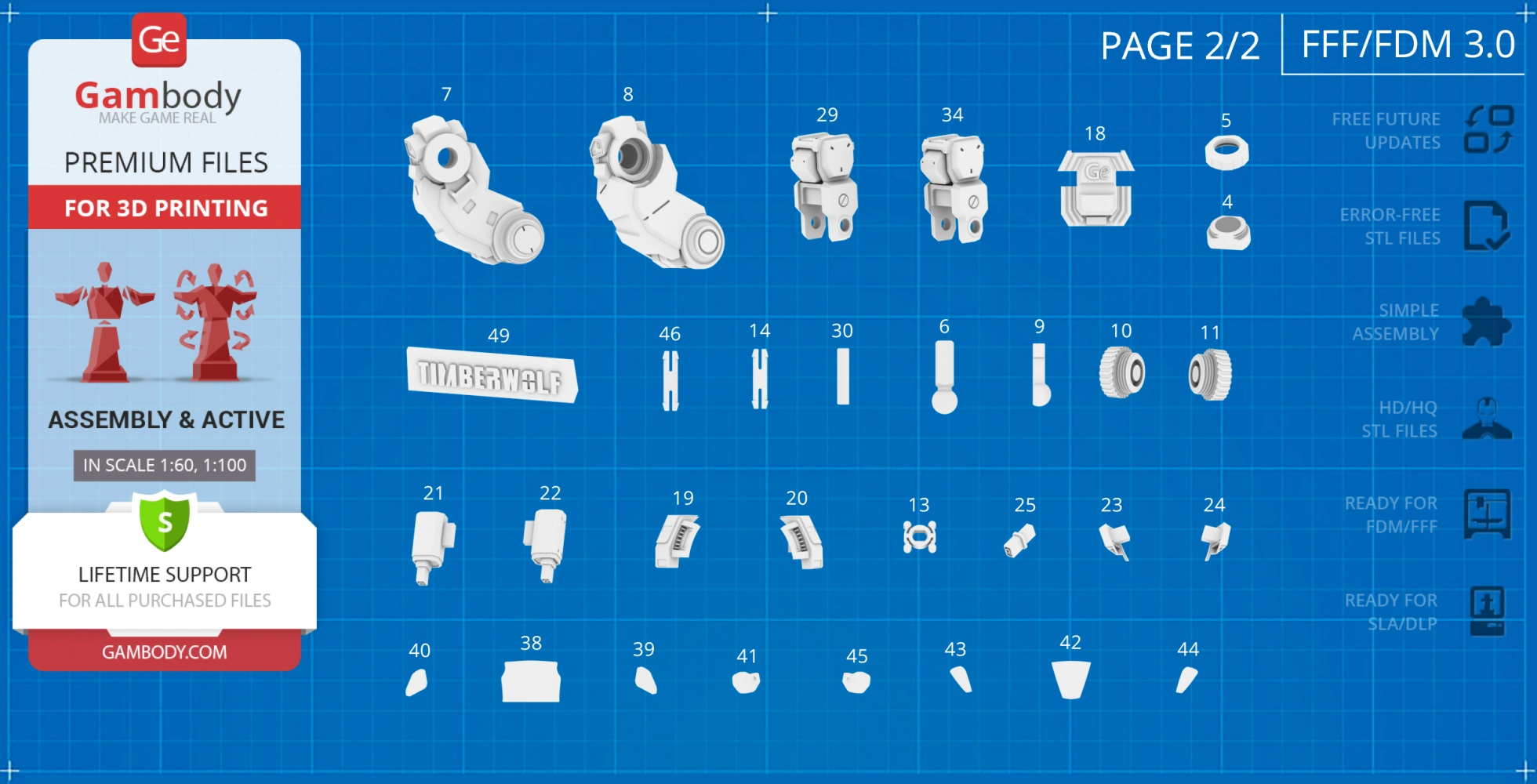
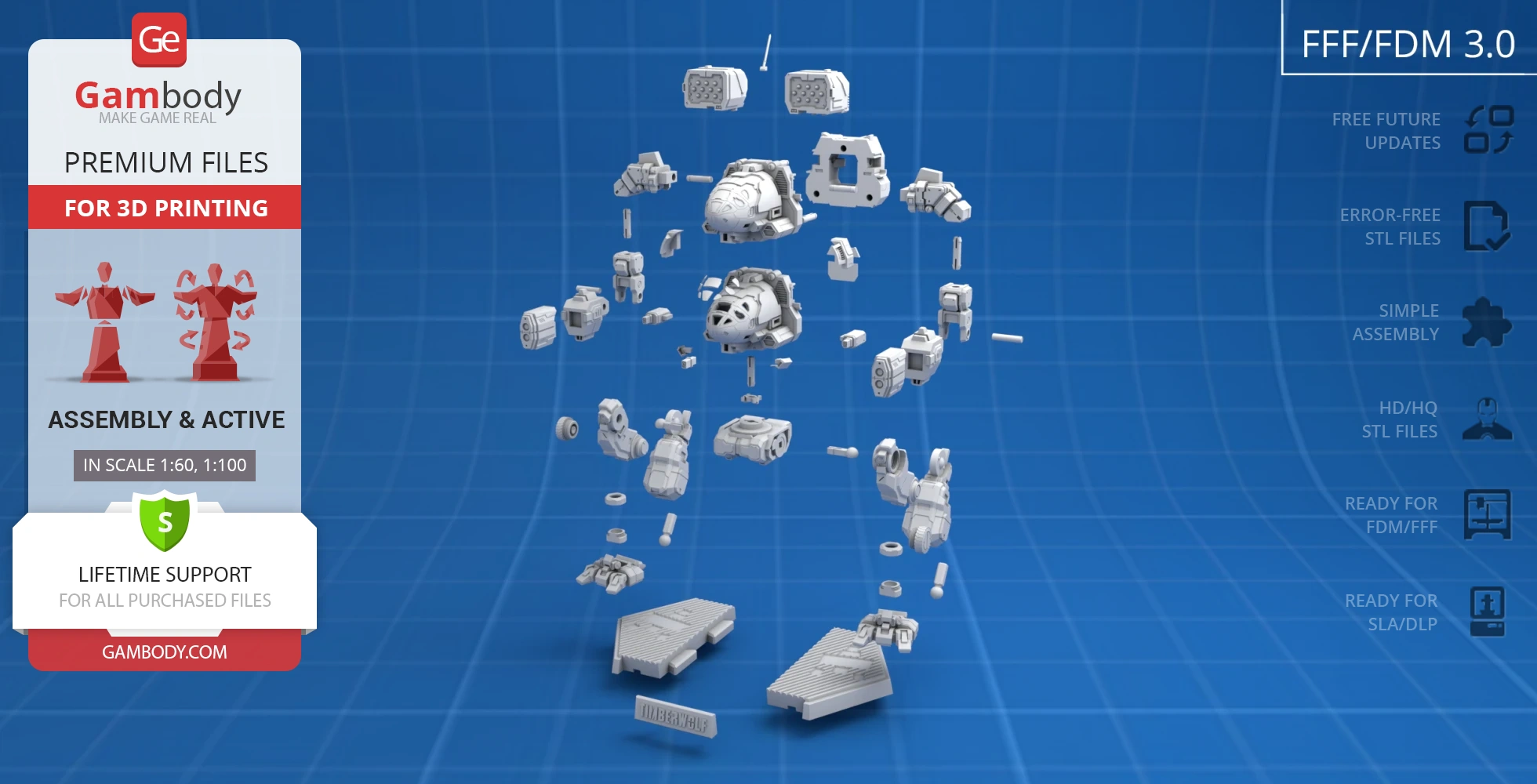
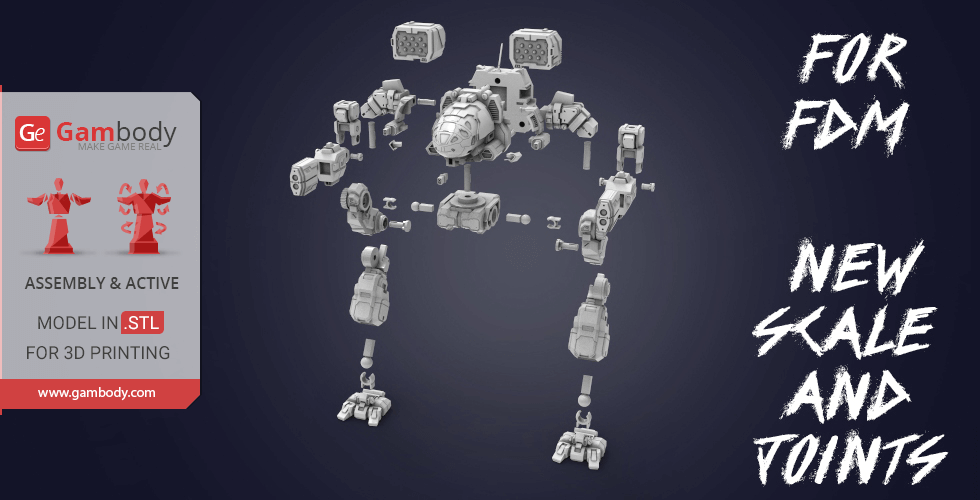
All assembly parts in the FFF/FDM 3.0 version are provided in STL files in recommended positions that were worked out in order to ensure the smoothness of the details’ surfaces after printing and that the 3D printing beginners won’t face difficulties when placing the parts on a build plate. When downloading any model’s file you will also receive “Assembly Manual” for FFF/FDM 3.0 and DLP/SLA 2.0 versions in PDF and video formats. We highly recommend that you get acquainted with the “Assembly Video” and “Assembly Manual” before getting down to the Timber Wolf 3D printing model.
The model is saved in STL files, a format supported by most 3D printers. All STL files for 3D printing have been checked in Netfabb and no errors were shown.
The model’s scale was calculated from the height of the mech. The 3D printing model’s chosen scales are 1:60 for the FFF/FDM version and 1:100 for the DLP/SLA version.
VERSIONS’ SPECIFICATIONS
FFF/FDM 3.0 version features:
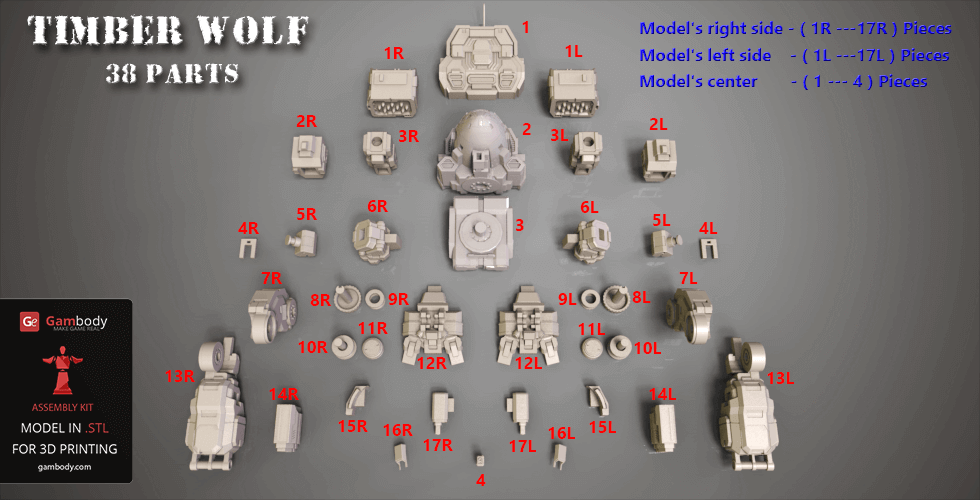
- Contains 49 parts;
- A printed model is 263 mm tall, 190 mm wide, 150 mm deep;
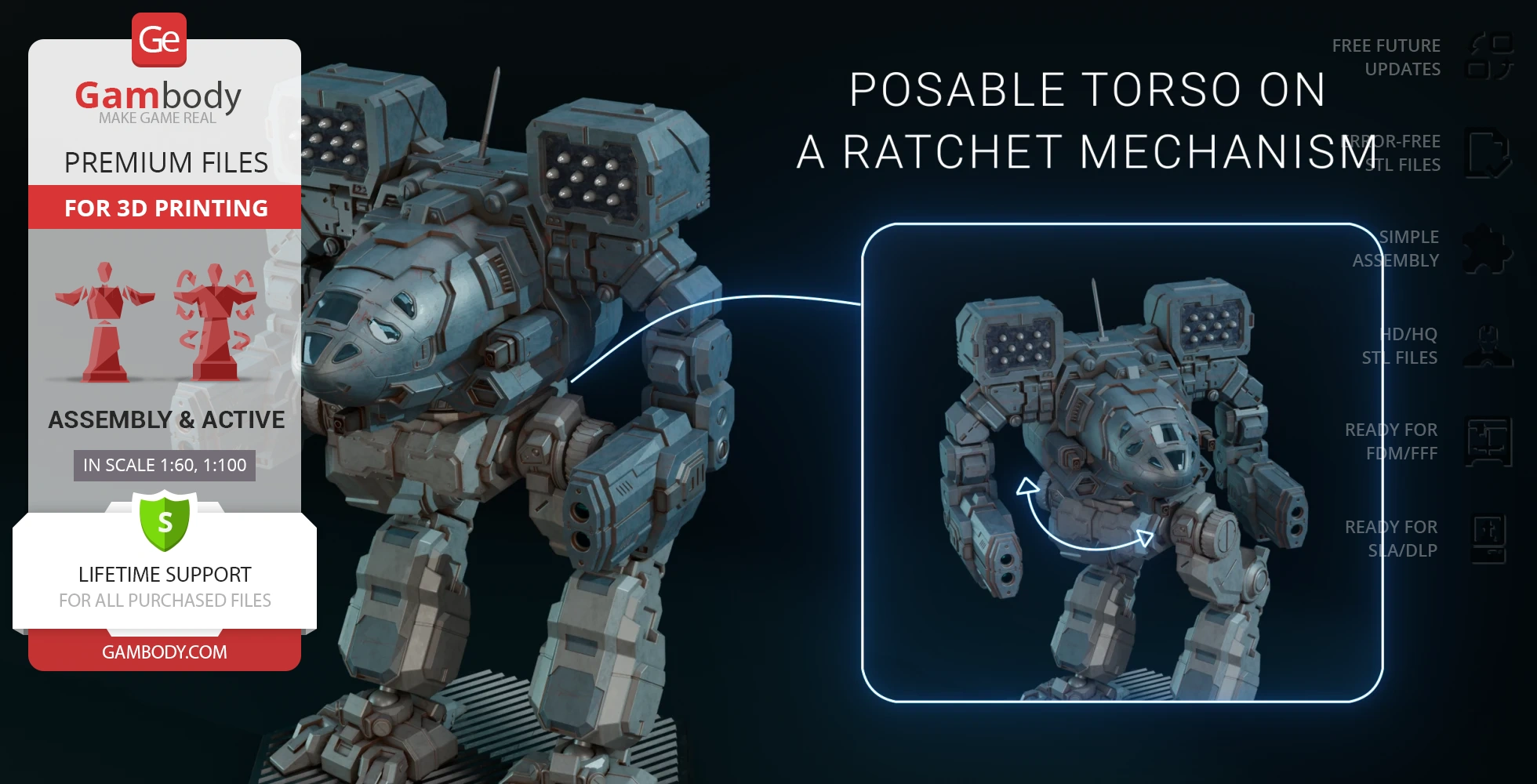
- Posable torso on a ratchet mechanism;
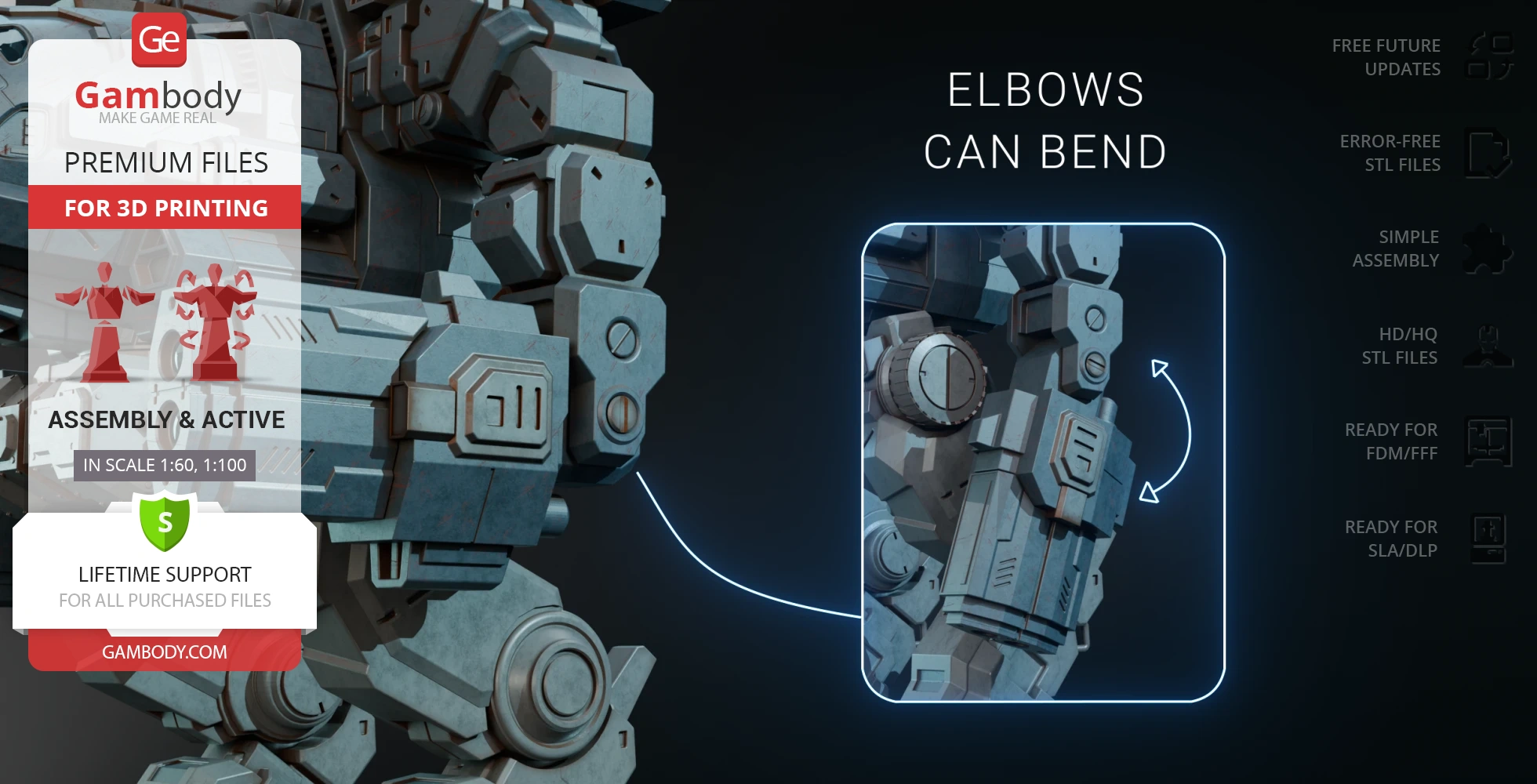
- Elbows can bend;
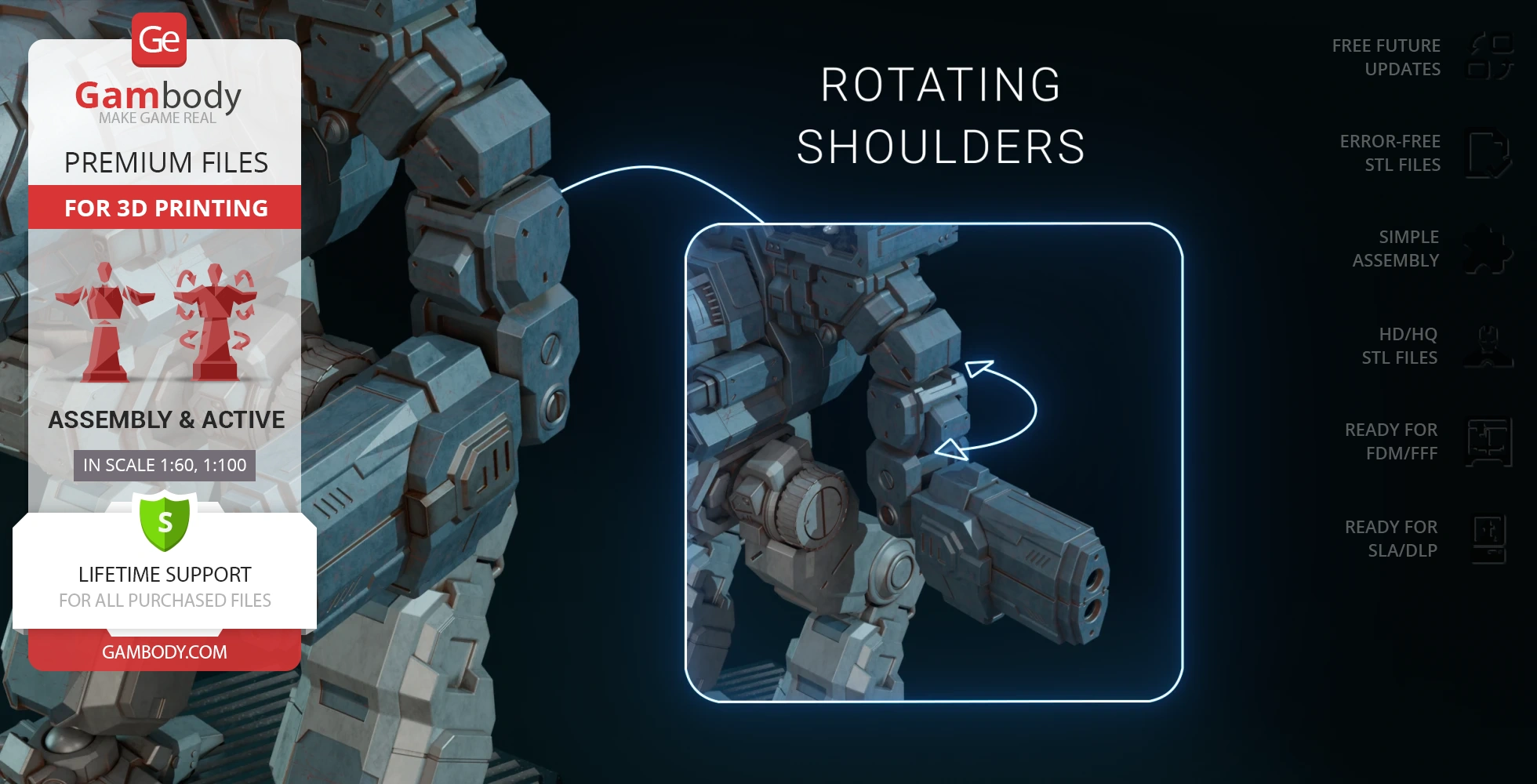
- Movable shoulders;
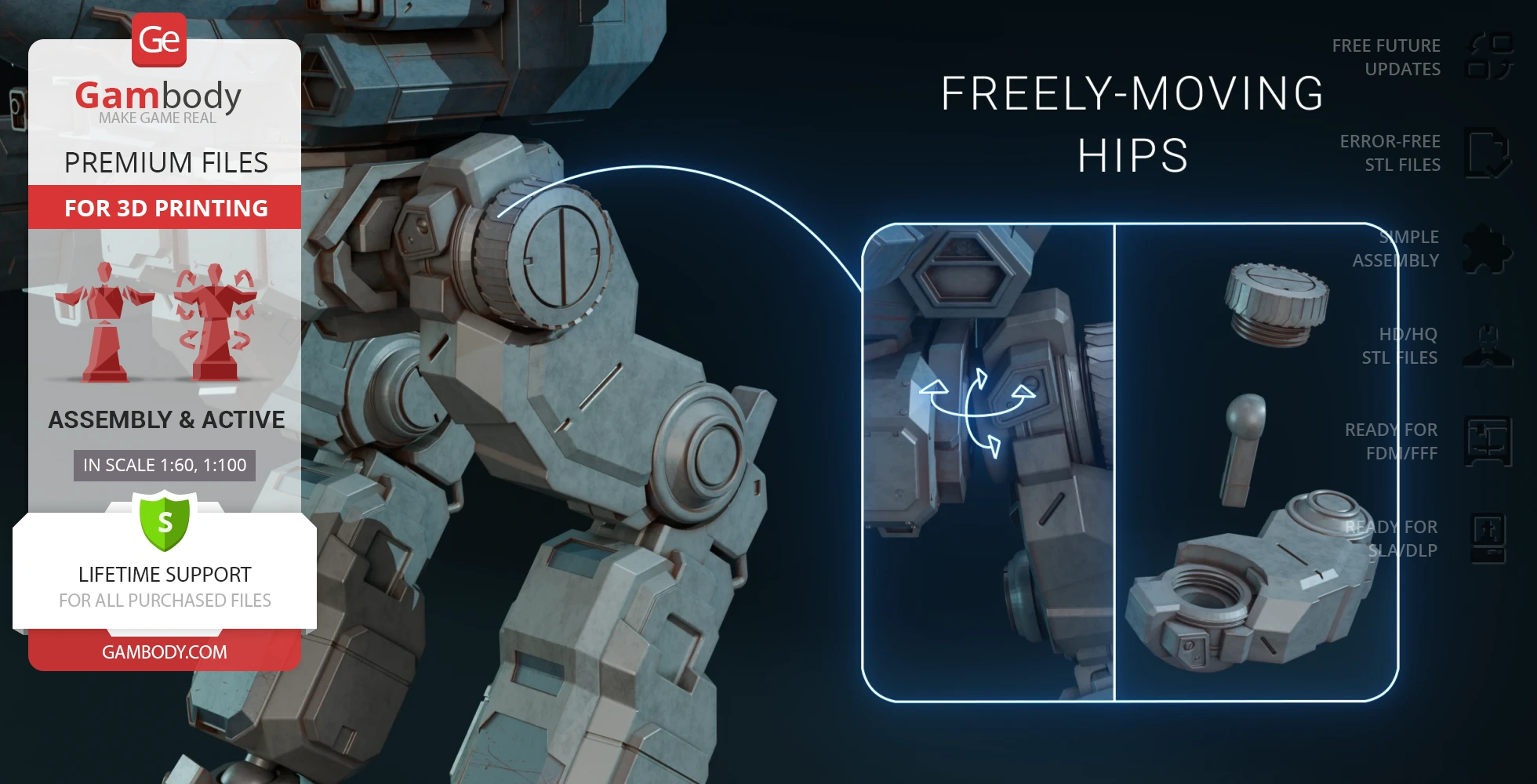
- Multidirectional movements of the hips;
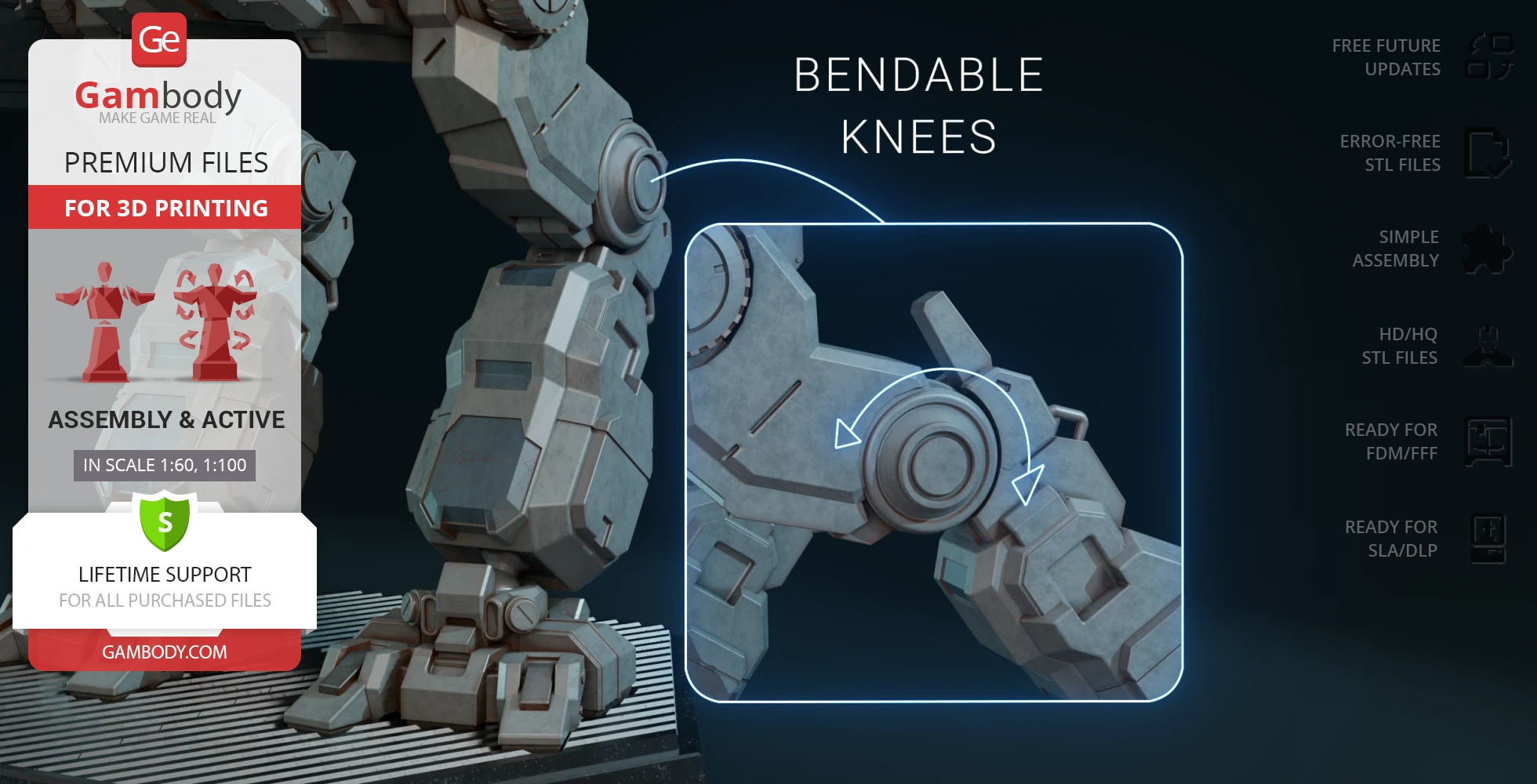
- Bendable knees;
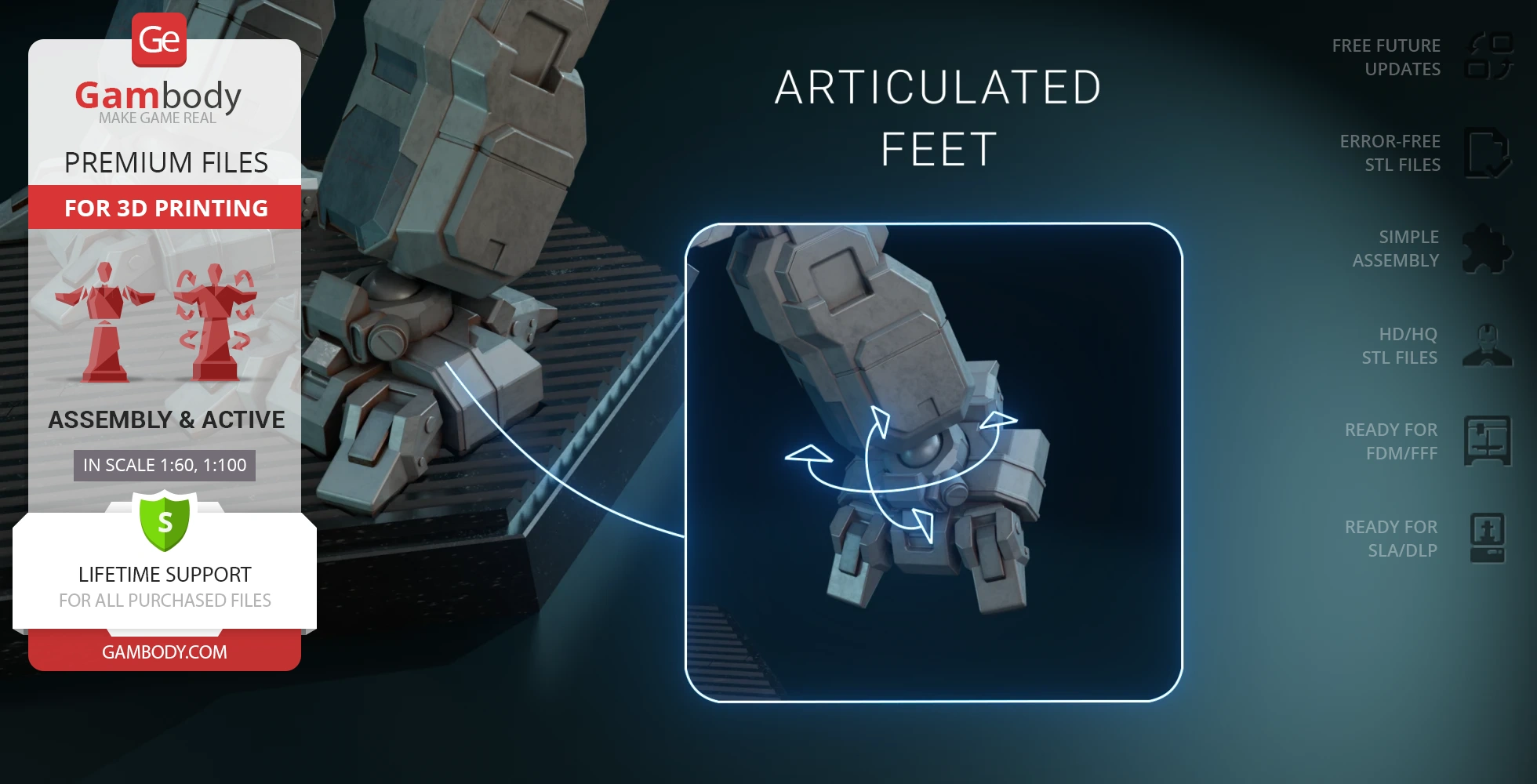
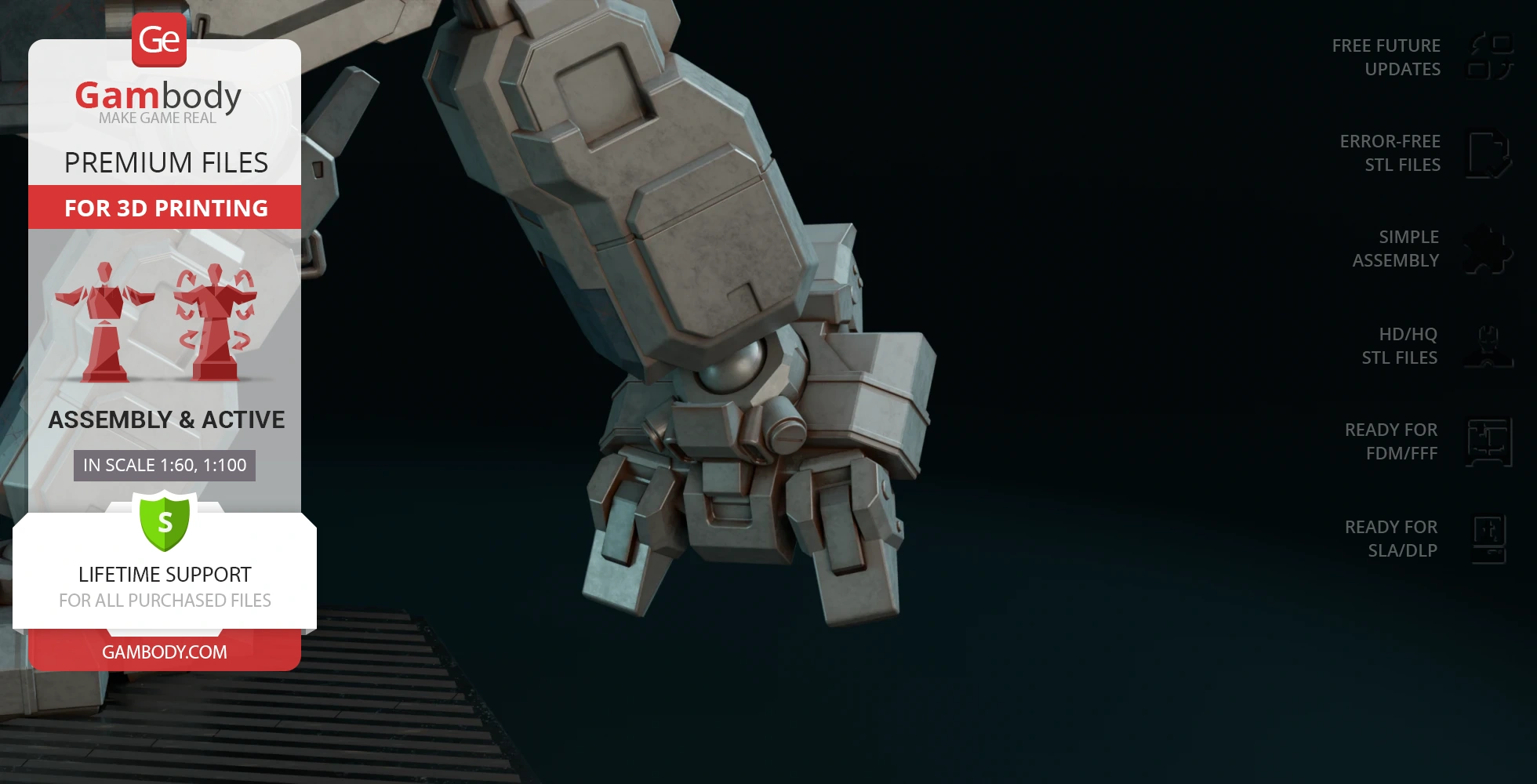
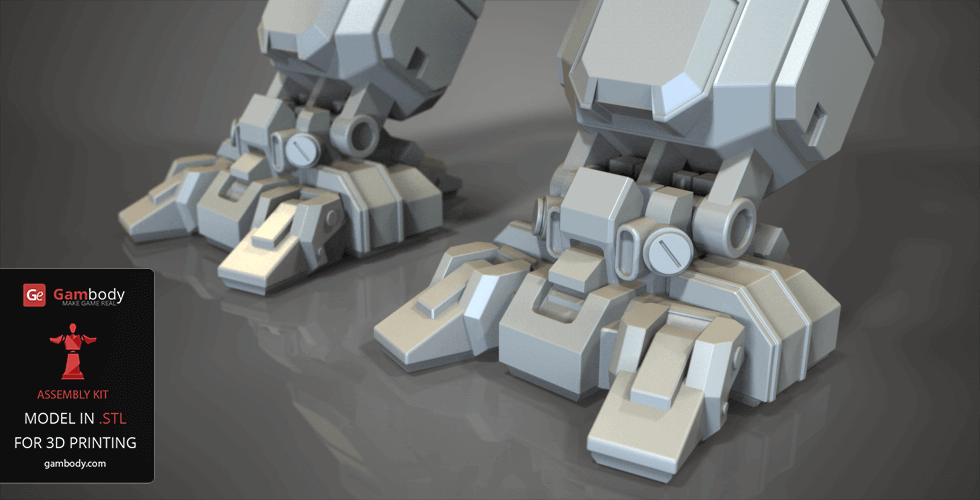
- Articulated feet;
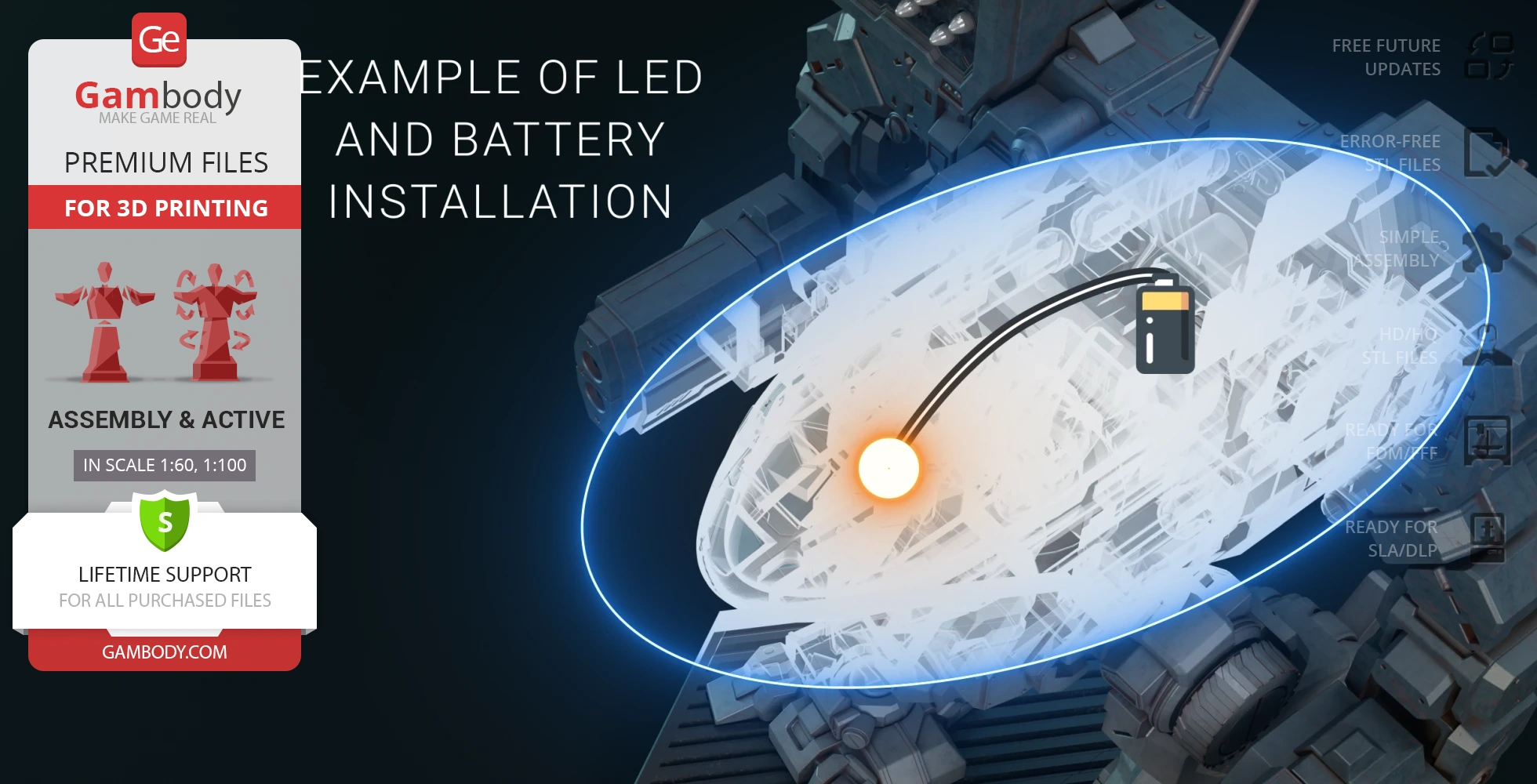
- You can install the battery and LED lighting inside the mech;
- All parts are divided in such a way that you will print them with the smallest number of support structures.
DLP/SLA 2.0 version features:
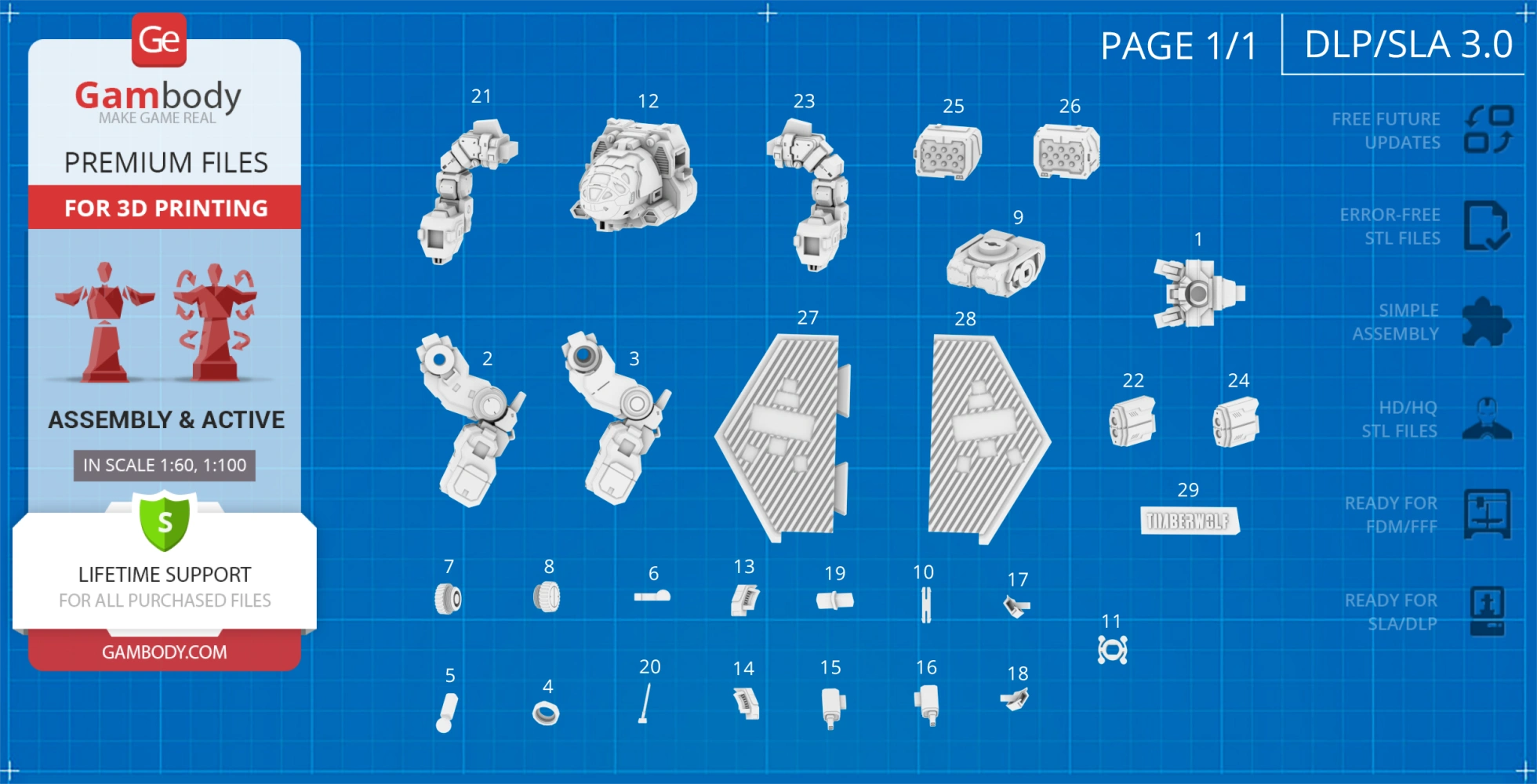
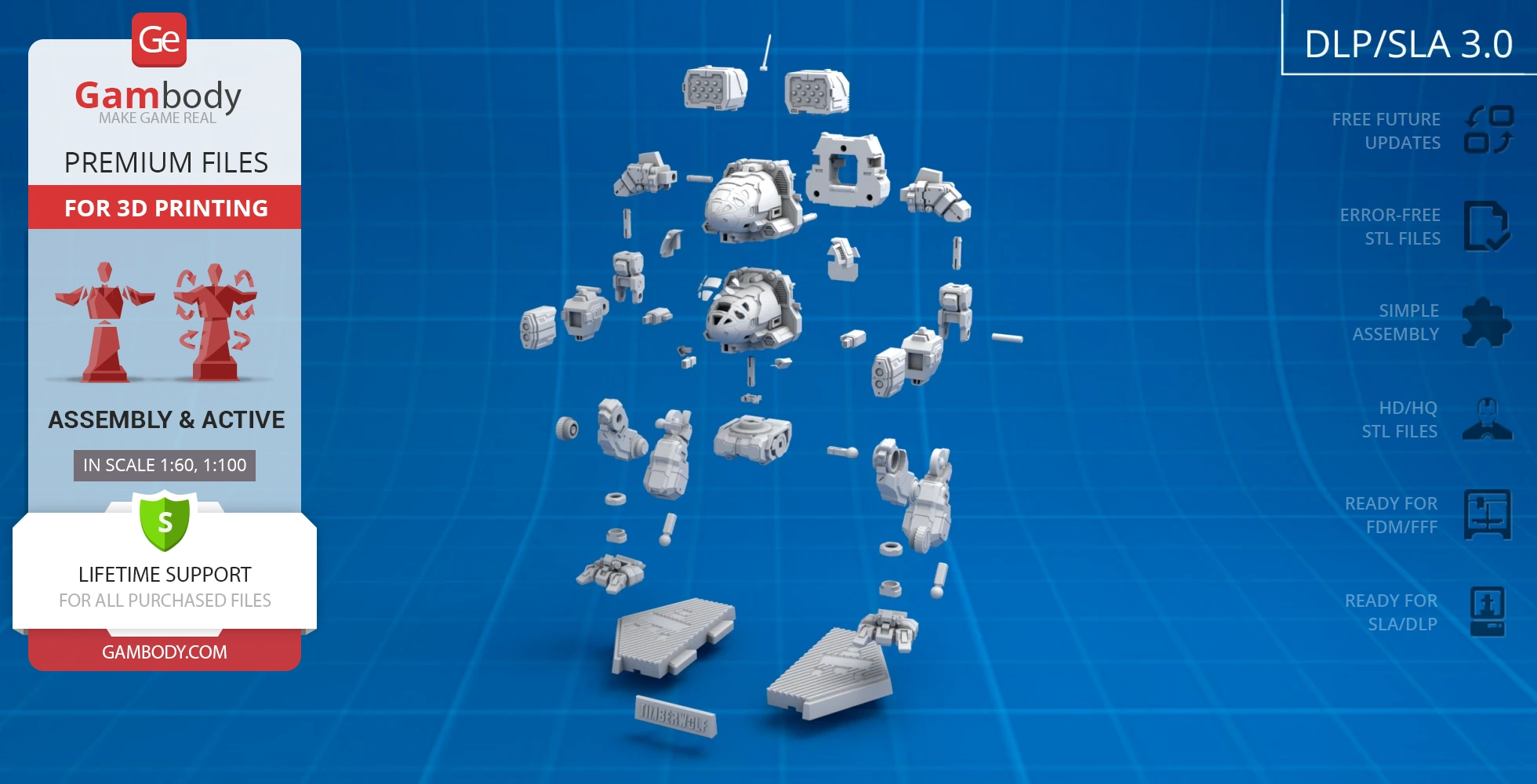
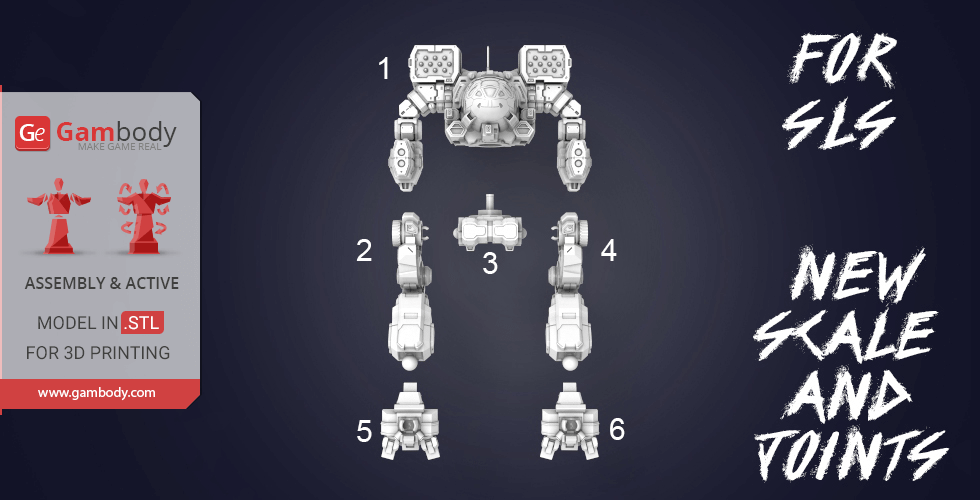
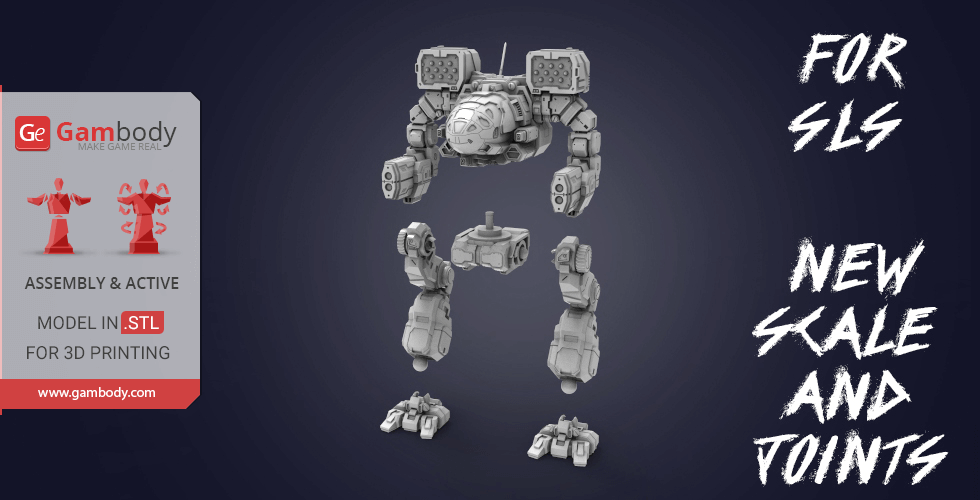
- Contains 29 parts;
- A printed model is 158 mm tall, 115 mm wide, 90 mm deep;
- New body cutting;
- Reworked joints in legs and torso.
FFF/FDM 2.0 version features:
- Contains 54 parts;
- A printed model is 267 mm tall, 191 mm wide, 147 mm deep;
- Made with new joints;
- All movable elements of the Mech were saved.
- All parts are divided in such a way that you will print them with the smallest number of support structures.
DLP/SLA 1.0 version features:
- Contains 11 parts;
- A printed model is 161 mm tall, 115 mm wide, 88 mm deep;
- Made with new joints;
- All movable elements of the Mech were saved;
- Has as few details as possible to keep printing costs down.
All parts are divided in such a way to fit the build plates and to ensure that support structures are generated where needed.
You can get the MWO Timber Wolf model for 3D printing immediately after the purchase! Just click the green Buy button in the top-right corner of the model’s page. You can pay with PayPal or your credit card.
Watch the tutorial on how to assemble a MWO Timber Wolf 3D Printing Model onGambody YouTube channel.
Also, you may like other MechWarrior3D Printing Models.
________
FAQ:
Average customer rating (37 reviews)
4.2
Ratings breakdown
Click a star rating to filter reviews
Overall experience
Level of detail in the model
4.2
Model cut quality and assembly guide
4.2
Clarity and accuracy of the model page
4.2



 Verified purchase
 Level of detail in the model
5
Model cut quality and assembly guide
5
Clarity and accuracy of the model page
5
After Printing I just loved it so much I printed a second version of it for my Wife's desk. I really need to figure out the cockpitglass though...


 Community Support Team
 It’s great to see two different versions side by side, and we can certainly understand why you decided to print a second one.
For the cockpit glass, one of the clearest options is to print the part in transparent resin, if you have access to an SLA/DLP printer. Another practical solution is to cut the glazing from a thin sheet of transparent plastic and fit it into the cockpit frame.
If you prefer to stay with FFF/FDM, transparent PETG or clear PLA can also be used, although the result will usually be more translucent than fully clear. In that case, a slower print speed, careful orientation, and light sanding and polishing can help improve the finish.
You can simply choose the method that best suits your equipment and the look you want to achieve. If you need any advice with the cockpit glazing, please feel free to reach out – we’ll be happy to assist.
 Verified purchase
 Level of detail in the model
5
Model cut quality and assembly guide
3.5
Clarity and accuracy of the model page
4
Step 13, 14 & 17, parts 4,5,6. I had to add a medium density cardboard cutout to take out the slack from the ball joint to the feet. The cardboard was 4mm thick. This made me able to still move the feet to a posable position. Otherwise the model ends up being a ragdoll & cannot stand on its own.
Step 15, 18, part 7, 8. The tolerance was so close that when slipping into the legs 2,3, one of my leg joints on part 2 or 3 snapped in half. I was able to salvage it, but I would recommend a higher infill than 15% for parts 2 & 3 or make the tolerance on parts 7 & 8 a little looser, but not by much. Also the legs 7 & 8 appear to be backwards in the instructions. I'm not sure if the piece protruding up on parts 2 & 3 are supposed to line up or not. I researched pictures of the Timberwolf & the legs appear to be correct based on the pictures I found & your instructions. I'd appreciate your insight on this.
Steps 16, 19 & 20, parts 9, 10 & 11. The joints were so loose the model ended up again with the ragdoll problem. It was unable to stand or support the main body. For these joints I added a medium density & hard density cardboard cut into circles totalling 7mm of cardboard. I really had to reef down on parts 10 & 11 to get the model to stay upright & posable on its own.
Lastly, Steps 22 & 26, part 30. In order to make the arm weapons not have the ragdoll effect, I had to print the pin (part 30) 2.5% bigger in order to make the arm weapons posable.
In addition, here is my setup for your referece. I used a Bambu Labs X1C to print all of my parts. I used the Gambody recommended settings. All joint peices were printed at 100% infill. The rest of the parts were printed with your recommended settings.
By adding cardboard I was able to make the model stay upright on its own, but I'm concerned that it will fall down & break as cardboard is really just a temporary fix.
I welcome your feedback & would appreciate any insight you have on a more permanent fix to the joints on this model or any insight in general. I have purchased multiple models from you & would like to say that your designers & models are absolutely amazing.
Community Support Team Our Moderation Team has completed a thorough technical review based on your feedback. Your documentation was so precise that it allowed us to implement several official updates to the model:
– Elbow pin (Part 30): We have introduced a new file, 30_elbow_pin_x2, specifically optimized for FDM printing to ensure a tighter fit for the arm weapons without needing scale adjustments.
– Leg parts (07 & 08): Based on your findings regarding tolerances and alignment, we have replaced the files for both the FDM (07_Leg_1_R_FDM, 08_Leg_1_L_FDM) and resin versions.
– Hip & ball Joints: The team verified the geometry for the feet and hips. Regarding the slack you mentioned, they confirmed that while the 3.0 version provides the necessary tightening clearance, using friction inserts (like your cardboard or thin plastic shims) is a practical and effective solution for a model of this massive 200% scale to ensure long-term stability.
All updated files are now live and available under the "3.0 - Fully upgraded" folder in the "Source Files" tab on the models page.
We truly appreciate this level of feedback, as it helps us refine the technical assembly of more complex models. If you need any further suggestions or have any questions, please don't hesitate to let us know!
Community Support Team We really appreciate the time you spent testing and documenting the joint issues. Your feedback is invaluable!
We're sorry the model caused difficulties during assembly. Our Moderation Team is reviewing everything carefully, and we'll reach out to you by email with updates or solutions as soon as possible.
Thank you for being a part of Gambody!
Verified purchase Level of detail in the model
4.2
Model cut quality and assembly guide
3.9
Clarity and accuracy of the model page
5
I printed it on an FDM printer and that required some knowledge and experience to orientate and support the model properly.
I would totally recommend this to someone who understands the basics of both plastic models and 3d printing.
Community Support Team We’d like to note that the MWO Timber Wolf 3D Model is an updated version, and both the author and our team invested a great deal of effort into refining the design, including the joint tolerances.
To help us better understand what happened in your case, could you please let us know whether the tight tolerances affected all joints or only specific ones? If it was limited to certain joints, we’d really appreciate it if you could specify which ones. We’ll be happy to double-check them on our side.
If the tight fit was consistent across the entire model, we recommend verifying your printer’s dimensional accuracy by printing calibration cubes. You can use these calibration models:
https://www.gambody.com/premium/calibration-elements-3d-printer
The solid calibration cube should measure 20 × 20 × 20 mm, and the wall thickness of the hollow calibration cube should be exactly 0.4 mm. If the measurements differ, some printer calibration adjustments may be needed, which can significantly improve joint fit and reduce the risk of breakage.
Thank you again for your thoughtful feedback, it’s extremely valuable to us and helps us continue improving our models.
Verified purchase Level of detail in the model
5
Model cut quality and assembly guide
5
Clarity and accuracy of the model page
5
 This feedback is from a user who hasn't purchased this model
 Level of detail in the model
5
Model cut quality and assembly guide
5
Clarity and accuracy of the model page
5
Verified purchase Level of detail in the model
5
Model cut quality and assembly guide
5
Clarity and accuracy of the model page
5
This feedback is from a user who hasn't purchased this model Level of detail in the model
5
Model cut quality and assembly guide
5
Clarity and accuracy of the model page
5
Verified purchase Level of detail in the model
4
Model cut quality and assembly guide
4
Clarity and accuracy of the model page
4

 This feedback is from a user who hasn't purchased this model
 Level of detail in the model
5
Model cut quality and assembly guide
5
Clarity and accuracy of the model page
5
This feedback is from a user who hasn't purchased this model Level of detail in the model
4
Model cut quality and assembly guide
4
Clarity and accuracy of the model page
4
Verified purchase Level of detail in the model
1
Model cut quality and assembly guide
1
Clarity and accuracy of the model page
1
 Verified purchase
 Level of detail in the model
5
Model cut quality and assembly guide
5
Clarity and accuracy of the model page
5
This feedback is from a user who hasn't purchased this model Level of detail in the model
5
Model cut quality and assembly guide
5
Clarity and accuracy of the model page
5
This feedback is from a user who hasn't purchased this model Level of detail in the model
4
Model cut quality and assembly guide
4
Clarity and accuracy of the model page
4
Verified purchase Level of detail in the model
2
Model cut quality and assembly guide
2
Clarity and accuracy of the model page
2
Verified purchase Level of detail in the model
3
Model cut quality and assembly guide
3
Clarity and accuracy of the model page
3
This feedback is from a user who hasn't purchased this model Level of detail in the model
1
Model cut quality and assembly guide
1
Clarity and accuracy of the model page
1
This feedback is from a user who hasn't purchased this model Level of detail in the model
5
Model cut quality and assembly guide
5
Clarity and accuracy of the model page
5
This feedback is from a user who hasn't purchased this model Level of detail in the model
2
Model cut quality and assembly guide
2
Clarity and accuracy of the model page
2
Verified purchase Level of detail in the model
5
Model cut quality and assembly guide
5
Clarity and accuracy of the model page
5
Below you'll find detailed slicing settings for Bambu Studio 2.0+, Orca Slicer 2.0+, UltiMaker Cura 5.0+, PrusaSlicer 2.0+, Slic3r 1.3+, Simplify3D 5.0+ to help you get the best results when printing this model. These settings are optimized specifically for this 3D model, but please note they may need slight adjustments depending on your printer or filament. When in doubt, refer to your printer's user manual.
To avoid printing issues and achieve the best quality, we highly recommend applying the following settings:
 Bambu Studio 2.0+
 For better quality use 0.12 mm layer height, for fast printing use 0.2 mm layer height. For pins and the Ge connectors, use 0.2 layer height.
120-150% of your Layer Height
But you can paint the seam if you want.
You have to calibrate this parameter
You have to calibrate this parameter
You have to calibrate this parameter
For pins and power elements of the structure, such as the vehicle frame, use 3 loop
Disabled for vehicles and enabled for characters
For 0,2 Layer Height
The parameters in this tab vary greatly, it all depends on the quality of your printer. For example, if you have a classic Ender3, stick to the minimum parameters, but if you have a newer printer, for example Anycubic cobra 3 v2, you can select the maximum recommended values
Settings for advanced users, change these parameters only if you have sufficient 3D printing expertise
Enable this parameter if your model requires supports
We also recommend placing and removing supports manually in some places using special button
1-2 loops for more thick support
Top Z distance = 1-1.3 layer Height. If the supports are hard to remove, try increasing this setting by 0.1-0,4 mm
Bottom Z distance = 1-1.3 layer Height. If the supports are hard to remove, try increasing this setting by 0.1-0,4 mm
You have to calibrate this parameter which one is better for your filament
Increase this parameter if the supports are hard to remove from walls
For PLA and PETG filament types
5-8 mm is optional for small prints that have bad adhesion to the build plate
You have to calibrate this parameter
Read the description on your filament roll
Read the description on your filament roll and increase this parameter for fast printers
Read the description on your filament roll and increase this parameter for fast printers
 Orca Slicer 2.0+
 For better quality use 0.12 mm layer height, for fast printing use 0.2 mm layer height. For pins and the Ge connectors, use 0.2 layer height.
120-150% of your Layer Height
But you can paint the seam if you want.
0.01-0.05 You have to calibrate this parameter
0.01-0.05 You have to calibrate this parameter
0.1-0.2 You have to calibrate this parameter
For pins and power elements of the structure, such as the vehicle frame, use 3 loop
Disabled for vehicles and ships, enabled for characters
For 0,2 Layer Height
For 0,2 Layer Height
The parameters in this tab vary greatly, it all depends on the quality of your printer. For example, if you have a classic Ender3, stick to the minimum parameters, but if you have a newer printer, for example, Anycubic Kobra 3 Or Bambulab A1, you can select the maximum recommended values.
Settings for advanced users, change these parameters only if you have sufficient 3D printing expertise
Enable this parameter if your model requires supports
We also recommend placing and removing supports manually in some places using special button
Top Z distance = 1-1.3 layer Height. If the supports are hard to remove, try increasing this setting by 0.1-0,4 mm
Bottom Z distance = 1-1.3 layer Height. If the supports are hard to remove, try increasing this setting by 0.1-0,4 mm
Increase this parameter if the supports are hard to remove from walls
For PLA and PETG filament types
5-8 mm is optional for small prints that have bad adhesion to the build plate
Read the description on your filament roll
Read the description on your filament roll and increase this parameter for fast printers
You have to calibrate this parameter
Read the description on your filament roll and increase this parameter for fast printers
Read the description on your filament roll
This field is filled in according to your printer specifications when you add it to the slicer.
You can add custom G-code here for the start and end of the print. However, be careful - this is for advanced users only!
You have to calibrate your printer using Ge retraction test models
Retraction Length: For direct-drive setups use 0.5 mm to 2.5 mm; for Bowden extruders use 5 to 7 mm
This is how fast the filament is pulled back—40-60 mm/s for direct drive and 30-50 mm/s for Bowden setups.
You have to calibrate this parameter: Reduce it until the printer starts to hit the parts with the nozzle during printing, then increase it by 0.2.
 UltiMaker Cura 5.0+
 For better quality use 0.12 mm layer height, for fast printing use 0.2 mm layer height. For pins and the Ge connectors, use 0.2 layer height.
120-150% of your Layer Height
To increase the strength of the print parts, use wall line count: 3
For pins and connectors use 50% Infill
These parameters are for standard PLA plastic. If you are using a different type of plastic, check the printing temperature recommended by the manufacturer. Also, read the description on your filament spool. For fast printers, add +30 °C to the current parameters.
The parameters in this tab vary greatly, it all depends on the quality of your printer. For example, if you have a classic Ender3, stick to the minimum parameters, but if you have a newer printer, for example Anycubic cobra 3 v3, you can select the maximum recommended values
Settings for advanced users, change these parameters only if you have sufficient 3D printing expertise.
You need to calibrate this parameter using Gambody test models. These values are average values for a Direct Drive extruder; for a Bowden extruder, the values should be increased.
You need to calibrate this parameter using Gambody test models. These values are average values for a Direct Drive extruder; for a Bowden extruder, the values should be increased.
Use this value other than 0 if your nozzle catches on the internal infill during travel moves. Try to keep this value as low as possible in height.
Use normal supports to support large, straight surfaces (most mechanical or technical parts).
You have to calibrate this parameter according to the capabilities of your printer and your filament, using a Gambody test models.
Use 1 instead of 0 if your supports are thin and tall. They will be harder to remove, but much stronger.
Top Z distance = 1-1.3 layer Height. If the supports are hard to remove, try increasing this setting by 0.1-0,4 mm
Increase this parameter if the supports are hard to remove from walls
Use tree supports to support complex objects, such as characters.
You have to calibrate this parameter according to the capabilities of your printer and your filament, using a Gambody test models.
Top Z distance = 1-1.3 layer Height. If the supports are hard to remove, try increasing this setting by 0.1-0,4 mm
Increase this parameter if the supports are hard to remove from walls
Use a skirt for all parts when printing on outdated printers.
Use a brim when printing thin but tall parts, as well as parts with a small bed adhesion area.
 PrusaSlicer 2.0+
 For better quality use 0.12 mm layer height, for fast printing use 0.2 mm layer height. For pins and the Ge connectors, use 0.2 layer height.
120-150% of your Layer Height
for 0.2 Layer Height
But you can paint the seam if you want.
(for PLA and PETG)
(5-8 mm is optional for small prints that have bad adhesion to the build plate)
Enable this parameter if your model requires supports
(45-50 degree)You have to calibrate this parameter according to the capabilities of your printer
and your filament, using a Gambody test models.
Top contact Z distance = 1-1.3 layer Height. If the supports are hard to remove, try
increasing this setting by 0.1-0,4 mm
Top contact Z distance = 1-1.3 layer Height. If the supports are hard to remove, try
increasing this setting by 0.1-0,4 mm
Increase this parameter if the supports are hard to remove from walls
The parameters in this tab vary greatly, it all depends on the quality of your printer. For example, if you have a classic Ender3, stick to the minimum parameters, but if you have a newer printer, for example Anycubic cobra 3 v3, you can select the maximum recommended values
Settings for advanced users, change these parameters only if you have sufficient 3D printing expertise. Use the minimum value for outdated printers without acceleration calibration, and the maximum value for modern printers if you need it.
These settings only work for 3D printers with multiple extruders
You can try setting all parameters in this section, except the First layer, to values between 0.75% of your nozzle diameter and 1.25% of your nozzle diameter. Adjusting them will help you work out the optimal parameters for the best quality for your print. As for the First layer, you can set it to 150% of the diameter of your nozzle for better adhesion to the build plate (for a nozzle with a diameter of 0.4 mm, the First layer extrusion width can be from 0.3 mm to 0.5 mm)
For better printing quality you have to calibrate this parameter using Gambody test model.
Check your filament manufacturer's temperature recommendations on the spool.
Cooling parameters depends on the material you use for printing.
*for PLA
 Slic3r 1.3+
 For better quality use 0.12 mm layer height, for fast printing use 0.2 mm layer height. For pins and the Ge connectors, use 0.2 layer height.
120-150% of your Layer Height
For 0.12 Layer Height
For 0.12 Layer Height
For pins and connectors use 50% Infill
Use skirt for outdated 3d printers
(5-8 mm is optional for small prints that have bad adhesion to the build plate)
Enable this parameter if your model requires supports
(45-60 degree)You have to calibrate this parameter according to the capabilities of your printer and your filament, using a Gambody test models
Contact Z distance = 1-1.3 layer Height. If the supports are hard to remove, try increasing this setting by 0.1-0,4 mm
The parameters in this tab vary greatly, it all depends on the quality of your printer. For example, if you have a classic Ender3, stick to the minimum parameters, but if you have a newer printer, for example Anycubic cobra 3 v3, you can select the maximum recommended values
Settings for advanced users, change these parameters only if you have sufficient 3D printing expertise. Use the minimum value for outdated printers without acceleration calibration, and the maximum value for modern printers if you need it.
You have to calibrate this parameter from 0.9 to 1.1 according to the capabilities of your printer and your filament, using a Gambody test models.
Check your filament manufacturer's temperature recommendations on the spool.
Cooling parameters depends on the material you use for printing.
Calibrate this value if you need to reduce or improve the adhesion between the plastic and the heat bed
Your current nozzle diameter
You need to calibrate this parameter using Gambody test models. These values are average values for a Direct Drive extruder; for a Bowden extruder, the values should be increased.
 Simplify3D 5.0+
 Your current nozzle diameter
You have to calibrate this parameter using Gambody test models.
You need to calibrate this parameter using Gambody test models. These values are average values for a Direct Drive extruder; for a Bowden extruder, the values should be increased.
For better quality use 0.12 mm layer height, for fast printing use 0.2 mm layer height. For pins and the Ge connectors, use 0.2 layer height.
For 0,2 Layer Height
For 0,2 Layer Height
To increase the strength of the print parts, use Outline Perimeters: 3
You can enable this parameter to print rounded or spherical models, as well as character models.
Use this option only if your parts are too tight. but better calibrate your printer extrusion
Use this option only if your parts are too tight. but better calibrate your printer extrusion
Use 2 and more if you want to create skirt instead brim
1-2 for skirt and 10-20 for brim
Use for wipe nozzle if you need
Use For ABS filament
For pins and connectors use 50% Infill
Top Z distance = 1-1.3 layer Height. If the supports are hard to remove, try increasing this setting by 0.1-0,4 mm
Calibrate your filament and detect optimal temperature for it
Average temperature for PLA filament
The parameters in this tab vary greatly, it all depends on the quality of your printer. For example, if you have a classic Ender3, stick to the minimum parameters, but if you have a newer printer, for example Anycubic cobra 3 v3, you can select the maximum recommended values
Settings for advanced users, change these parameters only if you have sufficient 3D printing expertise.